



கம்பராமாயணம் 6521 · யுத்த 4.115
பாடல் · The poem
Tap a word to see its gloss in the commentary and where else it occurs.
பாட வேறுபாடு · Project Madurai reads
பொருள் · Meaning in Tamil
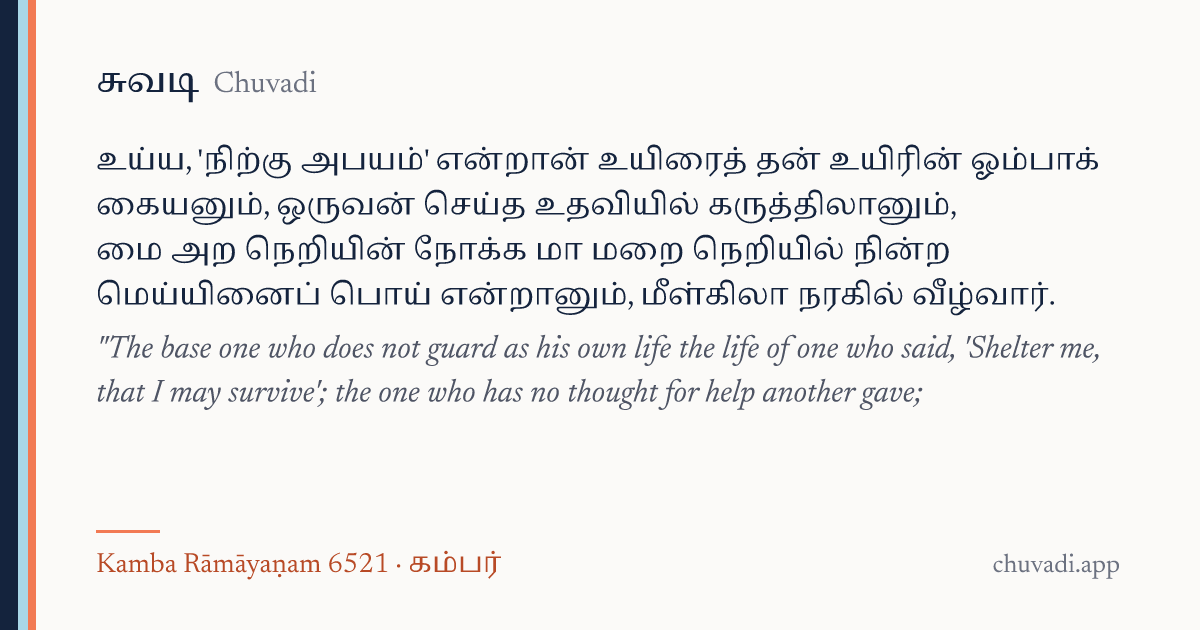
உய்யநிற்கு அபயம் என்றான் - நான் உய்யுமாறு உன்னைச் சரண்புகுந்தேன் என்று வந்த ஒருவனுடைய; உயிரைத் தன் உயிரின் ஓம்பாக்கய்யனும் - உயிரினைத் தன்னுயிராகக் கருதிப் பேணிக்காப்பாற்றாத கீழ்மகனும்; ஒருவன் செய்த உதவியில் கருத்திலானும் - ஒருவன் செய்த உதவியில் கருத்தில்லாது மறந்தவனும்; மய்அற நெறியின் நோக்கி - குற்றம் நீங்க, அறநெறியை அறிந்து; மாமறை நெறியில் நின்ற - சிறந்த வேத நெறிப்படி நின்றொழுகும்; மெய்யினைப் பொய் என்பானும் - உண்மை நெறியைப் பொய் என்று கூறுபவனும்; மீள்கிலா நரகில் வீழ்வார் - மீண்டு வரமுடியாத கொடிய நரகத்திலே வீழ்ந்து துன்புறுவார்
மய் - மை, குற்றம். மை, கையன் என்பன எதுகை நோக்கி மய், கய்யன் என வந்தது.
மீள்கிலா - மீளமுடியாத. "உலகத்தார் உண்டென்பதில் லென்பான்... அலகையா வைக்கப்படும்” என்ற குறள் (850) ஒப்பு நோக்கத்தக்கது.
ஆங்கிலம் · English translationAI
Translation
- "The base one who does not guard as his own life the life of one
- who said, 'Shelter me, that I may survive'; the one who has no thought for help another gave;
- and the one who, though the way of dharma is plain to see without flaw, calls false
- the truth that stands upon the path of the great Vedas — these fall into a hell from which there is no return."
What the poem says
Irāmaṉ names three kinds of people who fall into the hell from which there is no return: those who fail to protect a refugee as they would their own life, those who forget a kindness done to them, and those who deny the truth taught by the Vedas.
Refusing Vīṭaṇaṉ would place Irāmaṉ in the first group. The commentary compares a Tirukkuṟaḷ (850) that calls one who denies what the world affirms a demon on earth.