



கம்பராமாயணம் 653 · பால 10.101
பாடல் · The poem
Tap a word to see its gloss in the commentary and where else it occurs.
பாட வேறுபாடு · Project Madurai reads
பொருள் · Meaning in Tamil
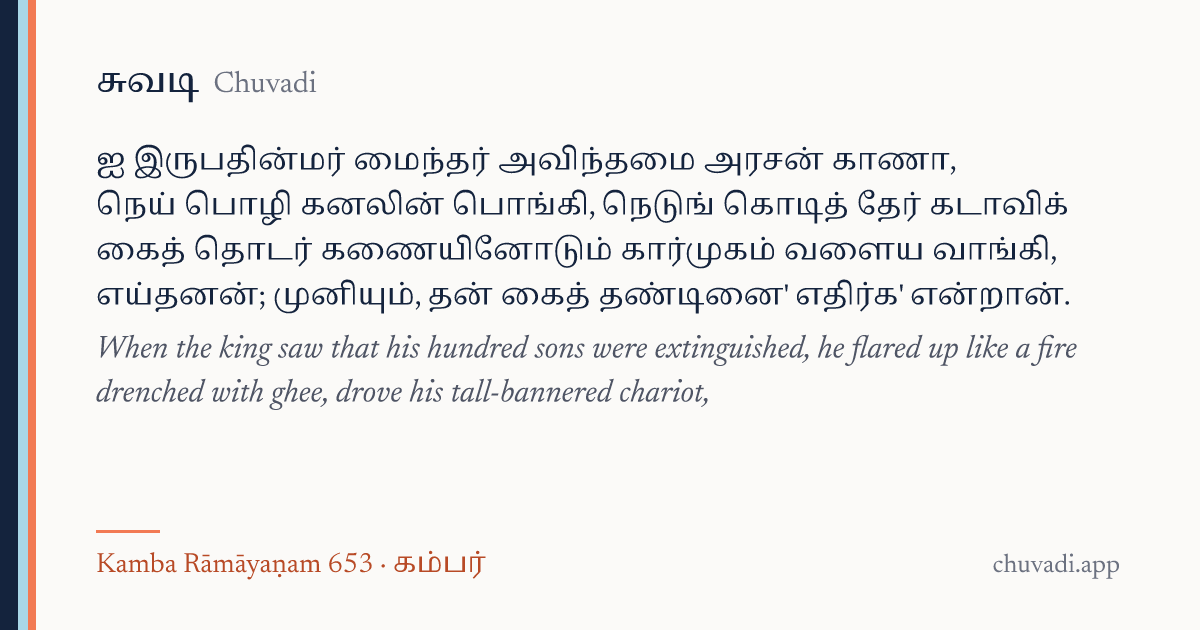
(அப்பொழுது); அரசன் - இக் கௌசிகராசன்; ஐ இரு பதின்மர்மைந்தர் - தன் புத்திரர் நூறு பேர்களும்; அவிந்தமை காணா - இறந்ததைக் கண்டு; நெய் பொழி கனலின் பொங்க - நெய் சொரிந்த நெருப்புப் போலச் சீறியெழுந்து; நெடுங்கொடித் தேர் - நீண்ட கொடியமைந்த தன் தேரை; கடாவி - செலுத்தி; கார்முகம் வளைய வாங்கி - வில்லை நன்கு வளைத்து; கை தொடர் கணையினோடும் - தன் கையிலிருந்து தொடர்ச்சியாக விடப்படும் அம்புகளால்; எய்தனன் - (வசிட்டன்மேல்) எய்யத் தொடங்கினான்; முனியும் - வசிட்ட முனிவனும்; தன் கைத் தண்டினை - தன் கையிலுள்ள பிரமதண்டத்தை நோக்கி; எதிர்க என்றான் - நீ அந்த ஆயுதங்களை எதிராக ஏற்றிடு என்று நியமித்தான்.
கணையினோடு: கணையினால்; ஓடு கருவிப் பொருள். வளைய வாங்குதல்: ஒரு பொருட் பன்மொழி.
ஆங்கிலம் · English translationAI
Translation
- When the king saw that his hundred sons were extinguished,
- he flared up like a fire drenched with ghee, drove his tall-bannered chariot,
- drew his bow till it bent, and with arrows following one another from his hand
- he shot; and the sage told the staff in his hand, 'Meet them.'
What the poem says
Seeing all hundred of his sons dead, King Kaucikaṉ blazes up like a fire fed with ghee. He drives his chariot at the sage and looses a stream of arrows. Vaciṭṭaṉ does not take up a weapon; he merely tells the brahmic staff in his hand to stand against them.