



கம்பராமாயணம் 6536 · யுத்த 4.130
பாடல் · The poem
Tap a word to see its gloss in the commentary and where else it occurs.
பாட வேறுபாடு · Project Madurai reads
பொருள் · Meaning in Tamil
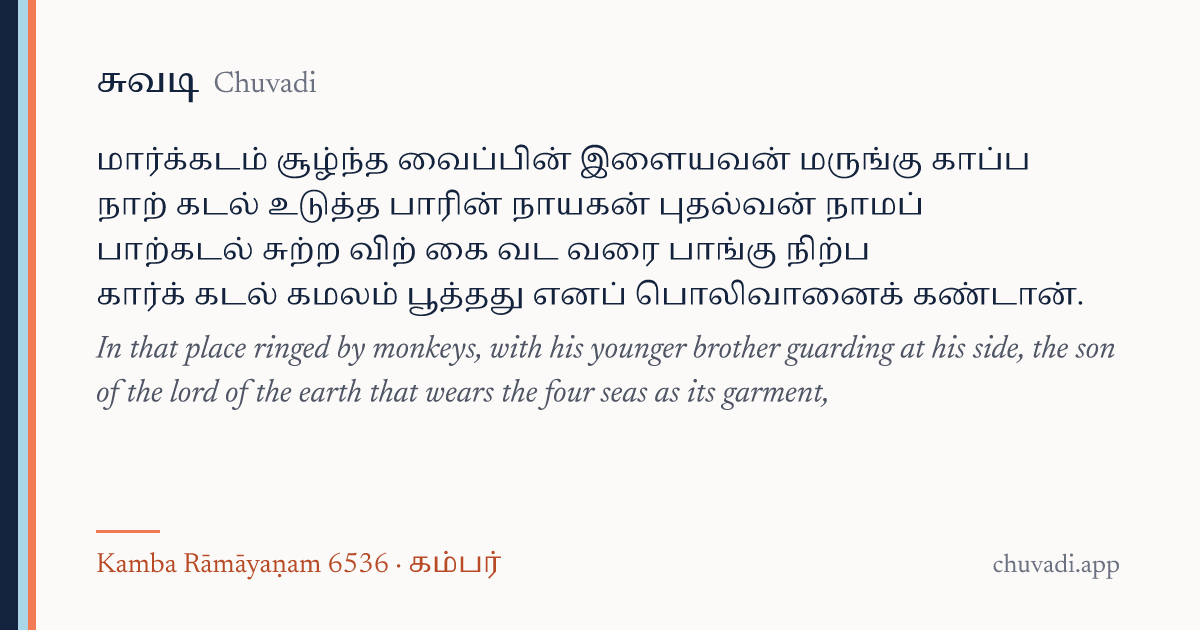
மார்க்கடம் சூழ்ந்த வைப்பின் - வானரவீரர்கள் சூழ்ந்து நின்ற இடத்தில்; இளையவன் மருங்கு காப்ப - இளையவனாகிய இலக்குவன் பக்கத்திலே நின்று பாதுகாக்க; நாற்கடல் உடுத்த பாரின் நாயகன் புதல்வன் - நான்கு கடல்களாலும் சூழப்பட்ட உலகத்தின் மன்னனான தயரதனது புதல்வனாகிய இராமபிரான்; நாமப் பாற்கடல் சுற்ற - புகழ்மிக்க பாற்கடல் தன்னைச் சூழ்ந்திருக்க; விற்கை வடவரை பாங்கு நிற்ப - வில்லைத்தாங்கிய கையை உடைய மேருமலை பக்கத்திலே நிற்க; கார்க்கடல் கமலம் பூத்ததென - கரிய நிறக்கடல் ஒன்று, தாமரை மலர்கள் மேலே மலர்ந்திருந்தது போல; பொலிவானைக் கண்டான் - பொலிந்து விளங்கும் இராமபிரானை வீடணன் பார்த்தான்.
மற்கடம் - வானரம். இங்கு எதுகை நோக்கி 'மார்க்கடம்' என வந்தது. வெண்மை நிறம் வாய்ந்த வானரங்கள் இராமபிரானைச் சூழ்ந்து நிற்பது பாற்கடல் சூழ்ந்திருப்பதைப் போன்றிருக்தெது. வில்லேந்திக் காத்து நிற்கும் பொன்மேனியனான இலக்குவன் நிற்பது பொன்மலை நிற்பது போலத் தோன்றுகிறது. கருமை நிறமான கடல் ஒன்று. இடையிடையே தாமரை மலர்ந்திருக்கக் காணப்படுவது போல இராமபிரான் இடையே பொலிந்து காட்சி தர வீடணன் கண்டான் என்பது கருத்து. 'கண்ணும், திருவாயும் கையும் செய்ய கரியவனை' என்ற சிலப்பதிகார வரியும், கரம், கண், கை, கால் செய்யானை' என்ற அஷ்டபிரபந்தப்பாட்டும் நினைவு கூரத்தக்கது. இப்பாட்டு அழகானதொரு எழுத்தோவியமாகப் பொலிந்து விளங்குகிறது. நாமம் - புகழ்.
ஆங்கிலம் · English translationAI
Translation
- In that place ringed by monkeys, with his younger brother guarding at his side,
- the son of the lord of the earth that wears the four seas as its garment,
- with a famed ocean of milk around him and a northern mountain, bow in hand, standing beside him,
- shining like a dark sea that has burst into lotus bloom — him Vīṭaṇaṉ saw.
What the poem says
Vīṭaṇaṉ's first sight of Irāmaṉ is painted as a picture. Irāmaṉ, son of Tacarataṉ, sits ringed by pale monkeys, who look like the Ocean of Milk around him. Beside him stands golden Ilakkuvaṉ with his bow, like Mount Mēru.
Irāmaṉ himself, dark-bodied with red lotus-like eyes, hands and feet, looks like a dark sea in which lotuses have bloomed. The commentary recalls similar images in the Cilappatikāram and later devotional poetry.