



கம்பராமாயணம் 655 · பால 10.103
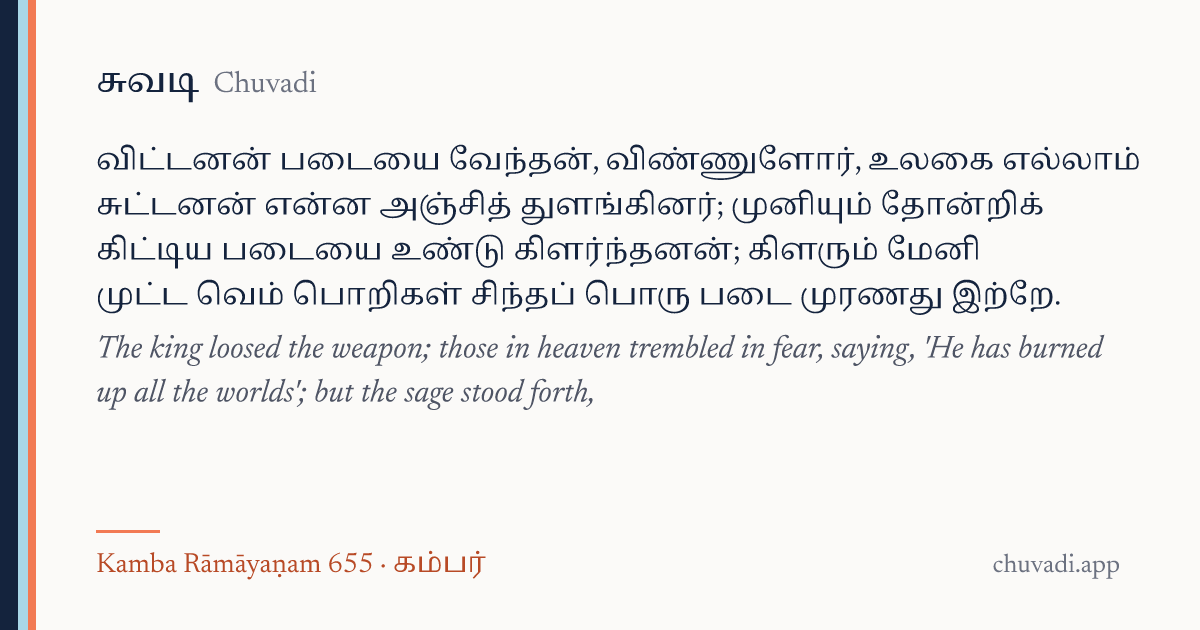
பாடல் · The poem
Tap a word to see its gloss in the commentary and where else it occurs.
பொருள் · Meaning in Tamil
வேந்தன் - விசுவாமித்திரன்; படையை - அந்தப் படையை; விட்டனன் - (வசிட்டன்மேல்) ஏவினான்; விண் உளோர் - (அதனைக் கண்ட) தேவர்களும் (இப்படையால்); உலகை எல்லாம் - எல்லா உலகையும்; சுட்டனன் என்ன - எரித்தவன் இவன் என்று; அஞ்சித் துளங்கினர் - பயந்து நடுங்கினார்கள் (ஆயினும்), முனியும் - வசிட்ட முனிவனும்; தோன்றி - எதிரில் வந்து; கிட்டிய படையை - நெருங்கிய அந்த உருத்திரப் படையை, உண்டு - (தானே) உட்கொண்டு; கிளரும் மேனி - (அந்த அத்திர நெருப்பால்) பொலிகின்ற; முட்ட வெம்பொறிகள் - தன் உடம்பிலிருந்து வெப்பமான நெருப்புப் பொறிகள்; சிந்த - வெளிப்பட; கிளர்ந்தனன் - (தன்னைத் தாக்கிய அப்படையின் வலிமை அழியுமாறு செய்து) ஆற்றலால் பொலிவுற்று நின்றான்; பொருபடை முரண் அது - போர் செய்து அழிப்பதற்குரிய உருத்திரப் படையின் அவ்வலிமை; இற்று - (வசிட்டனிடம்) இப்படி ஆயிற்று.
சுட்டனன் - தெளிவு குறித்த கால வழுவமைதி.
ஆங்கிலம் · English translationAI
Translation
- The king loosed the weapon; those in heaven trembled in fear,
- saying, 'He has burned up all the worlds'; but the sage stood forth,
- swallowed the weapon as it came near, and blazed up, so that from his glowing body
- hot sparks scattered everywhere — such was the fate of that warring weapon's might.
What the poem says
Kaucikaṉ hurls Śiva's weapon at Vaciṭṭaṉ, and the gods quake, so certain are they that it will burn up every world. But the sage steps forward, swallows the weapon whole and stands radiant, sparks of fire flying from his body. That was all the great weapon could achieve against him.
The commentary notes that "he has burned" uses the past tense for a future event to express certainty.