



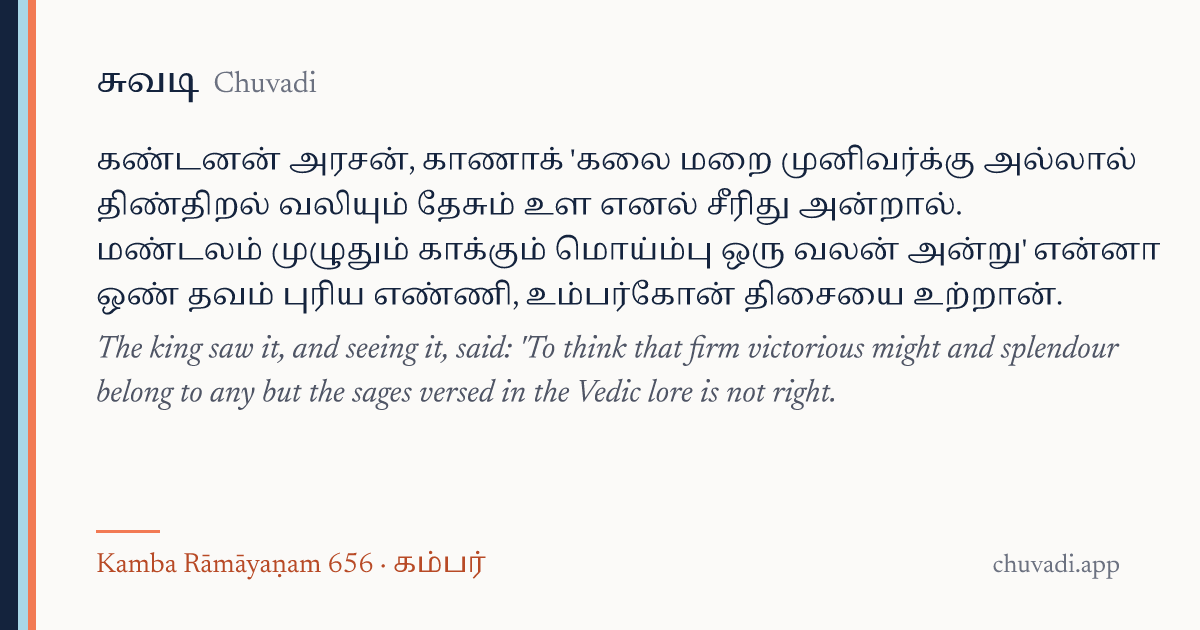
கம்பராமாயணம் 656 · பால 10.104
பாடல் · The poem
Tap a word to see its gloss in the commentary and where else it occurs.
பாட வேறுபாடு · Project Madurai reads
பொருள் · Meaning in Tamil
(தான் விட்ட உருத்திரப் படை செயலற்றதை) அரசன் - இந்தக் கௌசிகன்; கண்டனன் - பார்த்தான்; காணா - (அவ்வாறு) பார்த்து; திண்திறல் வலியும் - உறுதியான வெற்றியும் வலிமையும்; தேசும் - ஒளியும்; கலை மறை - வேதக் கலைகளை அறிந்த; முனிவர்க்கு அல்லால் - முனிவர்களுக்கு மாத்திரம் அல்லாமல்; உள எனல் - (பிறர்க்கு) உள்ளன என்று கருதுதல்; சீரிது அன்று - சிறப்பானது அல்ல; மண்டலம் முழுதும் - உலகம் முழுவதையும்; காக்கும் மொய்ம்பு - அரசாளும் வலிமை; ஒரு வலி அன்று - (முனிவர் வலிமைக்கு முன்) ஒரு வலிமையாக மாட்டாது; என்னா - என்று உறுதியாக அறிந்து; ஒள்தவம் புரிய எண்ணி - சிறந்த தவத்தைச் செய்ய நினைத்து; உம்பர்கோன் - தேவேந்திரனது; திசையை உற்றான் - திசையான கிழக்குத் திக்கை அடைந்தான்.
அரசர் ஆற்றலைவிட முனிவர் ஆற்றலே சிறப்புடையது என்பதை அறிந்த கௌசிகன் அதைப் பெறக் கருதித் தவம் செய்யச் சென்றான். திறல் - வெற்றி; திறல் வலி - வெற்றிக்குக் காரணமான வலிமை.
ஆங்கிலம் · English translationAI
Translation
- The king saw it, and seeing it, said: 'To think that firm victorious might and splendour
- belong to any but the sages versed in the Vedic lore is not right.
- The strength that guards the whole earth is no strength at all.'
- Resolving to perform bright penance, he went to the quarter of the lord of the gods.
What the poem says
Seeing his greatest weapon fail, Kaucikaṉ concludes that real power and glory belong only to sages learned in the Vedas; the might of a king who rules the whole world counts for nothing beside it. He decides to win that power through austerity and goes to the east, the quarter ruled by Indra, to perform penance.