



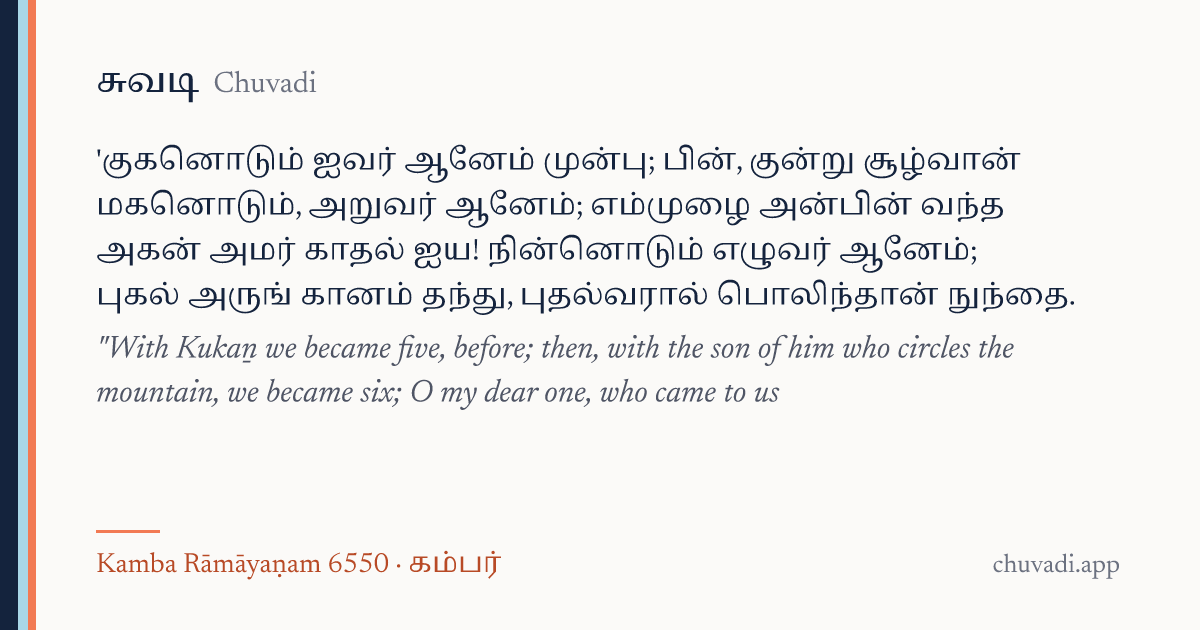
கம்பராமாயணம் 6550 · யுத்த 4.144
பாடல் · The poem
Tap a word to see its gloss in the commentary and where else it occurs.
பொருள் · Meaning in Tamil
குகனொடும் ஐவர் ஆனேம் முன்பு - குகனுடன் சேர்த்து நாங்கள் ஐந்து பேர் சகோதரர்கள் ஆனோம் இது முன்பு நிகழ்ந்தது; பின் குன்று சூழ்வான் மகனொடும் - அதன் பின் மேருமலையைச்சுற்றிவரும் சூரியனது மகனான சுக்கிரீவனுடன்; அறுவர் ஆனேம் - சகோதரர் ஆறுபேர் ஆயினோம்; எம்முழை அன்பின் வந்த அகன் அமர் காதல் ஐய - எங்களிடம் அன்பு கொண்டு வந்த உள்ளத்திலே நிறைந்த அன்புடையவனே; நின்னொடும் எழுவர்ஆனேம் - உன்னுடன் சேர்த்து சகோதரர்கள் ஏழுபேர் ஆயினோம்; புகல் அரும் கானம்தந்து - எவரும் புகுதற்கரிய கானக வாழ்வை எனக்குத் தந்து; நுந்தை புதல்வரால் பொலிந்தான் - உனது தந்தையாகிய தயரதன் புதல்வர்களால் நிறைவு பெற்றுவிட்டான்.
உன்னுடன் சேர்ந்து நாம் ஏழுபேர் ஆய்விட்டோம். தந்தை என்று கூறாமல் தயரதனை உனதுதந்தை என்று பொருள் பெற 'நுந்தை' என்றது நோக்கத்தக்கது. எனக்குக் கானக வாழ்வைத் தந்து மேலும் மூன்று புதல்வர்களை உன் தந்தை பெற்றுப் பொலிந்தார் என்பதை 'புதல்வரால் பொலிந்தான் நுந்தை' என்று கூறிய நயம் நோக்கத்தக்கது. அகனமர் காதல் - மனமார்ந்த நேயம்.
ஆங்கிலம் · English translationAI
Translation
- "With Kukaṉ we became five, before; then, with the son
- of him who circles the mountain, we became six; O my dear one, who came to us
- with love that fills the heart, with you we have become seven;
- by giving me this forest, so hard to enter, your father has been blessed with sons."
What the poem says
Irāmaṉ embraces Vīṭaṇaṉ as a brother. The four sons of Tacarataṉ became five when Irāmaṉ adopted the boatman Kukaṉ as a brother on his way into exile, six with Cukkirīvaṉ, son of the Sun who circles Mount Mēru, and now seven with Vīṭaṇaṉ.
He ends with gentle irony. By sending Irāmaṉ into the harsh forest, Tacarataṉ, "your father" as he calls him, has gained three more sons.