



கம்பராமாயணம் 6554 · யுத்த 4.148
பாடல் · The poem
Tap a word to see its gloss in the commentary and where else it occurs.
பாட வேறுபாடு · Project Madurai reads
பொருள் · Meaning in Tamil
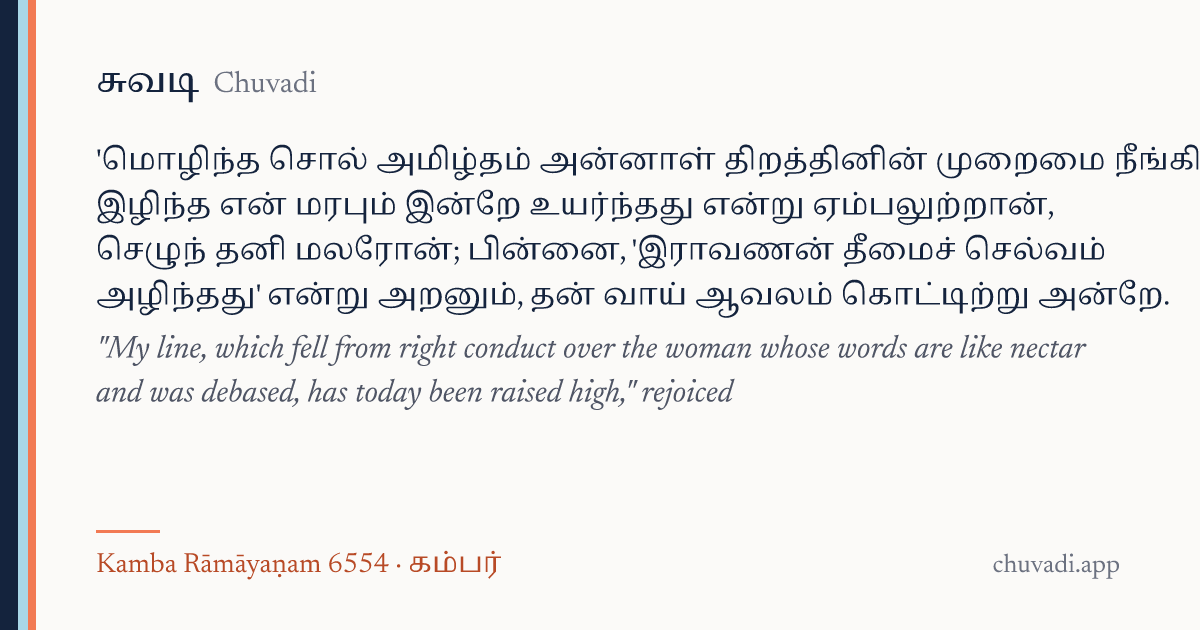
செழும் தனி மலரோன் - செழிப்பான சிறந்த தாமரை மலரில் வீற்றிருக்கும் பிரமதேவன்; மொழிந்த சொல் அமுதமன்னாள் திறத்தினில் - அமுதம் போன்ற மொழிகளைப் பேசும் சீதாபிராட்டி காரணமாக; முறைமை நீங்கி - அற நெறியிலிருந்து நீங்கி; இழிந்த என் மரபும் - தாழ்ந்து விட்ட எனது குலமும்; இன்றே உயர்ந்தது - இன்று இழிவு தீர்ந்து உயர்வடைந்தது; என்று ஏம்பலுற்றான் - என மகிழ்வடைந்தான்; பின்னை, இராவணன் தீமைச் செல்வம் - பின்பு, இராவணனுடைய தீமையான செல்வம்; அழிந்தது என்று - இன்றோடு அழிந்து தீர்ந்தது என்று; அறனும் தன்வாய் ஆவலம் கொட்டிற்றன்றே - அறக்கடவுளும் தனது வாயால் ஆரவாரம் செய்தது.
மலரோன் - பிரமன். 'ஏம்பலுற்றான்' என்பதற்கு 'இடரின் தீர்ந்தான்' என்ற பாடமும் பொருந்துவதே. அறன் - அறம் (தருமதேவதை). ஆவலம் கொட்டல் - ஆரவாரித்தல்.
ஆங்கிலம் · English translationAI
Translation
- "My line, which fell from right conduct over the woman whose words are like nectar
- and was debased, has today been raised high," rejoiced
- the one of the rich, peerless lotus; and then, crying, "Irāvaṇaṉ's evil fortune
- is destroyed," Dharma too clapped its mouth in jubilation.
What the poem says
Brahmā, who sits on the lotus, rejoices because Irāvaṇaṉ and Vīṭaṇaṉ are his descendants, through the sage Pulastya. Irāvaṇaṉ's abduction of Cītai had shamed the family, but Vīṭaṇaṉ's virtue restores its honour.
Dharma, the god of righteousness, also exults, since Irāvaṇaṉ's wicked prosperity is now doomed. "Clapping the mouth" is a traditional gesture of loud celebration.