



கம்பராமாயணம் 6576 · யுத்த 5.18
பாடல் · The poem
Tap a word to see its gloss in the commentary and where else it occurs.
பாட வேறுபாடு · Project Madurai reads
பொருள் · Meaning in Tamil
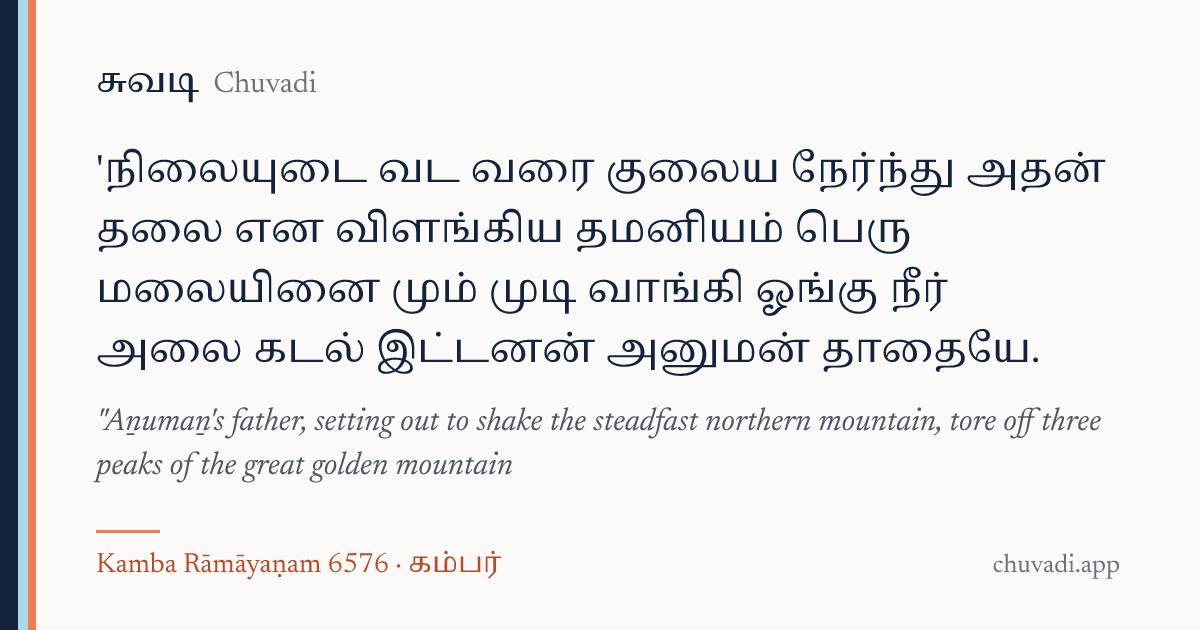
அனுமன்தாதை - அனுமானுடைய தந்தையாகிய வாயுதேவன் (காற்று), நிலையுடைவடவரை - நிலைத்ததன்மை கொண்ட வடமேருமலையை; குலைய நேர்ந்து - நிலைகுலைந்து சிதையும்படி செய்ய நினைத்து; அதன் தலை என விளங்கிய - அந்தவடமலையின் முடி என்று திகழ்ந்த; தமனியப் பெருமலையினை - பொன்மயமான பெரிய மேரு மலையை, மும்முடிவாங்கி - மூன்று சிகரங்களைப் பறித்து வாங்கி; ஓங்கு நீர் அலைகடல் இட்டனன் - நிறைந்த நீரையுடைய கடலிலே இட்டான்.
வடவரை - வடமேருமலை. தமனியம் - பொன். மும்முடி - மூன்று சிகரங்கள். வாயுவுக்கும், ஆதி சேடனுக்கும் இடையே நிகழ்ந்த பலப் போட்டியில் ஆதி சேடன் தனது ஆயிரம் பணா மகுடங்களாலும் மேருமலையின் ஆயிரம் சிகரங்களையும் மூடிக் கவித்துக் கொண்டான். வாயு தேவன் அம்மலையின் மூன்று சிகரங்களைத் தனது வலிமையால் பறித்துக் கடலில் இட்டான். அந்த மலையே 'திரிகூடமலை'. இலங்கை தோன்றிய வரலாறு இது. வாயுதேவன் என்று கூறாது அனுமன் தாதை' என்றது, அனுமனுடைய ஆற்றலால் இலங்கை எரியுண்டதை நினைவு கூர்ந்ததாகும்.
ஆங்கிலம் · English translationAI
Translation
- "Aṉumaṉ's father, setting out to shake the steadfast northern mountain,
- tore off three peaks of the great golden mountain
- that shone like its head,
- and threw them into the surging, wave-tossed sea."
What the poem says
Vīṭaṇaṉ begins with the origin of Ilaṅkai. In a contest of strength between the Wind god and the serpent Ādiśeṣa, the serpent covered the peaks of golden Mount Mēru with his thousand hoods. The Wind wrenched away three peaks and flung them into the ocean.
Those three peaks became Mount Trikūṭa, on which Ilaṅkai stands. Calling the Wind "Aṉumaṉ's father" recalls that his son has already set that city on fire.