



கம்பராமாயணம் 658 · பால 10.106
பாடல் · The poem
Tap a word to see its gloss in the commentary and where else it occurs.
பாட வேறுபாடு · Project Madurai reads
பொருள் · Meaning in Tamil
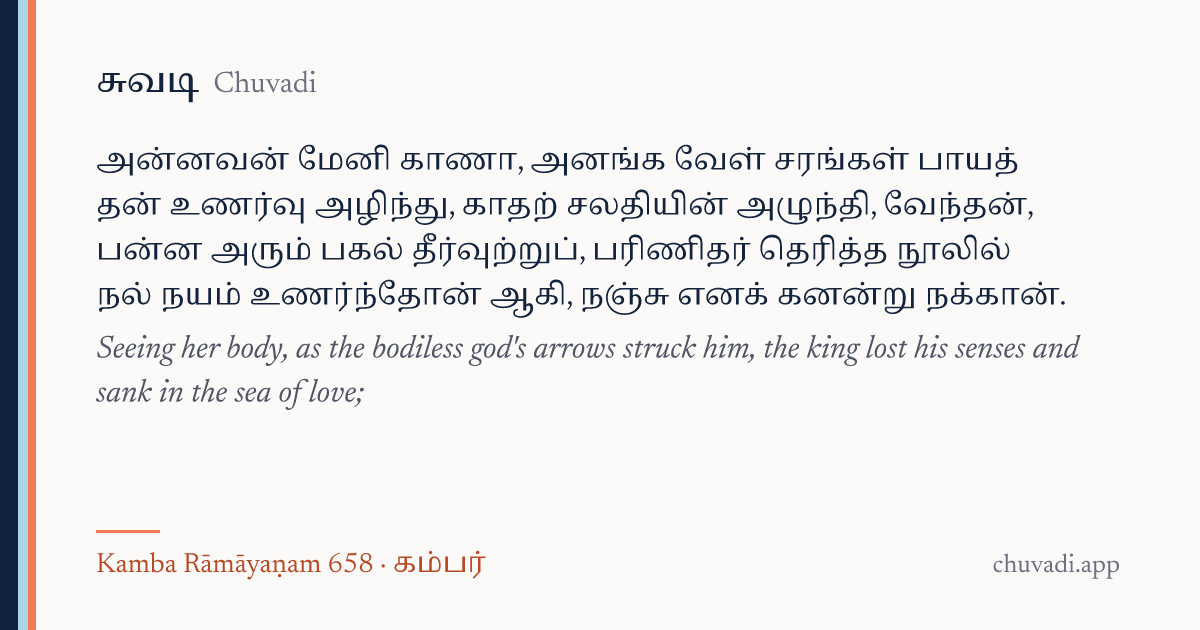
வேந்தன் - அரசனான கௌசிகன்; அன்னவள் மேனி காணா - திலோத்தமையின் மேனியழகைக் கண்டு; அனங்க வேள் - மன்மதனுடைய; சரங்கள் பாய - அம்புகள் (தன்மேல்) பட்டுத் தைத்தலால்; தன் உணர்வு அழிந்து - நல்லறிவு கெட்டு; காதல் சலதியின் அழுந்தி - அவளது காமக் கடலிலே மூழ்கி; பன்னரும் பகல் தீர்வுற்று - சொல்ல முடியாத பல நாட்கள் அதிலே கழியப் பெற்று; பரிணிதர் தெரிந்த நூலின் - (பின்பு) நல்லறிஞர் ஆராய்ந்து கூறின கலைகளின்; நல் நயம் உணர்ந்தோன் ஆகி - சிறந்த பொருள்களை உணர்ந்தவனாகி; நஞ்சு எனக் கனன்று - (அச்சிற்றின்பத்தை) நஞ்சுபோல் வெறுத்து; நக்கான் - நகைத்தான்.
தனது தவம் குலையக் காரணமான திலோத்தமையை எண்ணிச் சினமும் தனது செய்கையில் வெறுப்பும் கொண்டு கௌசிகன் சிரித்தான். சிரித்தற்குக் காரணம் - செய்யக் கூடாத ஒழுக்கத்தைச் செய்து விட்டதால். பரிணிதர் - அறிவின் பக்குவம் முதிர்ந்தவர்.
ஆங்கிலம் · English translationAI
Translation
- Seeing her body, as the bodiless god's arrows struck him,
- the king lost his senses and sank in the sea of love;
- countless days passed; then, grasping the true sense
- of the books the wise have set out, he blazed as at poison, and laughed.
What the poem says
Kaucikaṉ sees Tilōttamai, is struck by the arrows of the bodiless love god, and loses himself in passion for days beyond counting. At last he comes to his senses, recalls the teachings of the wise, and burns with anger at the pleasure that has poisoned his penance. He laughs — a bitter laugh at himself for having done what he should not, and at the woman who caused his fall.