



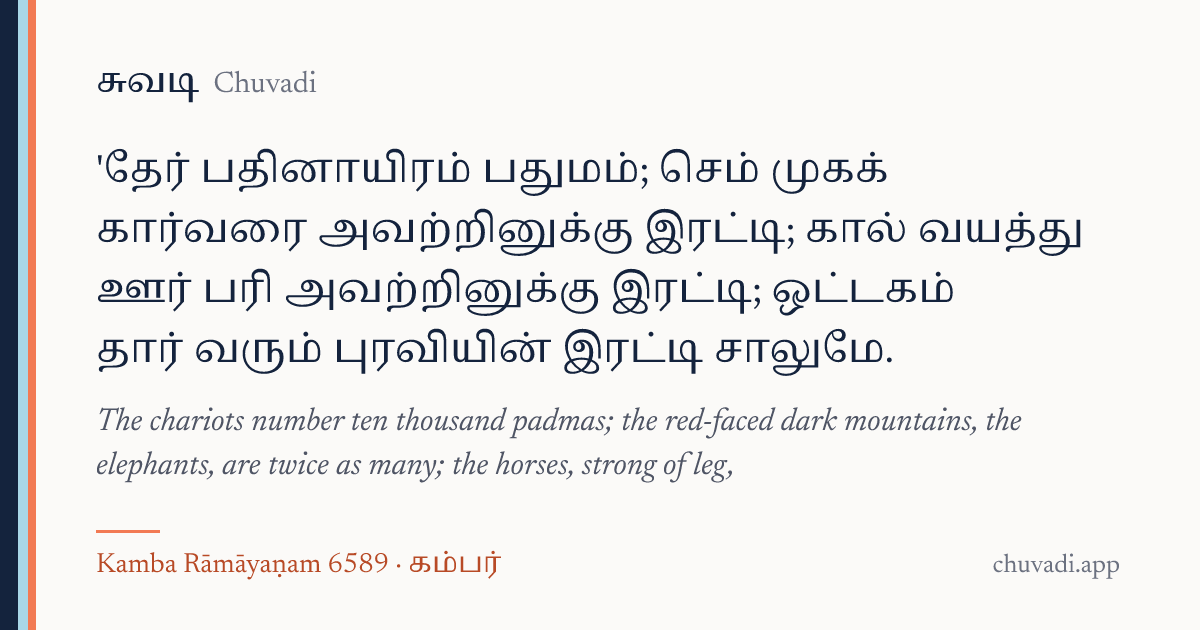
கம்பராமாயணம் 6589 · யுத்த 5.31
பாடல் · The poem
Tap a word to see its gloss in the commentary and where else it occurs.
பொருள் · Meaning in Tamil
தேர் பதினாயிரம் பதுமம் - இராவணனது படையிலுள்ள தேர்கள் பதினாயிரம் பதுமமாகும், செம்முகக் கார் வரை அவற்றினுக்கு இரட்டி - சிவந்த புள்ளிகளைக் கொண்டமுகத்தையுடைய கரிய மலைபோன்ற யானைகளின் எண்ணிக்கை தேர்ப் படையிலும் இரண்டு மடங்கு (இருபதாயிரம் பதுமம்); கால் வயத்து ஊர் பரி - கால்கள் வலியனவாய் ஏறிச் செல்லப் பயன்படும் குதிரைகள்; அவற்றினுக்கு இரட்டி - யானைப்படையை விட இரண்டுமடங்கு (நாற்பதாயிரம் பதுமம்); ஒட்டகம் தார்வரு புரவியின் - ஒட்டகப் படை, மாலை யணிந்த குதிரைப் படையை விட; இரட்டி சாலுமே - இரண்டு மடங்கு நிறைந்ததாயிருக்கும் (எண்பதாயிரம் பதுமம்),
'பதுமம்' என்பது ஒரு பேரெண்; கோடிக்கு மேற்பட்டது என்பர் சிவந்த - செம்புள்ளி வாய்ந்த முகத்தையுடைய யானைகள் கரிய மலை போன்ற வடிவுடையன வாதலின் 'செம்முகக் கார்வரை' எனப்பட்டது. தேர் கரி, பரி என்பதோடு காலாட்படை கூற வேண்டியிருக்க, அதனைக் கூறாது ஒட்டகப் படையைக் கூறியது கடற் கரை மணலில் நடக்க வல்லன வாதல் பற்றிப் போலும்.
ஆங்கிலம் · English translationAI
Translation
- The chariots number ten thousand padmas; the red-faced
- dark mountains, the elephants, are twice as many; the horses, strong of leg,
- that men ride, are twice as many again; and the camels
- are fully twice the garlanded horses.
What the poem says
Vīṭaṇaṉ now counts Irāvaṇaṉ's army: ten thousand padmas of chariots, twice that of elephants, twice that again of horses, and twice that again of camels. A padma is a huge number, said to be far beyond a crore.
The elephants are 'dark mountains with red faces' because of the reddish spots on their faces. The commentary notes that instead of the usual fourth arm, the foot-soldiers, the poet names camels, perhaps because they can march on the sandy seashore.