



கம்பராமாயணம் 660 · பால 10.108
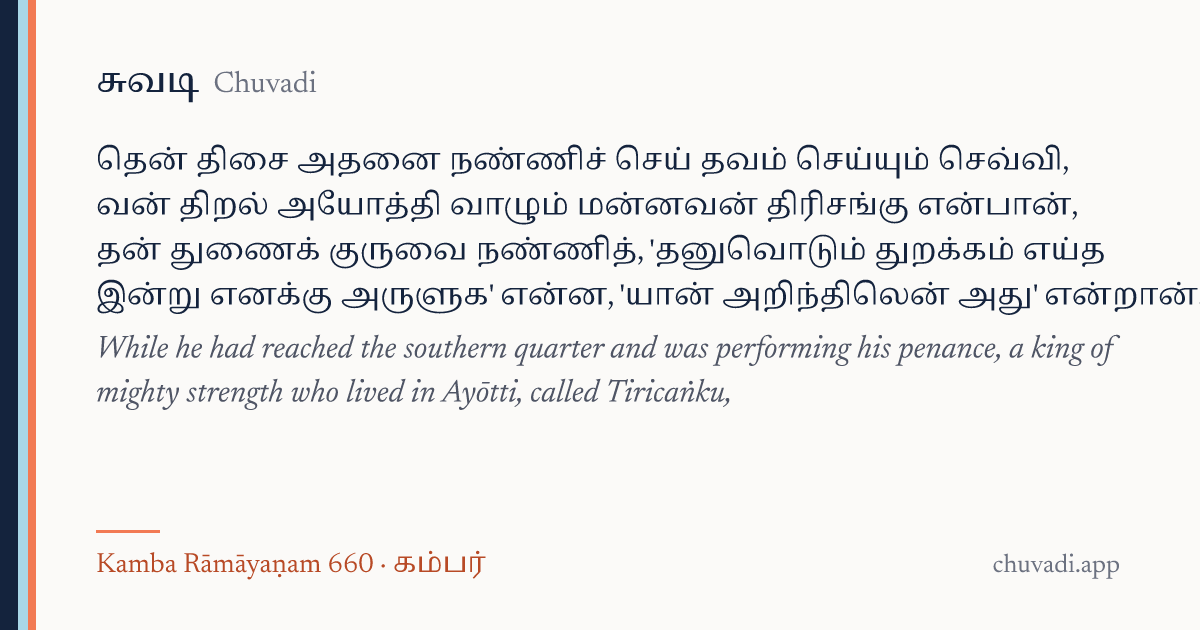
பாடல் · The poem
Tap a word to see its gloss in the commentary and where else it occurs.
பாட வேறுபாடு · Project Madurai reads
பொருள் · Meaning in Tamil
(இவ்வாறு கௌசிகன்) தென்திசை அதனை - தெற்குத் திக்கை; நண்ணி - அடைந்து; செய்தவம் செய்யும் செவ்வி - செய்ய வேண்டிய தவத்தை நடத்தும் பொழுது; வன்திறல் அயோத்தி வாழும் - அயோத்தி நகரில் வாழுகின்ற மிக்க வலியனான; மன்னவன் திரிசங்கு என்பான் - திரிசங்கு என்னும் மன்னவன்; தன் துணைக் குருவை நண்ணி - தனக்குத் துணை நிற்கும் குலகுருவான வசிட்டனிடம் சென்று; தனுவொடும் துறக்கம் எய்த - இந்தப் பூத உடம்போடு சுவர்க்கம் அடையும்படி; இன்று எனக்கு அருளுக - இப்போது எனக்கு அருள் செய்வாயாக; என்ன - என்று வேண்ட; யான் - (வசிட்டன்) நான்; அது அறிந்திலன் - இந்த உடலோடு துறக்கம் செலுத்தவல்ல செயலை அறிய வில்லை; என்றான் - என்று (அவன் வேண்டுகோளை) மறுத்துக் கூறினான்.
திரிசங்கு: இவனது இயற்பெயர் சத்தியவிரதன். இவ்வேந்தன் தன் தந்தை சொல்லையும் மீறி மறையவர் கன்னியைக் கவர்ந்தான்; குருவான வசிட்டனது பசுவைக் கொன்றான்; நீர் தெளித்துப் புனிதமாக்கப்படாத ஊனை உண்டான். இம்மூன்று குற்றங்களையுடையவனாதலால் 'திரிசங்கு' எனப் பெயர் பெற்றான். இவனே அரிச்சந்திரன் தந்தை என்பர்.
ஆங்கிலம் · English translationAI
Translation
- While he had reached the southern quarter and was performing his penance,
- a king of mighty strength who lived in Ayōtti, called Tiricaṅku,
- went to his family guru and said, 'Grant me today
- to reach heaven with this body,' and he said, 'I do not know how.'
What the poem says
While Kaucikaṉ is doing penance in the south, King Tiricaṅku of Ayōtti, an ancestor of Irāmaṉ's line, goes to his family preceptor Vaciṭṭaṉ and asks to be sent to heaven in his mortal body. Vaciṭṭaṉ declines, saying he knows no such rite.
The commentary explains that the king's real name was Satyavrata. He was called Triśaṅku, "three sins", for abducting a brahmin's daughter against his father's word, killing Vaciṭṭaṉ's cow, and eating unconsecrated meat. He is said to be the father of Hariścandra.