



கம்பராமாயணம் 661 · பால 10.109
பாடல் · The poem
Tap a word to see its gloss in the commentary and where else it occurs.
பொருள் · Meaning in Tamil
(திரிசங்கு வசிட்டனை நோக்கி) ஐய - தலைவனே!; நினக்கு ஒலாது ஆகின் - (என்னை இவ்வுடம்போடு சொர்க்கம் ஏற்றும் செயல்) உனக்கு முடியாது என்றால்; நீள் நிலத்து - பெரிய இப்பூவுலகில்; யாவரேனும் - எவராயினும்; மனக்கு இனியாரை நாடி - என் மனதுக்கு இசைந்தவரைத் தேடி; யான் வேள்வி வகுப்பல் - (அவரைக் கொண்டு) எண்ணிய யாகத்தை நான் செய்வேன்; என்ன - என்று கூற; (வசிட்டன் கோபங்கொண்டு அவனை நோக்கி); சினம் கொடு திறலோய் - சினமும் கொடிய வலிமையும் உடையவனே; முன்னர்த் தேசிகன் - முன்னோர்களின் குருவினிடம்; பிழைத்து - அபசாரப்பட்டு (அவனை நீக்கி); வேறு ஓர் நினக்கு இதன் - உனக்கு விருப்பமான வேறொரு குருவை; நாடி நின்றாய் - (நீ) தேடி நின்றாய்; (ஆதலால்); நீசன் ஆய் - புலையனாய்; விடுதி - ஆகி விடுவாய்; என்றான் - என்று சபித்தான்.
பரம்பரையான ஆசிரியன் தகுந்தவனாகியிருக்க அவனை அவமதித்து வேறொரு குருவைத் தேடுதல் முறைகேடானது. இதன் - ஹிதன்; நீசன் - சண்டாளன்.
ஆங்கிலம் · English translationAI
Translation
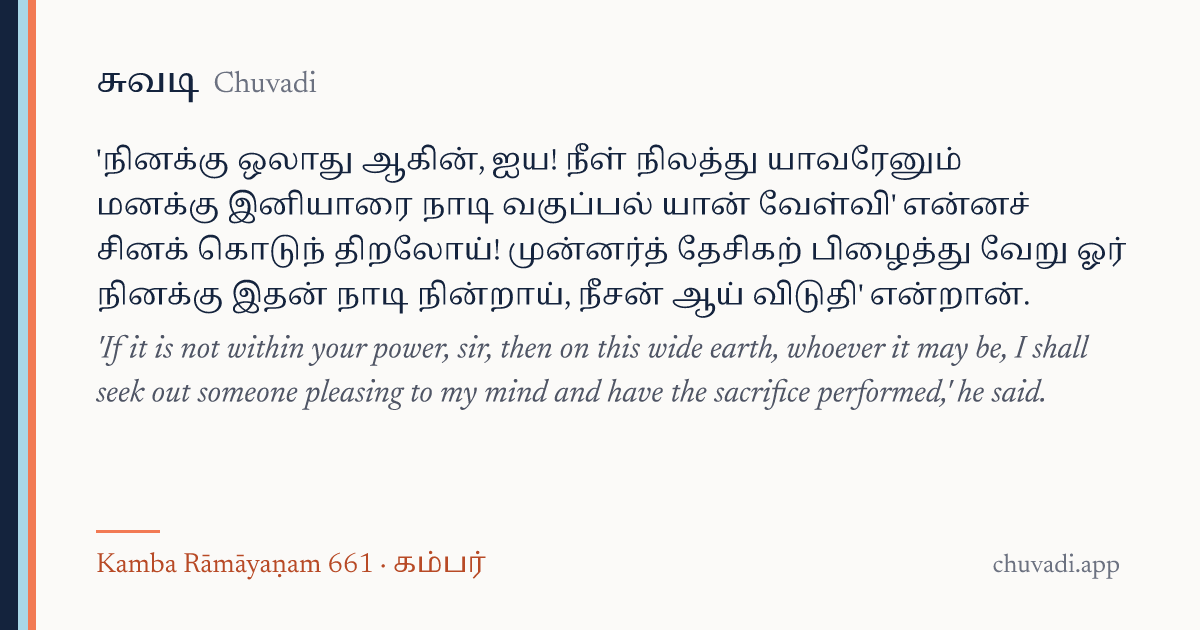
- 'If it is not within your power, sir, then on this wide earth, whoever it may be,
- I shall seek out someone pleasing to my mind and have the sacrifice performed,' he said.
- 'You of wrathful cruel strength! Having wronged your ancestral teacher, you stand
- seeking another who pleases you; you shall become an outcaste,' he said.
What the poem says
Tiricaṅku answers that if Vaciṭṭaṉ cannot do it, he will find someone else on earth more to his liking to perform the sacrifice. Vaciṭṭaṉ, angered that the king would slight his hereditary preceptor and go looking for another, curses him to become a caṇḍāla, an outcaste.