



கம்பராமாயணம் 6614 · யுத்த 5.56
பாடல் · The poem
Tap a word to see its gloss in the commentary and where else it occurs.
பாட வேறுபாடு · Project Madurai reads
பொருள் · Meaning in Tamil
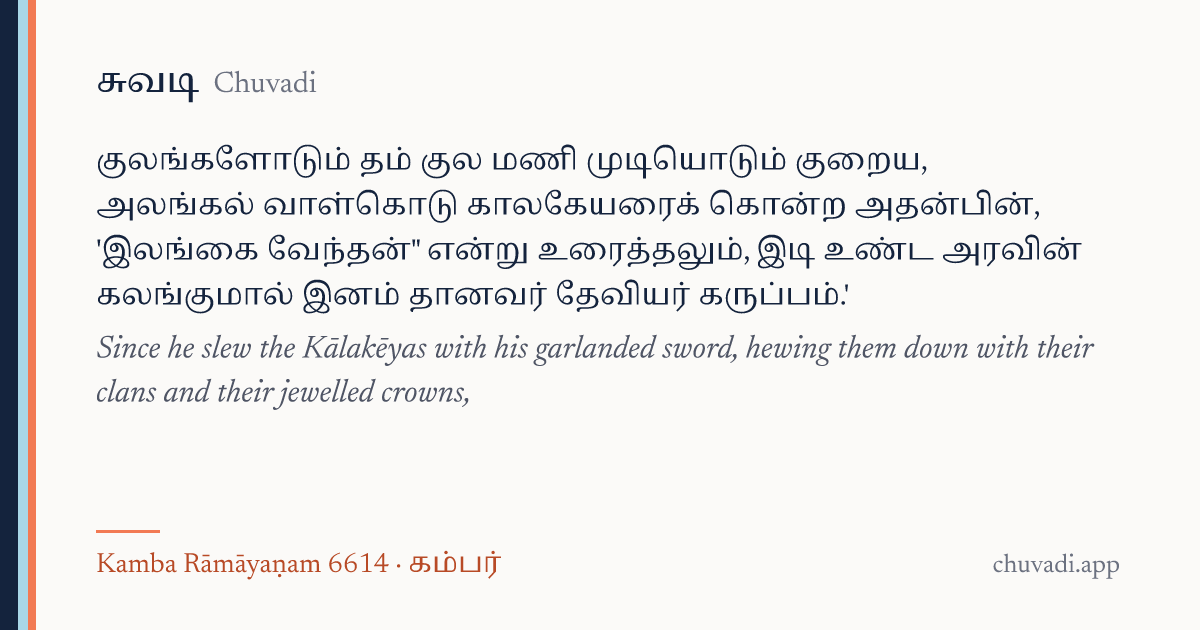
கால கேயரை - இராவணன் கால கேயர்கள் என்னும் தானவர்களை; குலங்களோடும் - அவர்களின் குலமக்களோடு; தம் குலமணிமுடியொடும் குறைய - மணிகள் பதிக்கப் பெற்ற மகுடங்களோடு, தலை குறையும்படி; அலங்கல் வாள் கொடு - வெற்றிமாலை சூட்டியவாளைக் கொண்டு; கொன்ற அதன் பின் - கொன்ற அதற்குப் பிறகும்; இலங்கை வேந்தன் - இலங்காதிபன்; என்று உரைத்தலும் - என்று கூறக் கேட்ட அளவிலே; தானவர் தேவியர் கருப்பம் - தானவர்களது மனைவி மார்களின் கருப்பம்; இடியுண்ட அரவின் - இடியோசை கேட்டு அஞ்சும் பாம்பைப் போல; இனம் கலங்குமால் - இன்னும் கலங்கும்.
இராவணன் கால கேயரை வென்ற செய்தி கூறப்படுகிறது. குல மணி முடி - நல்ல சாதி மணிகளால் அலங்கரிக்கப்பட்ட மகுடம். குறைய - அழிய. 'கொன்ற அதன் பின்' என்பதற்கு கொன்று பல நாட்களாகிய அதன் பின் என்பது பொருள். கால கேயர் தானவர் ஆதலின் தானவர் தேவியர் இடி யோசை கேட்ட நாகம் போல அஞ்சி நடுங்க அந்த அச்சத்தால் அவர்கள் கருப்பம் கலங்கியது இனம் - இன்னும்.
ஆங்கிலம் · English translationAI
Translation
- Since he slew the Kālakēyas with his garlanded sword,
- hewing them down with their clans and their jewelled crowns,
- even now, at the words 'the king of Ilaṅkai',
- the wombs of the Tāṉava women quake like snakes struck by thunder.
What the poem says
Long ago Irāvaṇaṉ slaughtered the Kālakēyas, a race of Tāṉavas (titans), cutting down whole clans along with their jewelled crowns. Even now, long afterwards, the mere mention of 'the king of Ilaṅkai' makes the wives of the Tāṉavas shake with terror, like snakes at a thunderclap, so that the children in their wombs are shaken too. Snakes were traditionally believed to dread thunder.