



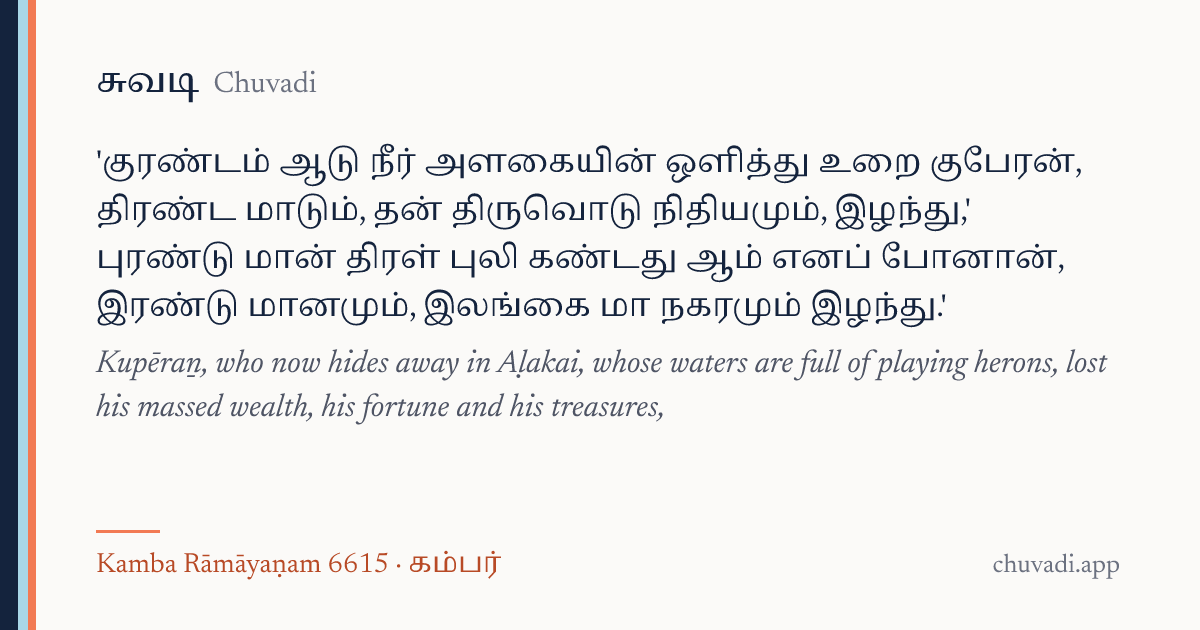
கம்பராமாயணம் 6615 · யுத்த 5.57
பாடல் · The poem
Tap a word to see its gloss in the commentary and where else it occurs.
பொருள் · Meaning in Tamil
குரண்டம் ஆடு நீர் அளகையின் - கொக்குகள் விளையாடித் திரியும் நீர்நிலைகளை உடைய அளகாபுரியில்; ஒளித்து உறை குபேரன் - இராவணனுக்கு அஞ்சி ஒளிந்து வாழ்ந்து கொண்டிருந்த குபேரன்; திரண்டமாடும் தன் திருவொடு நிதியமும் இழந்து - தனக்குரிய திரண்ட செல்வத்தையும் வெற்றித் திருமகளையும், சங்க நிதி, பதுமநிதி என்பவைகளையும் இராவணனிடம் இழந்து போய்; இரண்டு மானமும் இலங்கை மாநகரமும் இழந்து - தன் மானம், விமானம் என்று இரண்டு மானமும், இலங்கை மாநகரத்தையும் இழந்து; மான்திரள் புலிகண்டதாம் என - புலியைக் கண்ட மான் கூட்டம் அஞ்சி ஓடுவது போல; புரண்டு போனான் - இராவணனிடம் தோற்று புரண்டு ஓடிப் போயினான்.
குரண்டம் - கொக்கு. அளகாபுரி குபேரனுடைய நகரம் நீர்நிலைகளில் கொக்குகள் விளையாடி மகிழும் என்பதை 'குரண்டம் ஆடு நீர்அளகை' என்றான். மாடு, செல்வம். நிதி, சங்க நிதி, பதும நிதி என்னுமிரண்டும் குபேரனுக்குரிய அளவற்ற செல்வமாம். தன் மானத்தையும் விமானத்தையும் இழந்து போனான் என்பதை 'இரண்டு மானமும் இழந்து' என்றான். இராவணன் குபேரனை வென்ற செய்தி இங்குக் கூறப்பட்டது.
ஆங்கிலம் · English translationAI
Translation
- Kupēraṉ, who now hides away in Aḷakai, whose waters are full of playing herons,
- lost his massed wealth, his fortune and his treasures,
- and fled tumbling, like a herd of deer that has seen a tiger,
- losing both his 'māṉams', and the great city of Ilaṅkai.
What the poem says
Vīṭaṇaṉ tells how Irāvaṇaṉ defeated Kupēraṉ, the god of wealth, who once ruled Ilaṅkai. Kupēraṉ lost his riches and his two great treasures, the Caṅkanidhi and Padmanidhi, and fled like deer before a tiger to Aḷakāpuri, where he now lives in hiding.
There is a pun: he lost 'both māṉams', his māṉam (honour) and his vimāṉam, the flying chariot Puṣpakam, which Irāvaṇaṉ took from him along with the city.