



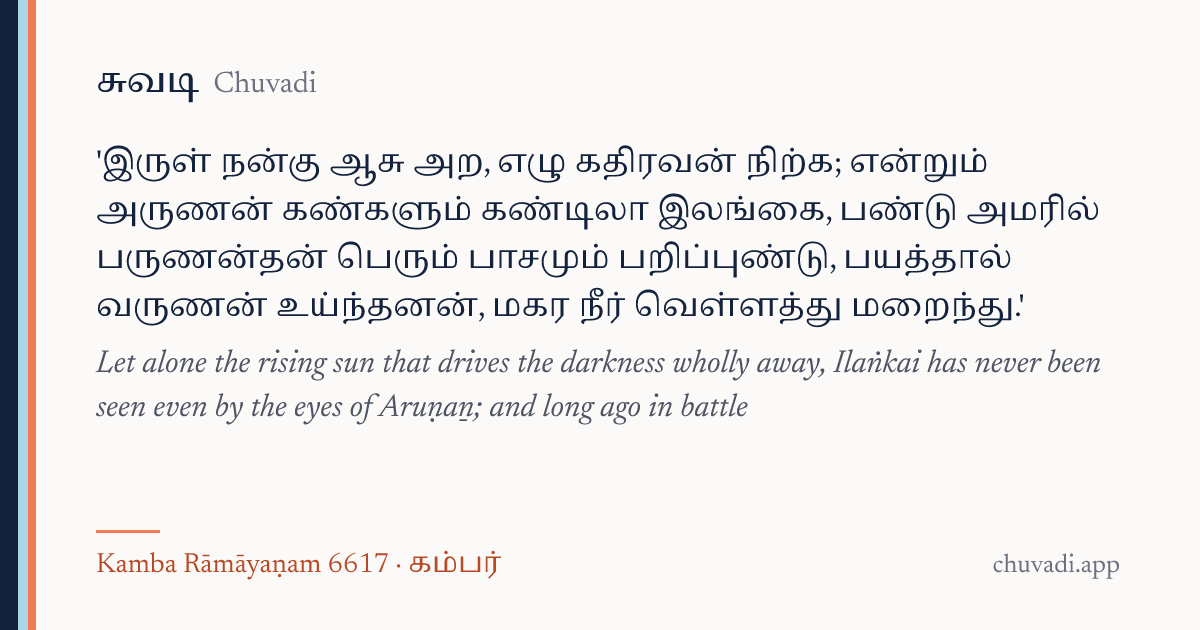
கம்பராமாயணம் 6617 · யுத்த 5.59
பாடல் · The poem
Tap a word to see its gloss in the commentary and where else it occurs.
பாட வேறுபாடு · Project Madurai reads
பொருள் · Meaning in Tamil
இருள் நன்கு ஆசற - இருள் நன்றாக விலகும்படி; எழு கதிரவன் நிற்க - கீழ்த்திசையில் எழும் சூரியன் இருக்கட்டும்; என்றும் அருணன் கண்களும் - சூரியனுடைய தேரில் சாரதியாக முன்னால் அமர்ந்திருக்கும் அருணனது கண்களும் கூட; கண்டிலா இலங்கை - பார்த்திராதது இலங்கை நகர்; பண்டு அமரில் - முன்பு இராவணனுடன் செய்த போரிலே; பருணன்தன் பெரும் பாசமும் பறிப்புண்டு - திறமை உடையவன் என்றாலும் தனது படையாகிய பாசம் பறிக்கப்பட; பயத்தால் - இராவணனைப்பற்றிய அச்சத்தினாலே; மகர நீர் வெள்ளத்து - மகரமீன்களை உடைய கடல் நீரிலே; மறைந்து வருணன் உய்ந்தனன் - மறைந்து வருணன் தப்பிப் பிழைத்தான்.
இராவணன் வருணனை வென்றது கூறப்பட்டுள்ளது. இராவணனுடன் நிகழ்ந்த போரில் தோற்றுத் தனது படையான பாசத்தைப் பறி கொடுத்து விட்டுக் கடலில் சென்று மறைந்தான் வருணன் என்பது கருத்து. பருணன் - திறமுள்ளவன். ஆசற - சிறிதும் இல்லாதபடி.
ஆங்கிலம் · English translationAI
Translation
- Let alone the rising sun that drives the darkness wholly away,
- Ilaṅkai has never been seen even by the eyes of Aruṇaṉ; and long ago in battle
- the skilled one had his great noose torn from him, and in fear
- Varuṇaṉ saved himself by hiding in the flood of the makara-filled sea.
What the poem says
The sun does not dare to shine over Ilaṅkai; not even Aruṇaṉ, the sun's charioteer who rides out in front, has ever set eyes on it.
Vīṭaṇaṉ then tells of Varuṇaṉ, god of the waters: in a battle with Irāvaṇaṉ, capable warrior though he was, he had his weapon, the noose, snatched away, and he escaped only by hiding in the ocean among its sea monsters.