



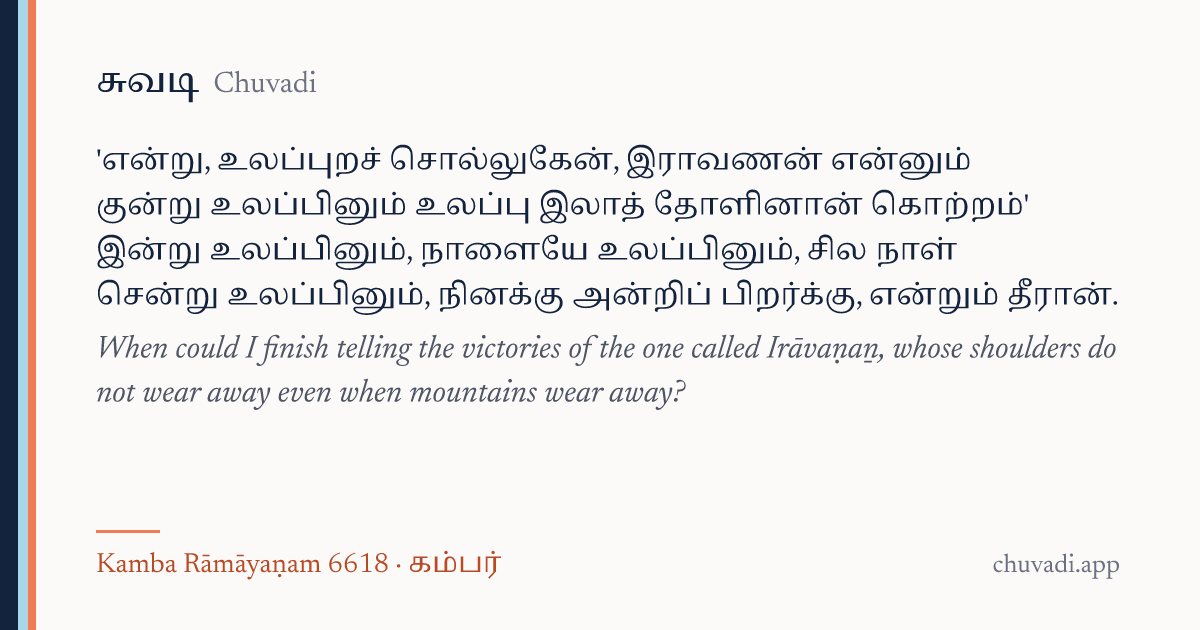
கம்பராமாயணம் 6618 · யுத்த 5.60
பாடல் · The poem
Tap a word to see its gloss in the commentary and where else it occurs.
பொருள் · Meaning in Tamil
இராவணன் என்னும் - இராவணன் என்ற பெயரை உடைய, குன்று உலப்பினும் - மலை அழிந்தாலும்; உலப்பிலாத தோளினான் கொற்றம் - அதனுடன் மாறு கொண்டும் அழியாது தோள்களை உடையவனது வெற்றியை; என்று உலப்புறச் சொல்லுகேன் - என்று நான்முடிவாகச் சொல்லுவேன்; இன்று உலப்பினும் நாளையே உலப்பினும் - இராவணன் இன்று இறப்பான் ஆயினும், நாளையே இறப்பானாயினும், சிலநாள் சென்று உலப்பினும் - அல்லது இன்னும் சில நாட்கள் கழிந்த பின் இறந்தானாயினும், நினக்கு அன்றிப் பிறர்க்கு என்றும் தீரான் - உனக்கு அல்லாமல் வேறு எவருக்கும் அழிந்து தீரான்.
இராவணன் மலையுடன் மோதியதால் மலை அழிந்ததேயன்றித் தோள்கள் அழியவில்லை என்பான் 'உலப்பிலாத தோளினான்' என்றான். பிறர் எவராலும் அழிவில்லாத இராவணன் உன்னால் மட்டுமே கொல்லப்படுபவனாவான் என்பதை 'நினக்கு அன்றிப் பிறர்க்கு என்றும் தீரான்' என்றான். தீரான் - அழியான்.
ஆங்கிலம் · English translationAI
Translation
- When could I finish telling the victories of the one called Irāvaṇaṉ,
- whose shoulders do not wear away even when mountains wear away?
- Whether he ends today, or ends tomorrow, or ends
- after some days have passed, he will never end at anyone's hand but yours.
What the poem says
Vīṭaṇaṉ closes his account of Irāvaṇaṉ: he could never finish listing his victories. When Irāvaṇaṉ's shoulders struck mountains, it was the mountains that crumbled.
Then he turns to Rāmaṉ: whether today, tomorrow or some days hence, Irāvaṇaṉ will die by Rāmaṉ's hand and no one else's. The verse plays on the word 'ulappu', ending, used five times over.