



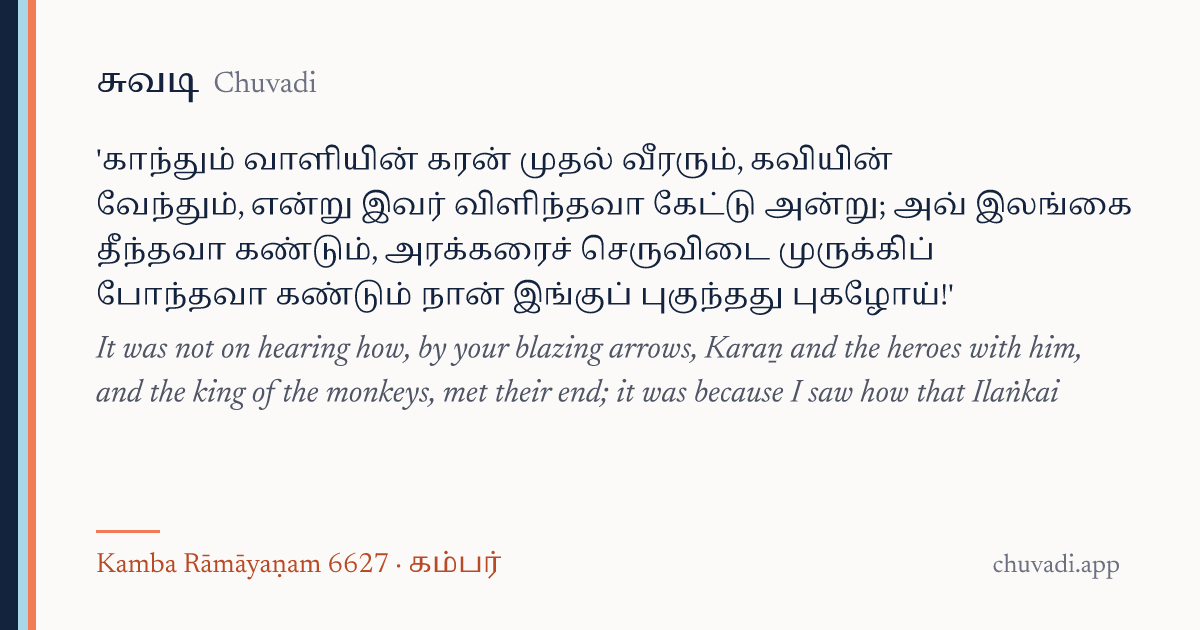
கம்பராமாயணம் 6627 · யுத்த 5.69
பாடல் · The poem
Tap a word to see its gloss in the commentary and where else it occurs.
பாட வேறுபாடு · Project Madurai reads
பொருள் · Meaning in Tamil
புகழோய் - புகழ்மிக்கவனே; நான் இங்குப் புகுந்தது - நான் உன்னைச் சரண்புகுந்து இங்கு வந்தது; காந்தும் வாளியின் - உனது எரிக்கும் அம்புகளால்; கரன்முதல் வீரரும் - கரனும் அவனுக்குத் துணையாக வந்த வீரர்களும்; கவியின் வேந்தும் - வானர சேனையின் அரசனான வாலியும்; என்றிவர் விளிந்தவா கேட்டன்று - ஆகிய இவர்களெல்லாம் மடிந்ததைக் கேட்டதனால் அல்ல; அவ்விலங்கை தீந்தவா கண்டும் - அந்த இலங்கை உன்னருள் பெற்ற அனுமன் ஒருவனாலே அழிந்தது கண்டும்; அரக்கரைச் செருவிடை முருக்கிப் போந்தவா கண்டும் - இலங்கை அரக்கர்களை எல்லாம் போரிலே அனுமன் அழித்துத் திரும்பி வந்ததை நேரில் கண்டதாலுமேயாம்.
இராமபிரான் தனது பண்பாலும் செயலாலும் புகழுக்கு உரியவனாகத் திகழ்வதால் 'புகழோய்' என வீடணன் அழைத்தான். காந்துதல் - எரித்தல் ஒளிர்தலுமாம்.
ஆங்கிலம் · English translationAI
Translation
- It was not on hearing how, by your blazing arrows, Karaṉ and the heroes with him, and the king
- of the monkeys, met their end; it was because I saw how that Ilaṅkai
- burned, and saw how he crushed the demons in battle
- and came away, that I came here, O glorious one!
What the poem says
Vīṭaṇaṉ ends his long account by explaining to Rāmaṉ why he came over to his side. It was not only the reports of Rāmaṉ's arrows killing Karaṉ and his warriors and Vālī, king of the monkeys. It was that he saw with his own eyes what one servant of Rāmaṉ, Aṉumaṉ, did to Ilaṅkai: burning it, crushing its demons, and returning unharmed.