



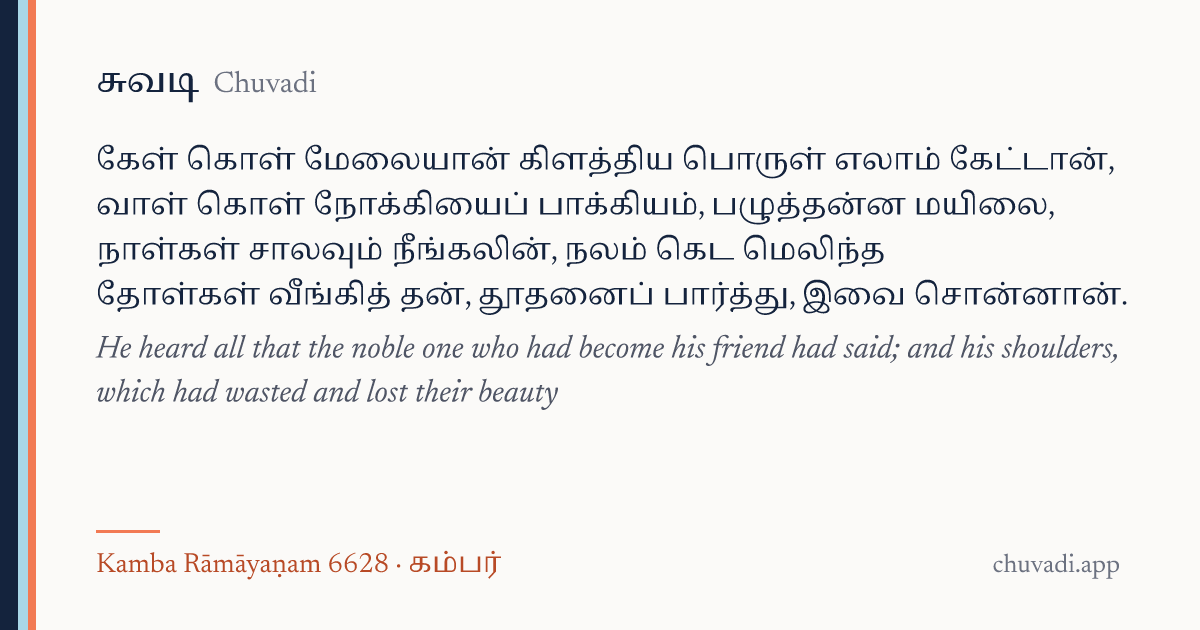
கம்பராமாயணம் 6628 · யுத்த 5.70
பாடல் · The poem
Tap a word to see its gloss in the commentary and where else it occurs.
பாட வேறுபாடு · Project Madurai reads
பொருள் · Meaning in Tamil
கேள் கொள் மேலையான் - தன்னுடன் நட்புக்கொண்ட வீடணன்; கிளத்திய பொருள் எலாம் கேட்டான் - கூறிய பொருள்களை எல்லாம் கேட்ட இராமபிரான்; வாள் கொள் நோக்கியை - வாள் போன்ற கண்களை உடையவளும், பாக்கியம் பழுத்தன்ன மயிலை - புண்ணியம் பழுத்துப் பயன் தந்தது போன்ற மயிலைப் போன்றவரும் ஆகிய சீதாபிராட்டியை; நாள்கள் சாலவும் நீங்கலின் - பல நாட்கள் பிரிந்தமையால்; நலம் கெட மெலிந்த தோள்கள் வீங்கி - அழகு கெட மெலிந்து போன தோள்கள் வீங்கி; தன் தூதனைப் பார்த்து இவை சொன்னான் - தன் தூதனான அனுமானைப் பார்த்துப் பின்வருமாறு கூறலானான்.
கேள், நட்பு. மேலையான் - வீடணன்; மேன்மையுடையவன் (மேலோன்; பொருள் - கருத்து. புண்ணியத்தின் பயனை 'புண்ணியம் பழுத்தன்ன' என்றான். தோள்கள் பிராட்டியின் பிரிவினால் அழகு கெட்டு மெலிந்திருந்தன வாதலின் 'நலம் கெடமெலிந்த தோள்கள்' என்றார். அனுமன் செயல் கேட்டுப் பூரித்த தோள்களை 'வீங்கி' என்றார் வீங்குதல் - பருத்துப் பூரித்தல்.
ஆங்கிலம் · English translationAI
Translation
- He heard all that the noble one who had become his friend had said;
- and his shoulders, which had wasted and lost their beauty
- through the many days of separation from her of the sword-like eyes, the peahen who was fortune ripened,
- swelled; and looking at his messenger, he said these words.
What the poem says
Rāmaṉ has listened to everything his new friend Vīṭaṇaṉ has told him. His shoulders had grown thin and lost their beauty during the long separation from Cītai, called a peahen in whom good fortune has ripened into fruit. Now, hearing of Aṉumaṉ's deeds, they swell with pride and joy, and he turns to Aṉumaṉ to speak.