



கம்பராமாயணம் 6631 · யுத்த 5.73
பாடல் · The poem
Tap a word to see its gloss in the commentary and where else it occurs.
பொருள் · Meaning in Tamil
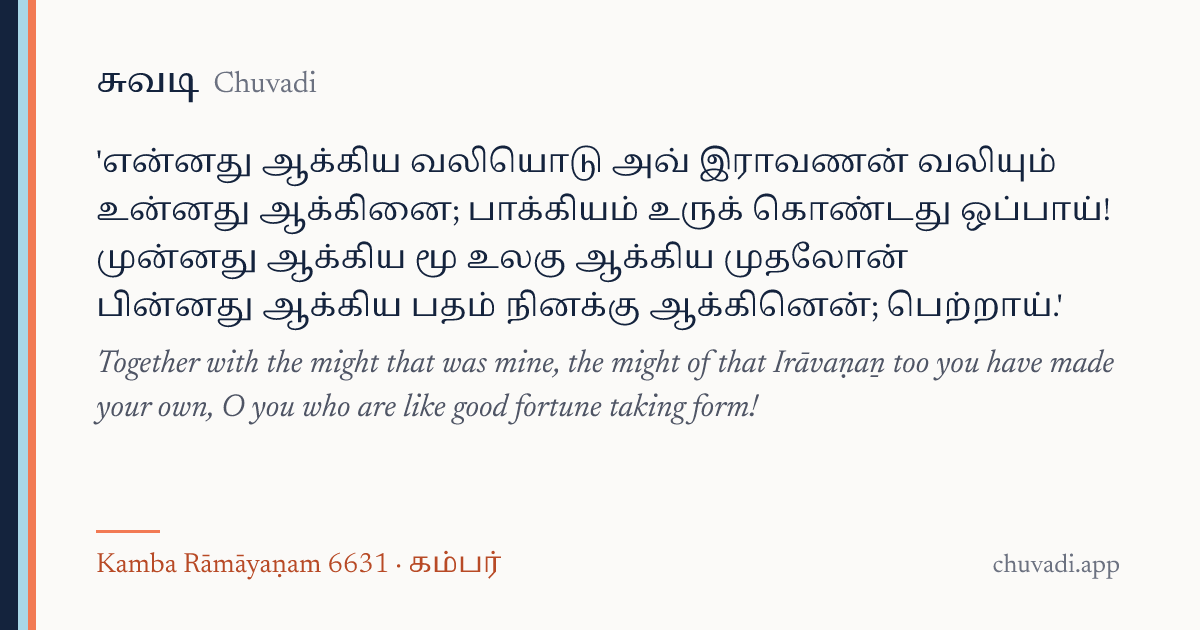
பாக்கியம் உருக் கொண்டது ஒப்பாய் - புண்ணியமே வடிவு கொண்டது போன்றவனே, என்னது ஆக்கியவலியொடு - எனக்கே உரியதான வலிமையோடு; அவ்விராவணன் வலியும் - அந்த இராவணனது வலிமையையும்; உன்னது ஆக்கினை - உனக்கே உரியது ஆக்கிக் கொண்டாய்; முன்னது ஆக்கிய மூவுலகு - முன்னால் படைக்கப்பட்ட மூன்றுலகங்களையும்; ஆக்கிய முதலோன் - படைத்த பிரமதேவனுக்காக; பின்னது ஆக்கிய பெரும் பதம் - ஏற்பட்ட பதவியாகிய பிரமபதத்தை; நின்னது ஆக்கினென் பெற்றாய் - உனக்கு உரியதாக்கினேன்; பெற்று உயர்வாயாக.
கரன், திரிசிரா போன்றவர்களை வெற்றிகொண்ட இராமபிரானது வலிமையை 'என்னதாக்கிய வலி' என்றார் கைலையை எடுத்தது, திக்கு யானைகளை வென்றது போன்ற இராவணனது பலத்தை 'அவ் விராவணன் வலிமையும்' என்றார் இலங்கையைத் தீக்கிரையாக்கியது மற்றும் போர் வென்றது போன்ற அனுமனது வலிமையை 'உன்னதாக்கினை' என்றார் மூவுலகங்களையும் படைத்த முதல்வன் பிரமன். அவனுக்குரிய பதவி பிரமபதம்; அதனை உனக்குத் தந்தேன் பெறுவது உறுதி என்பதால் 'பெற்றாய்' என இறந்த காலத்தால் கூறினார்.
ஆங்கிலம் · English translationAI
Translation
- Together with the might that was mine, the might of that Irāvaṇaṉ too
- you have made your own, O you who are like good fortune taking form!
- The station that was made, after him, for the First One who made the three worlds made long ago,
- I have made yours; you have received it.
What the poem says
Rāmaṉ says Aṉumaṉ has taken for himself both Rāmaṉ's own renown, won against Karaṉ and Tiricirā, and Irāvaṇaṉ's, won by lifting Kailāsam and defeating the elephants of the directions.
As a reward he grants Aṉumaṉ the office of Piramaṉ, creator of the three worlds, in a future age. This reflects the tradition that Aṉumaṉ is to be the next Piramaṉ. Rāmaṉ uses the past tense, 'you have received it', because his gift is certain.