



கம்பராமாயணம் 6632 · யுத்த 5.74
பாடல் · The poem
Tap a word to see its gloss in the commentary and where else it occurs.
பாட வேறுபாடு · Project Madurai reads
பொருள் · Meaning in Tamil
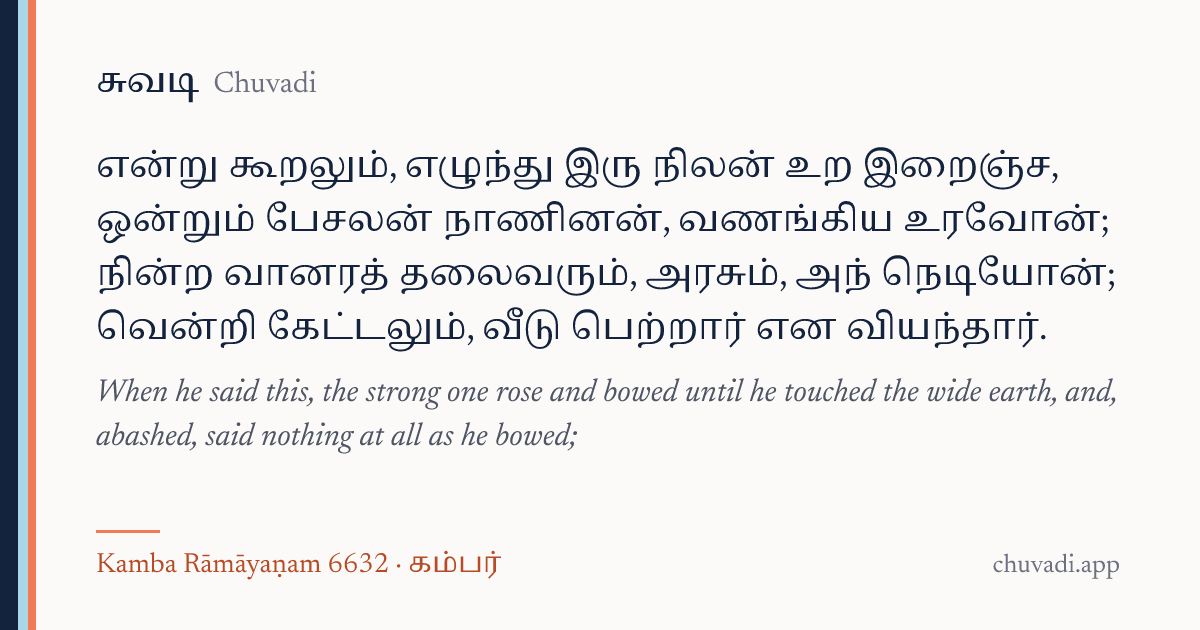
என்று கூறலும் - என்று இராமபிரான் கூறியதும்; எழுந்து, நிலன்உற இறைஞ்சி - அனுமன், எழுந்து, நிலத்தோடு படும் படி கீழே வீழ்ந்து இராமனை வணங்கி, ஒன்றும் பேசலன் - ஒன்றுமே பேசாதவனாக, நாணினன் வணங்கிய உரவோன் - தன்னை இராமன் புகழ்வதற்கு நாணப்பட்டவனாய் வலிமைமிக்கவனான அனுமன் மீண்டு வணங்குவானானான்; நின்ற வானரத் தலைவரும் அரசும் - அங்கு நின்ற மற்றை வானரப்படைத் தலைவர்களும் சுக்கிரீவனும், அந் நெடியோன் வென்றி கேட்டதும் - அந்த நெடியவனாகிய அனுமானது வெற்றியை வீடணன் கூறக் கேட்டதும்; வீடு பெற்றார் எனவியந்தார் - வீட்டின்பத்தைப் பெற்றவர்களைப் போல வியந்து நின்றனர்.
'நிலன் உற இறைஞ்சி' நெடுஞ்சாண் கிடையாகத் தரையிலே வீழ்ந்து வணங்கி, 'அஷ்டாங்க நமஸ்காரம்' எட்டு உறுப்புக்களும் தரையிலேபடத் தெய்வத்தையும், சான்றோர்களையும் வணங்க வேண்டும் என்பர். இராமபிரானது புகழ் மொழிகளைக் கேட்டு வெட்கமுற்றான் ஆதலின் 'நாணினன்' என்றார் 'தம் புகழ் கேட்டார் போல் தலை சாய்த்து மரம் துஞ்ச' என்ற கலித் தொகை (கலி 119) நினைவு கூரத்தக்கது - 'உரவு' அறிவின் திண்மையை உணர்த்தும்; அத்தகைய திண்மை உடையவன் ஆதல் பற்றி அனுமனை 'உரவோன்' என்றார் 'நெடியோன்' என்றது, கடலைத் தாண்டியது, அரக்கர்களை அழித்தது, இலங்கை நகரை எரித்தது போன்ற செயல்களை எண்ணிக் கூறியதாகும். வீடு பேறடைந்தார் அந்தப் பேரின்பத்தினை எண்ணி வியத்தல் போல் அனுமன் வெற்றியைக் கேட்டு வானரத்தலைவர்களும், வானர வேந்தனான சுக்ரீவனும் வியந்தனர் என்பது கருத்து.
ஆங்கிலம் · English translationAI
Translation
- When he said this, the strong one rose and bowed until he touched the wide earth,
- and, abashed, said nothing at all as he bowed;
- and the monkey chiefs standing there, and their king, on hearing
- that great one's victories, marvelled like those who have attained release.
What the poem says
Aṉumaṉ, embarrassed by Rāmaṉ's praise, says nothing; he prostrates himself full length on the ground. The commentary recalls the Kalittokai's image of trees bowing their heads at night as though they had heard their own praise.
The monkey chiefs and their king Cukkirīvaṉ, who had not known the full story of Aṉumaṉ's deeds in Ilaṅkai until Vīṭaṇaṉ told it, are filled with wonder, like souls that have reached mōkṣam, final liberation. This closes the canto.