



கம்பராமாயணம் 6640 · யுத்த 6.8
பாடல் · The poem
Tap a word to see its gloss in the commentary and where else it occurs.
பாட வேறுபாடு · Project Madurai reads
பொருள் · Meaning in Tamil
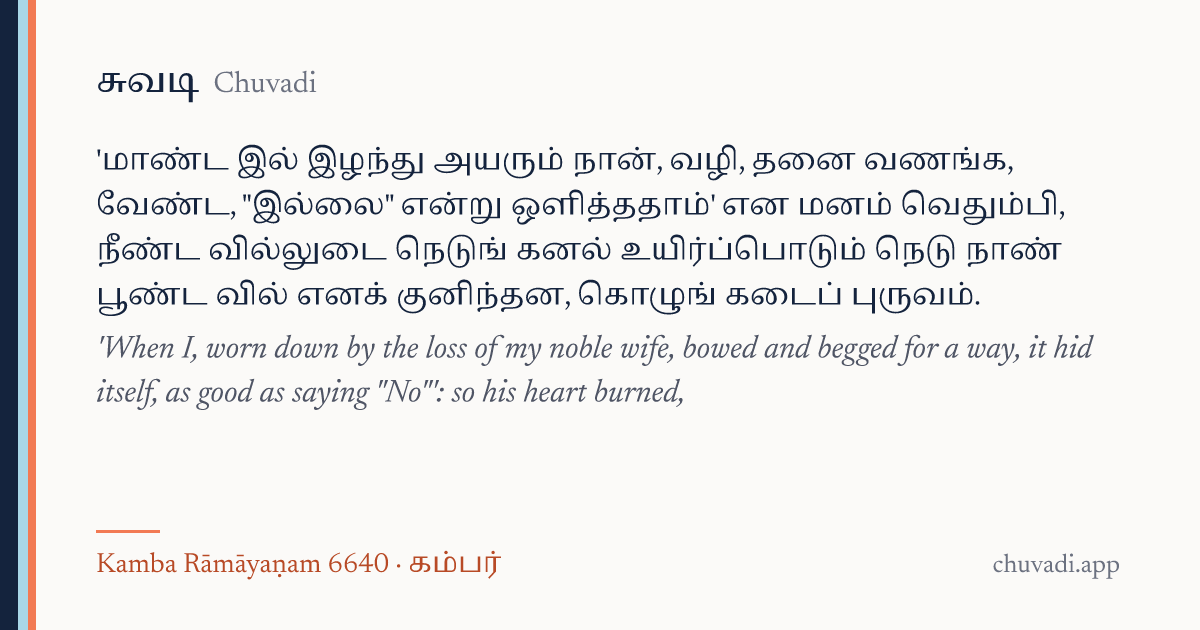
மாண்ட இல் இழந்து அயரும் நான் - மாண்புமிக்க இல்லாளாகிய சீதாபிராட்டியை இழந்து வருந்தும் நான்; வழிதனை வணங்கி வேண்ட - அந்த பிராட்டியை மீட்டு வரச் செல்லவழியை வணங்கி வருணனை வேண்டவும்; இல்லை என்று ஒளித்ததாம் என - வழிவிடுதற்கில்லை என்பதால் வருணன் வராது ஒளிந்தனனோ என்று; மனம் வெதும்பி - இராமபிரான் மனம் வெதும்பினானாக; நீண்ட வில்லுடை நெடுங்கனல் உயிர்ப்பொடும் - நீண்ட ஒளியை உடைய நெருப்பைப் போன்ற பெருமூச்சுடனும்; நெடு நாண் பூண்டவில் என - நீண்ட நாண் பூட்டிய வில்லைப் போலவும்; கொழுங்கடைப் புருவம் குனிந்தன - செழுமையான புருவங்கள் வளைந்தன.
சினத்தாலும் புருவங்கள் வளைதலுண்டு என்பதால் 'புருவம் குனிந்தன' என்றார். 'மாண்டஇல்' என்பதற்கு மாண்புடைய மனைவி என்பது பொருள் 'மாண்ட என் மனைவியொடு மக்களும் நிரம்பினர்' என்ற புறப்பாடலில் (புறம் - 191) இப்பொருளில் வந்தது நினைதற்குரியதாம். இல்லை என்று சொல்லும் குறிப்புத் தோன்ற ஒளிந்து கொண்டான் என்னும் பொருள்பட 'இல்லை என்று ஒளித்ததாம்' என்றார் புருவம் வளைந்தது வில் வளைவதை நினைவு படுத்தும். நீண்டவில் - நெடிய ஒளி. நாண் பூண்ட வில் - நாண் பூட்டியவில்.
ஆங்கிலம் · English translationAI
Translation
- 'When I, worn down by the loss of my noble wife, bowed and begged
- for a way, it hid itself, as good as saying "No"': so his heart burned,
- and with long, fiery breaths of far-reaching flame
- his rich-tipped brows bent like a bow strung with a long string.
What the poem says
Rāmaṉ is stung: he has lost his noble wife, he humbly begged the sea for a path, and the sea has hidden itself as a silent way of saying no. He breathes out hot, fiery sighs, and his brows arch in anger like a bow bent with its string drawn.
'Māṇṭa il', noble wife, is an old phrase; the commentary cites a Puṟanāṉūṟu poem that uses it in this sense.