



கம்பராமாயணம் 6642 · யுத்த 6.10
பாடல் · The poem
Tap a word to see its gloss in the commentary and where else it occurs.
பொருள் · Meaning in Tamil
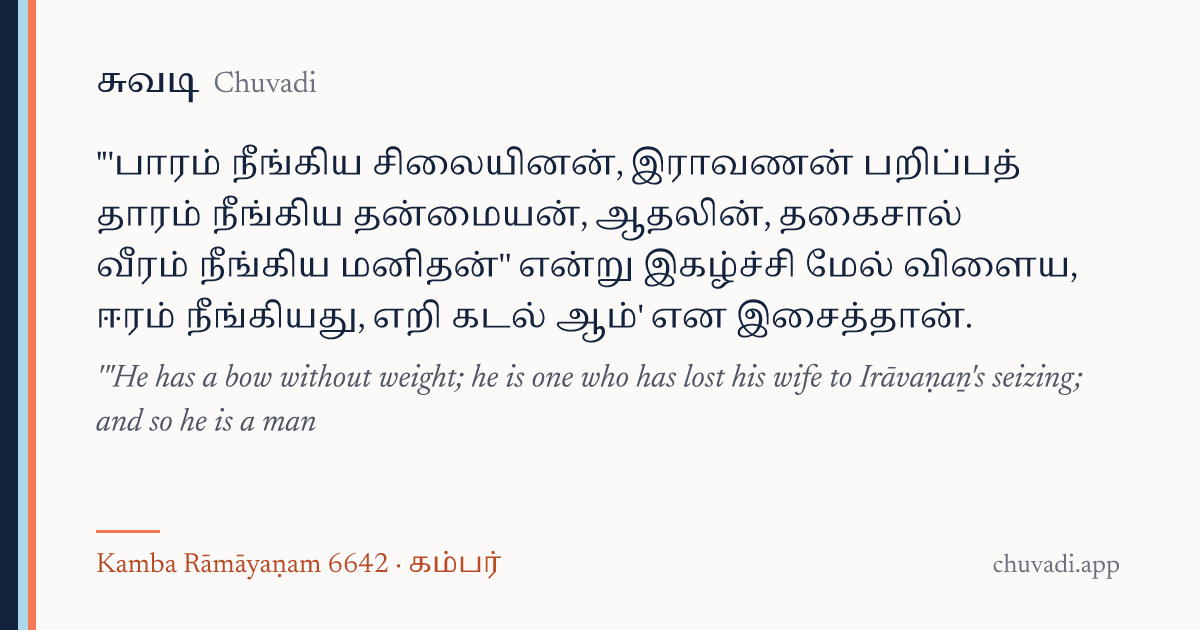
பாரம் நீங்கிய சிலையினன் - பெருமையில்லாத வில்லையுடையவன்; இராவணன் பறிப்பத்தாரம் நீங்கிய தன்மையன் - இராவணன் கவர்ந்து கொண்டமையால் மனைவியை நீங்கிய தன்மையினன்; ஆதலின், தகை சால் வீரம் நீங்கியமனிதன் - ஆதலால், தகுதி நிறைந்ததான வீரம் நீங்கிய மானிடன்; என்று இகழ்ச்சி மேல் விளைய - எனக்கருதி, மேலும் இகழ்ச்சி தோன்ற; எறிகடல் - அலையெறியும் கடலுக்கு அரசனான வருணன்; ஈரம் நீங்கியதாம் என இசைத்தான் - என்னிடம் இரக்கம் இல்லாதவனானான் என்று மீண்டும் இராமன் கூறினான்.
பாரம் - பெருமை. தகை சால் வீரம் - பெருமை மிகுந்த வீரம். கரனுடன் இராமன் செய்த போரில் வில்முறிந்து போக, பரசுராமன் வில்லை இராமனுக்குக் கொடுத்தவன் வருணன் என்பதால் வில்லைப் பற்றித் தெரிந்தவன் என்பதால் 'பாரம் நீங்கிய சிலை' என நினைத்திருக்கலாம் என இராமன் நினைந்தான். முன்பு நினைத்தவுடன் வந்தவன், இப்போது ஏழு நாட்களாகியும் வராமைக்குக் காரணமாக இராமன் இவ்வாறு கருதினான் என்க.
ஆங்கிலம் · English translationAI
Translation
- '"He has a bow without weight; he is one who has lost
- his wife to Irāvaṇaṉ's seizing; and so he is a man
- bereft of worthy valour": with such contempt growing in it,
- the wave-dashing sea has lost all kindness,' he declared.
What the poem says
Rāmaṉ imagines what the sea must be thinking of him: a man whose bow carries no weight, who let Irāvaṇaṉ carry off his wife, a man without real courage. Out of such contempt, he concludes, the sea has lost all regard for him.
The commentary explains the jibe about the bow: when Rāmaṉ's bow broke in the fight with Karaṉ, it was Varuṇaṉ who gave him the bow of Paracurāmaṉ, so Varuṇaṉ knew that bow well. Varuṇaṉ had come at once then; his absence now for seven days is what makes Rāmaṉ think he is being scorned.