



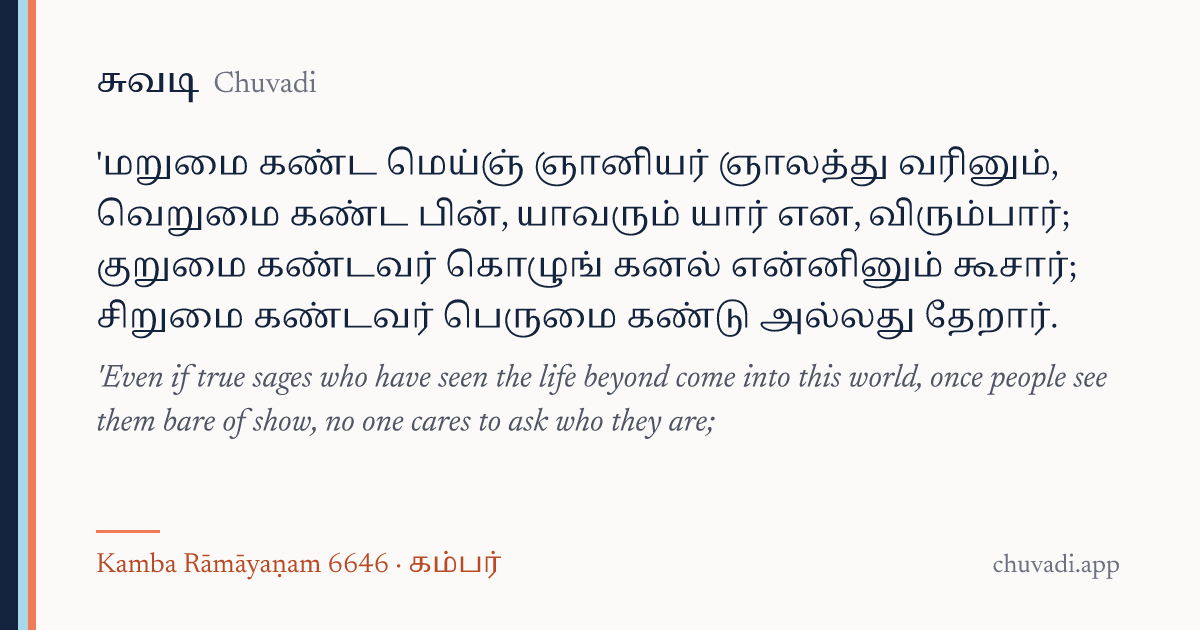
கம்பராமாயணம் 6646 · யுத்த 6.14
பாடல் · The poem
Tap a word to see its gloss in the commentary and where else it occurs.
பொருள் · Meaning in Tamil
மறுமை கண்ட மெய்ஞ் ஞானியர் - மறுமை இன்பமான முத்தி இன்பத்தை அனுபவித்த உண்மையான ஞானிகள்; ஞாலத்து வரினும் - இந்த உலகத்துக்கு வந்தார்களாயினும் அவரிடம்; வெறுமை கண்டபின் - தாம் விரும்பும் சிறப்பியல்பின்மை கண்டால்; யாவரும் யார் என விரும்பார் - எவரும் அந்த ஞானிகளை யார் என்று கேட்டறிந்து போற்றவிரும்பமாட்டார்; குறுமை கண்டவர் - ஒருவாறு உருவம் சிறிதாயிருப்பதைப் பார்த்தவர்கள்; கொழுங்கனல் என்னினும் கூசார் - அச்சிறிய வடிவுடையவர்கள் செழுமையான நெருப்பை ஒத்த திறம் வாய்ந்தவர் என்றாலும் அவர்களுக்கு அஞ்சமாட்டார்; சிறுமை கண்டவர் - உருவத்திலே சிறுமையைப் பார்த்தவர்கள்; பெருமை கண்டு அல்லது தேறார் - பெருமை, வலிமைகளைக் கண்டாலல்லது தெளிவு பெறமாட்டார்
'மறுமை கண்ட மெய்ஞ்ஞானியர்' என்போர் முத்திப் பேறடைந்த உண்மைமிக்க ஞானிகளாவார். அத்தகைய மேலோர் இவ்வுலகத்துக்கு வர நேர்ந்தாலும் அவர்களிடம் ஏதேனும் சிறப்பியல்புகள் இருந்தால் மட்டுமே உலகத்தார் மதிப்பர்; இல்லையென்றால் 'யார்' என்றே கண்டு கொள்ள மாட்டார்கள். ஒருவரது சிறிய உருவத்தைப் பார்த்தவர்கள் - அச்சிறிய வடிவில் கொழுந்து விட்டெரியும் கனல் போன்ற ஆற்றலும் ஞானமும் இருப்பதை அறிந்து போற்றார். சிறுமை கண்டவர் பெருமை, வலிமைகளைக் கண்டால் அல்லது தெளிவடைந்து போற்றார்; இது பிறிது மொழிதலணியாம். உலகத்தார் இயல்பைக் கூறி வருணன் தன்னை மதித்து வராமைக்குக் காரணம் இதுவென இராமபிரான் கூறலானான்.
ஆங்கிலம் · English translationAI
Translation
- 'Even if true sages who have seen the life beyond come into this world,
- once people see them bare of show, no one cares to ask who they are;
- those who see smallness do not shrink back, though it be a blazing fire;
- those who have seen smallness will not be convinced until they see greatness.'
What the poem says
Rāmaṉ states a general truth about how the world judges. Even enlightened sages who have attained liberation are ignored if they appear without outward distinction. People who see a small form do not fear it, even if it holds the power of a blazing fire; only a display of greatness convinces them.
This is an indirect statement: by describing the world's ways, Rāmaṉ explains why Varuṇaṉ has not come to him. He has seen only a humble man, and must now be shown his power.