



கம்பராமாயணம் 666 · பால 10.114
பாடல் · The poem
Tap a word to see its gloss in the commentary and where else it occurs.
பாட வேறுபாடு · Project Madurai reads
பொருள் · Meaning in Tamil
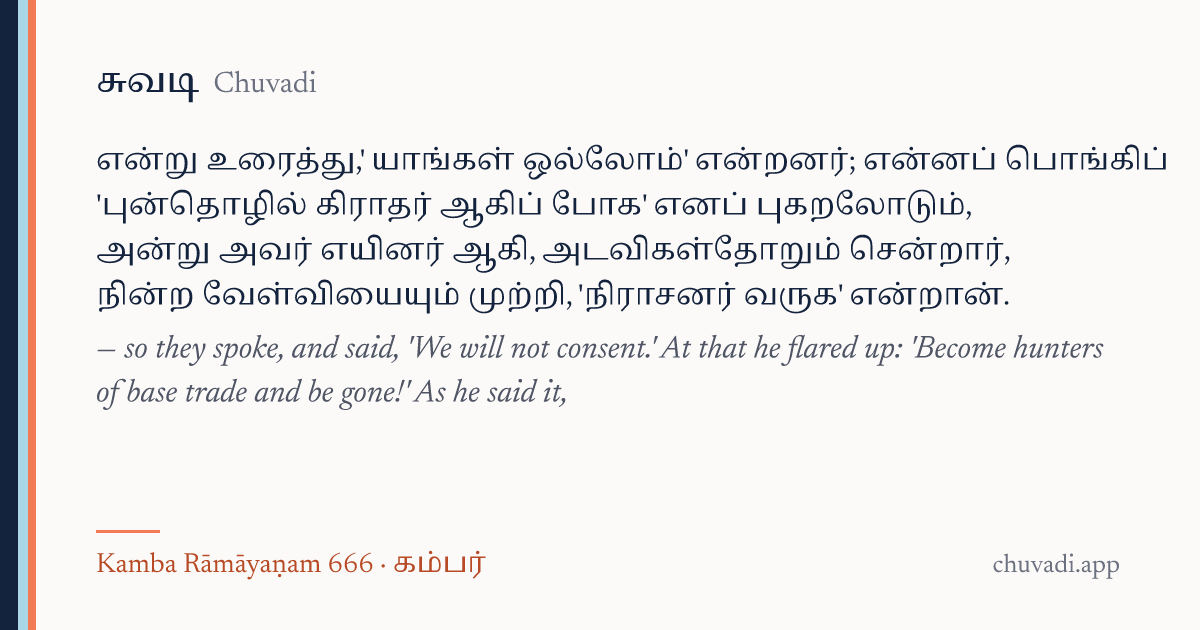
என்று உரைத்து - என்று கூறி; யாங்கள் ஒல்லோம் - 'நாங்கள் இச்செயலுக்கு உடன்படமாட்டோம்'; என்றனர் - என்று சொன்னார்கள்; என்ன - என்று கூற (அதனைக் கேட்ட கௌசிகன்); பொங்கி - கொதிப்பு அடைந்து; புன்தொழில் கிராதர் - (அவர்களைக் குறித்து) இழிந்த செயல்புரியும் வேடர்கள்; ஆகிப்போக என - ஆகிவிடக் கடவீர்கள் என்று; புகறலோடும் - சாபமொழி கூறிய அளவில்; அன்று - அப்பொழுதே; அவர் - அவர்கள்; எயினர் ஆகி - வேடர்களாகி; அடவிகள் தோறும் - காடுகள் தோறும்; சென்றார் - போய்விட்டார்கள்; நின்று - (கோசிகனோ) தொடங்கிய செயலில் சிறிதும் சலியாமல் நிலைநின்று; வேள்வியையும் முற்றி - வேள்வியை முடிக்கத் தொடங்கி; நிராசனர் வருக - (ஆகுதியை உண்ணுதற் பொருட்டு) தேவர்களே! நீவிர் வருவீர்களாக!; என்றான் - என்று அவர்களை அழைத்தான்.
நிராசனர்: தேவர் உணவை வேண்டாதவர் என்பது பொருள்.
ஆங்கிலம் · English translationAI
Translation
- — so they spoke, and said, 'We will not consent.' At that he flared up:
- 'Become hunters of base trade and be gone!' As he said it,
- that very day they became forest tribesmen and went off into the wilds;
- standing firm, he carried the sacrifice to its end and said, 'Let the gods come!'
What the poem says
When Vaciṭṭaṉ's sons refuse to take part, Kaucikaṉ angrily curses them to become hunters of the forest tribes, and they are instantly transformed and scatter into the jungles. Undeterred, he completes the sacrifice and calls on the gods to come and receive their offerings.