



கம்பராமாயணம் 6675 · யுத்த 6.43
பாடல் · The poem
Tap a word to see its gloss in the commentary and where else it occurs.
பாட வேறுபாடு · Project Madurai reads
பொருள் · Meaning in Tamil
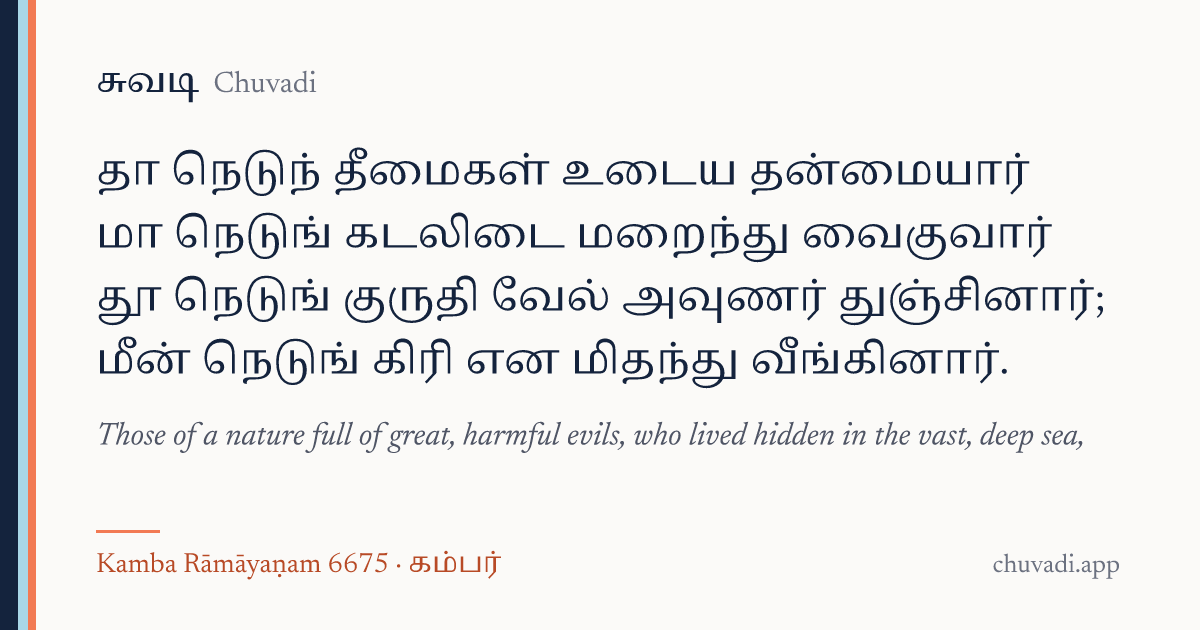
தூ நெடுங் குருதி வேல் அவுணர் - தசையோடு கூடிய, இரத்தம் தோய்ந்த நீண்ட வேலையுடைய அவுணர்கள்; தா நெடும் தீமைகள் உடைய தன்மையார் - துயர் தரும் பெருந்தீமைகள் கொண்ட பண்புடையவர் என்பதால்; மா நெடுங் கடலிடை மறைந்து வைகுவார் - பெரிய நீண்ட கடலிலே மறைந்து வாழ்கின்றவர்கள்; துஞ்சினார் - இராமபிரானுடைய அம்புகளின் வெம்மையால் உயிர்துறந்தார்கள்; மீ நெடுங்கிரியென - கடலின் மீது கிடந்த மலைகளைப் போல்; மிதந்து வீங்கினார் - மிதந்து உடல் வீங்கலாயினர்.
தூ - தசை. தசையும், இரத்தமும் கொண்ட வேலை 'தூ நெடுங்குருதிவேல்' என்றார். தா - வருத்தம், துயரம். மா நெடுங்கடல் - பெரியகடல்.
ஆங்கிலம் · English translationAI
Translation
- Those of a nature full of great, harmful evils,
- who lived hidden in the vast, deep sea,
- the Avuṇars with long spears clotted with flesh and blood, perished;
- they floated, swollen, like great mountains on the surface.
What the poem says
The Avuṇars, demons who hid deep in the ocean because of their many crimes and who carry long spears caked with flesh and blood, die in the heat of Rāmaṉ's arrows. Their bloated bodies float up and lie on the surface like mountains. This prepares for a later episode, in which Varuṇaṉ asks Rāmaṉ to turn his arrow against such demons.