



கம்பராமாயணம் 668 · பால 10.116
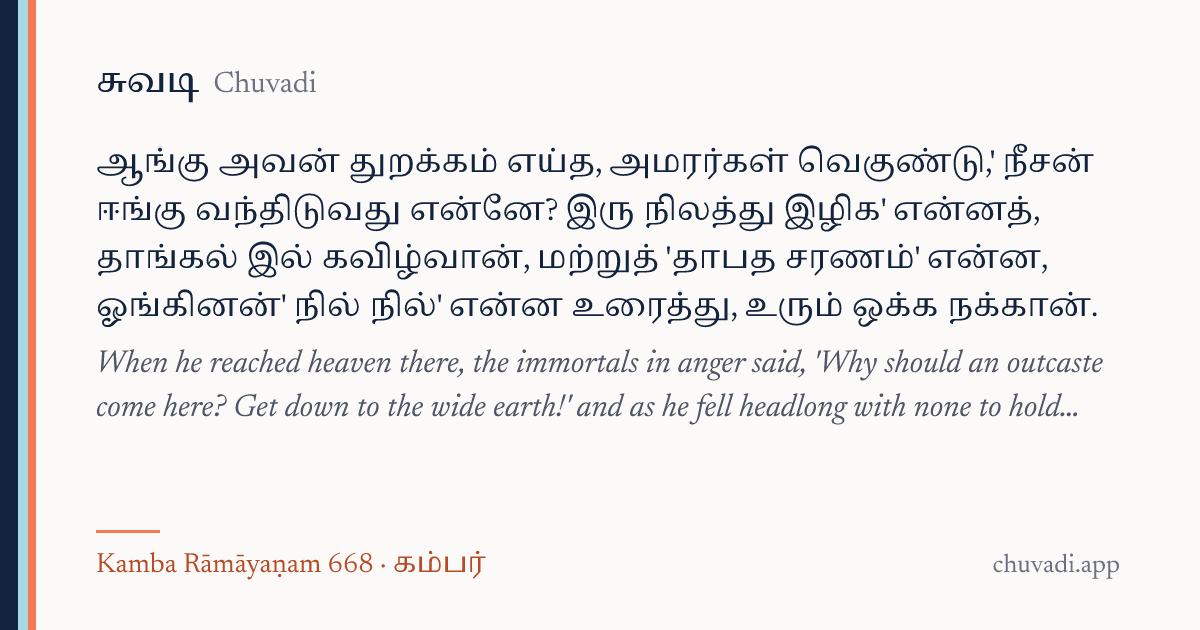
பாடல் · The poem
Tap a word to see its gloss in the commentary and where else it occurs.
பாட வேறுபாடு · Project Madurai reads
பொருள் · Meaning in Tamil
ஆங்கு - அவ்வாறு; அவன் - அவ்வரசன்; துறக்கம் எய்த - சுவர்க்கத்தை அடைய; அமரர்கள் - (அதுகண்ட) தேவர்கள்; வெகுண்டு - சினந்து; நீசன் ஈங்கு - சண்டாளனான நீ அவ்வுடம்போடு இவ்விடத்தே; வந்திடுவது என்னே - வந்து சேர்வது என்ன நீதி?; இரு நிலத்து இழிக - பூமியிலே இறங்குவாயாக; என்ன - என்று கூறித் தள்ள; தாங்கல் இல் - தன்னைத் தாங்குவார் இல்லாதவனாய்; கவிழ்வான் - (தலைகீழாக) விழும் அத்திரிசங்கு; மற்று - பின்பு (கோசிகனை நோக்கி), தாபதா - முனிவனே; சரணம் என்ன - 'நீயே எனக்குப் புகலிடம்' என்று ஓலமிட (அதுகேட்ட கோசிகன்); நில்நில் என்ன - (நிமிர்ந்து நின்று) அந்த இடத்தேயே நிற்பாயாக என்று; ஓங்கினன் உரைத்து - உரக்கச் சொல்லி; உரும் ஒக்க - இடி முழக்கம் போல; நக்கான் - சிரித்தான்.
சிரிப்பு: தேவர்களின் மீது உள்ள வெகுளியாலும் எள்ளலாலும் ஆகியது. நில்நில் - அடுக்கு விரைவு பற்றியது.
ஆங்கிலம் · English translationAI
Translation
- When he reached heaven there, the immortals in anger said, 'Why should an outcaste
- come here? Get down to the wide earth!' and as he fell headlong with none to hold him,
- he cried, 'Ascetic, refuge!' and the sage, rising up,
- shouted, 'Stop, stop!' and laughed like thunder.
What the poem says
When Tiricaṅku arrives in heaven in his outcaste body, the gods angrily throw him out and he falls headfirst toward the earth, crying to Kaucikaṉ for protection. The sage rises and roars "Stop! Stop!", halting him in mid-air, and laughs like thunder in anger and contempt for the gods. The repeated command conveys urgency.