



கம்பராமாயணம் 6685 · யுத்த 6.53
பாடல் · The poem
Tap a word to see its gloss in the commentary and where else it occurs.
பாட வேறுபாடு · Project Madurai reads
பொருள் · Meaning in Tamil
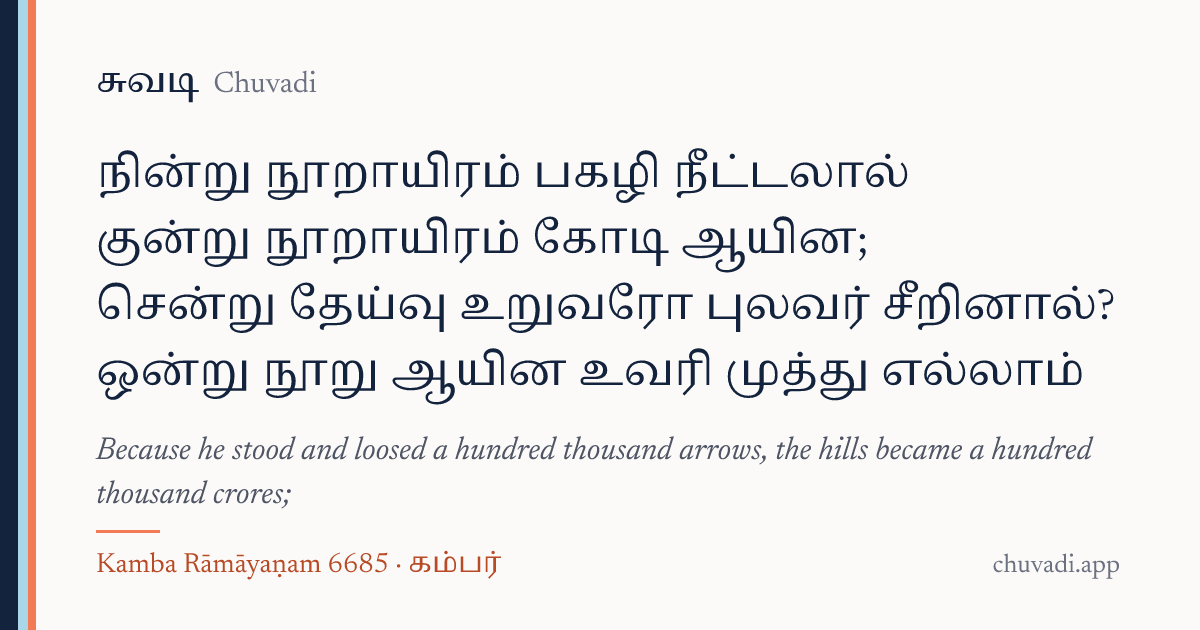
நின்று நூறாயிரம் பகழி நீட்டலால் - (இராமபிரான் போர்க்கோலம் கொண்டு) நின்று நூறாயிரம் அம்புகளை எய்தலால்; குன்று நூறாயிரம் கோடி ஆயின - கடலில் உள்ள குன்றுகள் எல்லாம் நூறாயிரம் கோடியாயின; உவரிமுத்து எலாம் - கடலில் உள்ள முத்துக்கள் எல்லாம்; ஒன்று நூறாயின - அம்பு பட்டு ஒன்று நூறாக ஆயின; புலவர் சீறினால் - அறிவுமிக்க சான்றோர்கள் சீறினாலும்; சென்று தேய்வுறுவரோ - (சீற்றத்துக்கு ஆளானவர் சென்று தேய்வடைவார்களோ? (மாட்டார்.
நின்று - போர்க் கோலம் கொண்டு நின்று. புலவர் - சான்றோர்கள். இராமபிரான் நூறாயிரம் அம்புகளை எய்ய, கடலில் உள்ள குன்றுகள் நூறாயிரம் கோடிகளாயின; அம்பு பட்டுச் சிதைந்த முத்துக்கள் ஒன்று நூறாக ஆயின. அறிவின் மிக்க மேலோர்கள் சினந்தாலும், சினத்துக்கு ஆளானவர் தேய்ந்து கெட மாட்டார்கள் என்ற பொதுப் பொருளை குன்றும், முத்தும் ஒன்று பல வாயின என்ற சிறப்புப் பொருளைக் கூறி விளக்குவதால் இது வேற்றுப் பொருள் வைப்பணி.
ஆங்கிலம் · English translationAI
Translation
- Because he stood and loosed a hundred thousand arrows,
- the hills became a hundred thousand crores;
- when the wise are angry, do those they strike dwindle away?
- Each pearl in the sea became a hundred.
What the poem says
A witty twist on destruction. Rāmaṉ's hundred thousand arrows shatter the undersea hills into countless fragments and split every pearl into a hundred pieces, so the hills and pearls have actually multiplied. The poet draws a general moral: when the truly wise are angry, those they are angry with do not dwindle; their anger turns to blessing. A general truth illustrated by a particular case, as the commentary notes.