



கம்பராமாயணம் 6693 · யுத்த 6.61
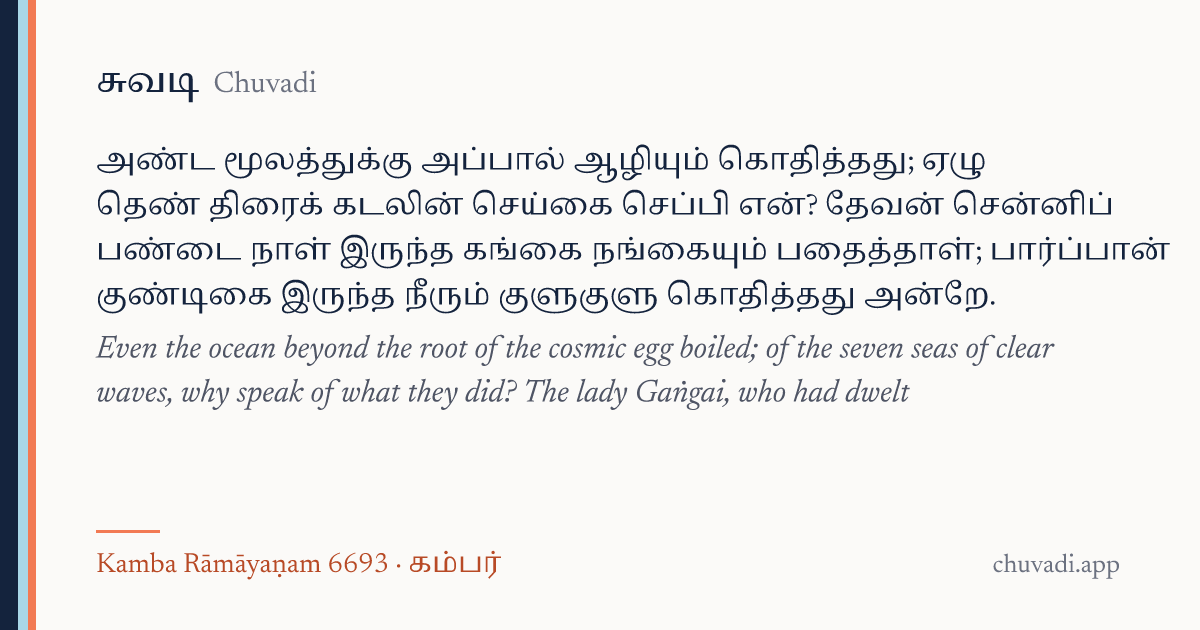
பாடல் · The poem
Tap a word to see its gloss in the commentary and where else it occurs.
பொருள் · Meaning in Tamil
அண்ட மூலத்துக்கு அப்பால் ஆழியும் கொதித்தது - அண்டத்தின் அடிப்பகுதியில் உள்ள பெரும் புறக் கடலும் கொதித்தது (என்றால்); ஏழு தெண்திரைக் கடலின் செய்கை செப்பிஎன் - உலகத்திலுள்ள தெளிந்த அலைகளையுடைய ஏழுகடல்களின் செய்கையைச் சொல்ல என்ன இருக்கிறது?; தேவன் சென்னிப் பண்டை நாள் இருந்த கங்கை நங்கையும் பதைத்தாள் - சிவபிரானுடைய சென்னியில் வெகு காலமாக வீற்றிருந்த கங்கையாகிய பெண்ணும் பதைபதைத்தாள்; பார்ப்பான் குண்டிகை இருந்த நீரும் - அந்தணர் தலைவனான பிரமனது கமண்டலத்தில் இருந்த தண்ணீரும்; குளு குளு கொதித்தது அன்றே - குளு குளு வென ஒலித்துக் கொதிக்கலாயிற்று.
அண்டமூலம் - அண்டங்களின் அடிப்பகுதி. ஆழி - பெரும்புறக் கடல் தேவன் - சிவபெருமான். பார்ப்பான் - பிரமன். குண்டிகை - கமண்டலம். 'குளு குளு' என்பது ஒலிக்குறிப்பு; 'அனுகரணம்' என்பர் 'அன்றே' அசை கங்கை நங்கை - இரு பெயரொட்டுப் பண்புத்தொகை.
ஆங்கிலம் · English translationAI
Translation
- Even the ocean beyond the root of the cosmic egg boiled; of the seven
- seas of clear waves, why speak of what they did? The lady Gaṅgai, who had dwelt
- since ancient days on the head of the God, trembled; and the water in the Brahmin's
- water-pot bubbled and boiled, gurgling.
What the poem says
The verse metre changes, and the effects of the weapon spread to the edge of creation. Even the outermost ocean at the base of the universe boils, so there is no need to speak of the seven seas. The goddess Gaṅgai, who has lived on Civaṉ's head since ancient times, trembles, and the water in the kamaṇṭalam of Piramaṉ, the 'Brahmin' of the gods, boils with a 'kuḷu kuḷu' bubbling sound.