



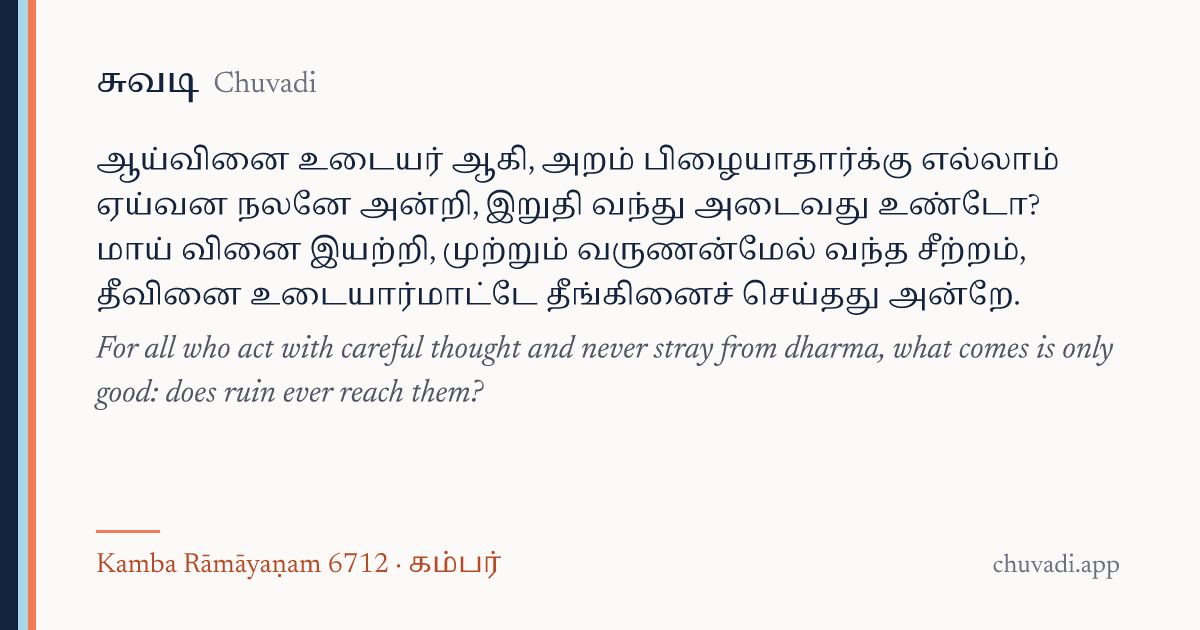
கம்பராமாயணம் 6712 · யுத்த 6.80
பாடல் · The poem
Tap a word to see its gloss in the commentary and where else it occurs.
பொருள் · Meaning in Tamil
ஆய்வினை உடையராகி - ஆராய்ந்து புரியும் நல்ல செயல்களையே உடையவராக; அறம்பிழையாதார்க்கு எல்லாம் - அறநெறியிலிருந்து தவறாது வாழும் நல்லவர்களுக்கு எல்லாம்; ஏய்வன நலனே அன்றி - எவ்விதத்தும் நன்மையே எய்துமே யல்லாது; இறுதி வந்தடைவதுண்டோ - அழிவு வந்து அடைவதுண்டோ? (இல்லை); மாய் வினை இயற்றி - அழியும்படியான செயலைச் செய்து; வருணன் மேல் வந்த சீற்றம் - வருணன் மீது வந்த இராமபிரானது வெகுளி (வருணனை எதுவும் செய்யாது), தீவினை உடையார் மாட்டே - தீய செயல்களைப் புரிந்துவந்த மருகாந்தாரத்து அரக்கர் பக்கம் சென்று; தீங்கினைச் செய்ததன்றே - அவர்களுக்குத் தீங்கை விளைவித்ததல்லவா?
அற நெறியில் நின்று ஒழுகும் நல்லோர்களுக்கு எவ்விதத்திலும் நன்மையே நடக்கும் என்ற பொதுப் பொருளைக் கூறி வருணன் உய்ந்தான் மருகாந்தாரத்து அரக்கர் அழிந்தனர் என்ற சிறப்புப் பொருளை விளக்குவதால் இது வேற்றுப் பொருள் வைப்பணியாகும். ஆய் வினை - ஆராய்ந்து செய்யும் நல்ல செயல்கள். மாய் வினை - மாய்ப்பதற்குரிய வினை.
ஆங்கிலம் · English translationAI
Translation
- For all who act with careful thought and never stray from dharma,
- what comes is only good: does ruin ever reach them?
- The wrath that came upon Varuṇaṉ, bent on utter destruction,
- wrought its harm only on those whose deeds were evil.
What the poem says
The poet draws the moral: those who act thoughtfully and never depart from dharma meet only with good, never with ruin. Rāmaṉ's anger, which had been aimed at Varuṇaṉ to destroy him, passed him by and fell instead on the wicked demons of Marukāntāram. Again a general truth supports a particular event, the figure Tamil poetics calls vēṟṟup poruḷ vaippu.