



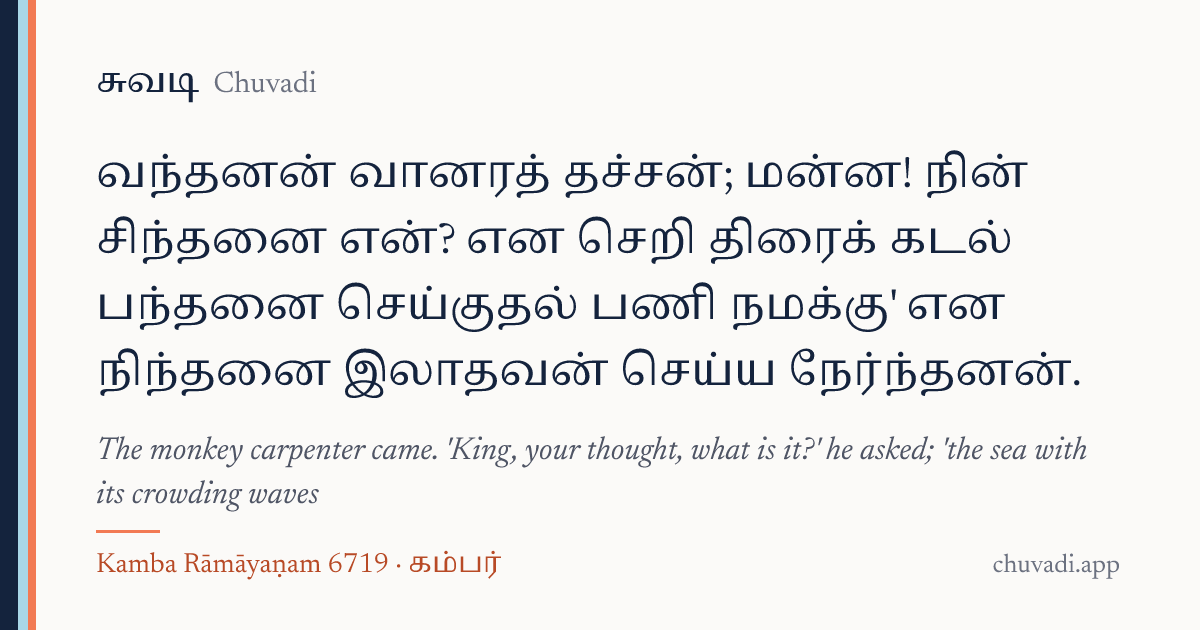
கம்பராமாயணம் 6719 · யுத்த 7.2
பாடல் · The poem
Tap a word to see its gloss in the commentary and where else it occurs.
பொருள் · Meaning in Tamil
வந்தனன் வானரத் தச்சன் - வானரத்தச்சனான நளன் சுக்கிரீவனது ஆணைப்படி அங்கு வந்தான் வந்தவன்; மன்ன! நின் சிந்தனை என் என - சுக்கிரீவனை நோக்க, அரசே! என்னை அழைத்த உனது கருத்து என்ன என்று கேட்க; செறிதிரைக்கடல் - செறிந்த அலைகளை உடைய இந்தக் கடலுக்கு; பந்தனை செய்குதல் பணி நமக்கு என - அணை கட்டுதல் நமக்குரிய பணியாகும் என்று சுக்கிரீவன் கூற; நிந்தனை இலாதவன் - பிறரால் நிந்திக்கப்படாத தொழில் வல்லவனாகிய நளன்; செய்ய நேர்ந்தனன் - அணை கட்டும் பணியைச் செய்ய உடன்பட்டான்.
நளன் வானரச் சிற்பி இவனைப் பற்றி: "வாநரத் தச்சன் மயன் குமரன், இரத்தக் கண்ணனைக் கொன்றவன், விச்வகர்மனாற் பிறந்தவன், சேது கட்டினவன்" என அபிதான சிந்தாமணி விவரித்துள்ளது. (பக்.945). கடல் கடந்து செல்ல அரிய அகலமும், ஆழமும் உடைய தென்பதனை 'செறிதிரைக்கடல்' என்பதுணர்த்தும். 'பணி உனக்கு' என சுக்கிரீவன் கூறாது, ப்ப உட்படுத்தி 'பணி நமக்கு' என்றது கருதத் தக்கது. நளனும் வானரன் ஆதலால் 'நம்' என்ற உளப்பாட்டுத்தன்மைச் சொல் வந்தது. பிறர் எவரும் குறை கூறிப் பழிப்பதற்கு இயலாத தொழில் திறமை உடையவன் நளன் என்பது தோன்ற 'நிந்தனை இலாதவன்' என்றார். நேர்தல் - உடன்படுதல்.
ஆங்கிலம் · English translationAI
Translation
- The monkey carpenter came. 'King, your
- thought, what is it?' he asked; 'the sea with its crowding waves
- to bind with a causeway is the task for us,' came the reply;
- he whom none could fault agreed to do it.
What the poem says
Naḷaṉ, the monkeys' builder, arrives and asks Cukkirīvaṉ why he has been called. The king answers that their task is to bind the crowded, wave-filled sea with a causeway, and the flawless craftsman accepts.
Cukkirīvaṉ says 'the task for us' rather than 'for you', counting himself in, since both are monkeys. 'He whom none could fault' praises Naḷaṉ's skill as beyond any reproach, and the 'crowding waves' hint at how wide and deep the sea is.