



கம்பராமாயணம் 673 · பால 10.121
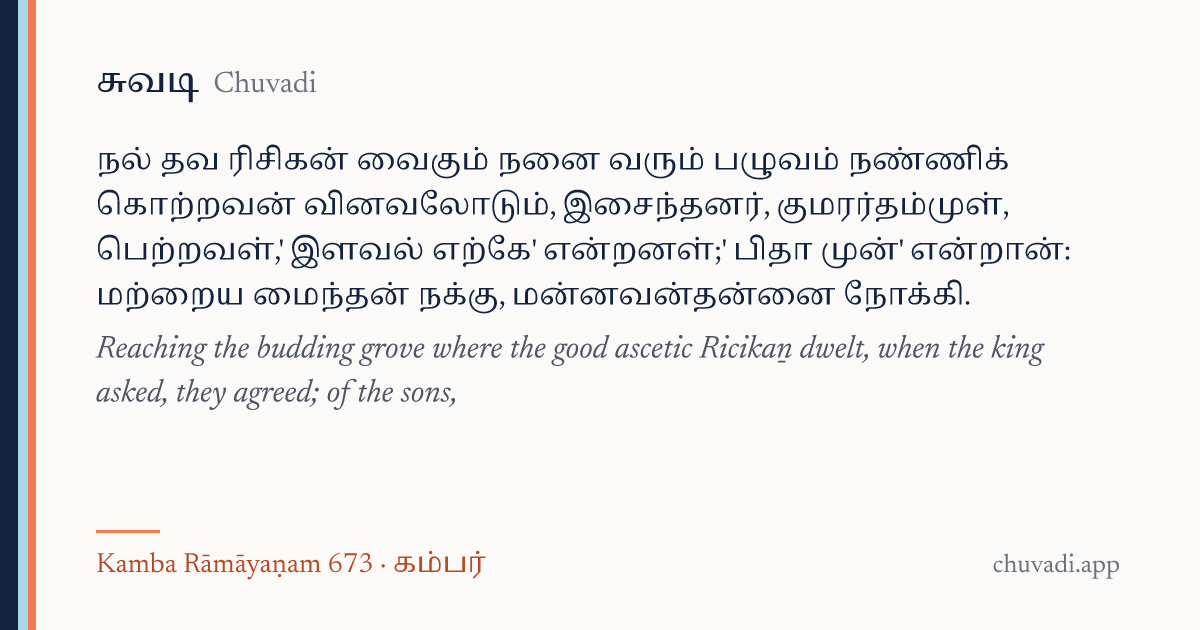
பாடல் · The poem
Tap a word to see its gloss in the commentary and where else it occurs.
பொருள் · Meaning in Tamil
கொற்றவன் - (அவ்வாறு சென்ற) அம்பரீடன்; நல் தவம் ரிசிகன் - சிறந்த தவ முனிவனான ரிசிகன்; வைகும் நனைவரும் - வசிக்கும் அரும்பு மலரும்; பழுவம் நண்ணி - சோலையை அடைந்து; வினவலோடும் - (வந்த செய்தி கூறி அவனுடைய மக்களில் ஒருவனை விலைக்கு) கேட்ட அளவில்; இசைந்தனர் குமரர் தம்முள் - தன் புதல்வர்களாக அமைந்த மூவருள்; இளவல் எற்கே - இளையவன் எனக்கே உரியவன் (அவனை விற்க முடியாது); என்றனள் பெற்றவள் - என்று சொன்னாள் தாயான ரிசிகன் மனைவி; பிதா முன் என்றான் - தந்தையோ மூத்தவன் தனக்கே உரியவன் என்று சொன்னான்; மற்றைய மைந்தன் - எஞ்சி நின்ற நடுப்பிள்ளையான சுனச்சேபன் என்பான்; நக்கு - (பெற்றோர் இருவரும் பெற்று வளர்த்த தன்னை விலைப்படுத்தற்கு உடன்பட்டதை அறிந்து) சிரித்து; மன்னவன் தன்னை நோக்கி - (தான்) அம்பரீட மன்னனைப் பார்த்து.
பிருகுதுங்க மலையில் தங்கியிருந்த ரிசிகனை அம்பரீடன் கண்டான்; தன் கருத்தைத் தெரிவித்தான். தந்தையோ மூத்த மகனை விலைக்குத் தர இயலாது என்றான்; தாயோ இளைய மைந்தனைக் கொடுக்க முடியாது என்றாள். இது கண்டு வருந்திய நடுப்பிள்ளை தன் குடும்பத்தின் வறுமை அகல அம்பரீடனிடம் தன் இசைவைத் தெரிவித்தான். முன் - காலவாகு பெயர்.
ஆங்கிலம் · English translationAI
Translation
- Reaching the budding grove where the good ascetic Ricikaṉ dwelt,
- when the king asked, they agreed; of the sons,
- the mother said, 'The youngest is mine'; the father said, 'The eldest';
- the remaining son laughed and, looking at the king, said:
What the poem says
Amparīṭaṉ comes to the hermitage of the sage Ricikaṉ (Ṛcīka) and asks to buy one of his sons. The parents agree, but the mother will not part with the youngest and the father will not part with the eldest. The middle son, Cuṉaccēpaṉ (Śunaḥśepa), realising that his parents have in effect sold him, laughs bitterly and turns to the king; his words follow in the next verse.