



கம்பராமாயணம் 6733 · யுத்த 7.16
பாடல் · The poem
Tap a word to see its gloss in the commentary and where else it occurs.
பாட வேறுபாடு · Project Madurai reads
பொருள் · Meaning in Tamil
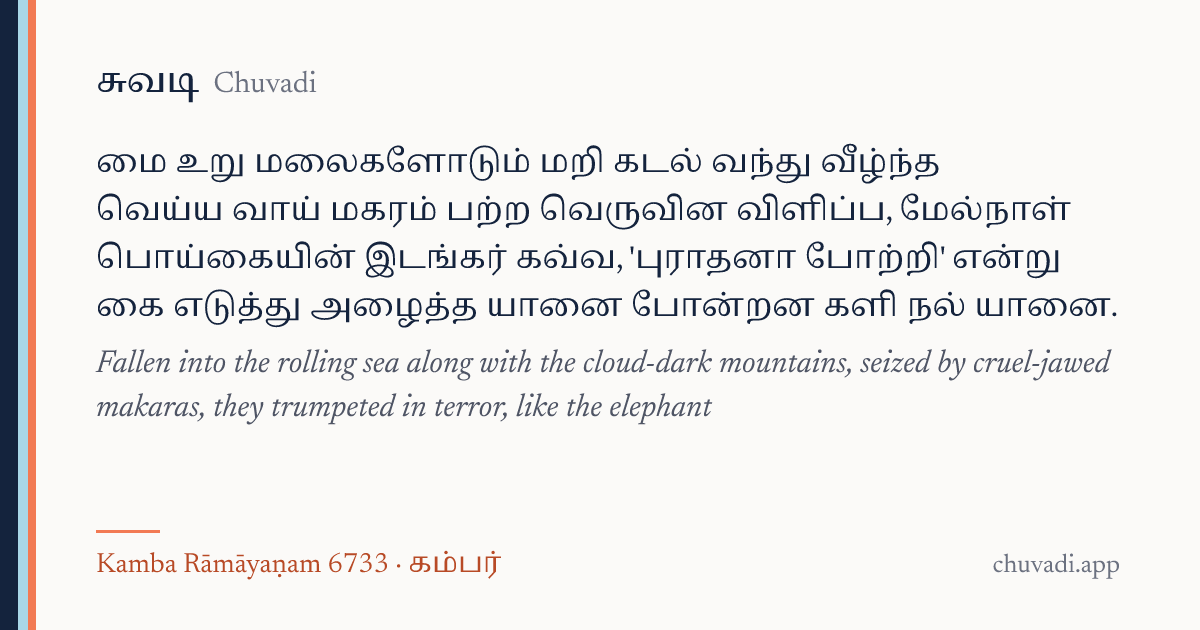
மை உறு மலைகளோடும் - மேகங்கள் தங்கியிருக்கும் மலைகளுடனே; வந்து வீழ்ந்த களிநல்யானை - வானரங்கள் எடுத்து வீசுவதால் வந்து கடலில் வீழ்ந்த மதம் கொண்ட யானைகள்; வெய்யவாய் மகரம் பற்ற வெருவின விளிப்ப - கொடிய வாயை உடைய முதலைகள் பற்றுவதால் அஞ்சிக் கதறிய செயல்; மேல் நாள் பொய்கையின் இடங்கர் கவ்வ - முன்னாளிலே பொய்கையிலிருந்த முதலை காலைக் கவ்வ; புராதனா போற்றி என்று - பழமையான தலைவனே காப்பாயாக என்று; கை எடுத்து அழைத்த யானை போன்றன - தும்பிக்கையை மேலே உயர்த்தி இறைவனை அழைத்த யானையான கஜேந்திரனைப் போன்றிருந்தது.
மை - கருமை; ஈண்டு மேகங்கள். களி நல்யானை - மதக் களிப்புடைய யானை. மகரம் - மகரமீன் (முதலை எனலுமாம்). இடங்கர் - முதலை. கடலுக்குப் பொய்கையும், யானைக்குக் கஜேந்திரனும், மகரமீனுக்கு முதலையும் உவமையாயின.
ஆங்கிலம் · English translationAI
Translation
- Fallen into the rolling sea along with the cloud-dark mountains,
- seized by cruel-jawed makaras, they trumpeted in terror, like the elephant
- of old that, when the crocodile of the pool gripped it, cried 'Ancient One, hail!'
- and raised its trunk in appeal: such were the fine rutting elephants.
What the poem says
Wild elephants living on the mountains are tossed into the sea along with them. Sea monsters, makaras, grab them in their fierce jaws, and they scream in fear.
The poet recalls the famous story of Gajendra, the king of elephants. A crocodile seized his leg in a lotus pool, and he lifted his trunk and called on Viṣṇu, the Ancient One, who came and saved him. The sea stands for the pool, the elephants for Gajendra, and the makaras for the crocodile.