



கம்பராமாயணம் 6735 · யுத்த 7.18
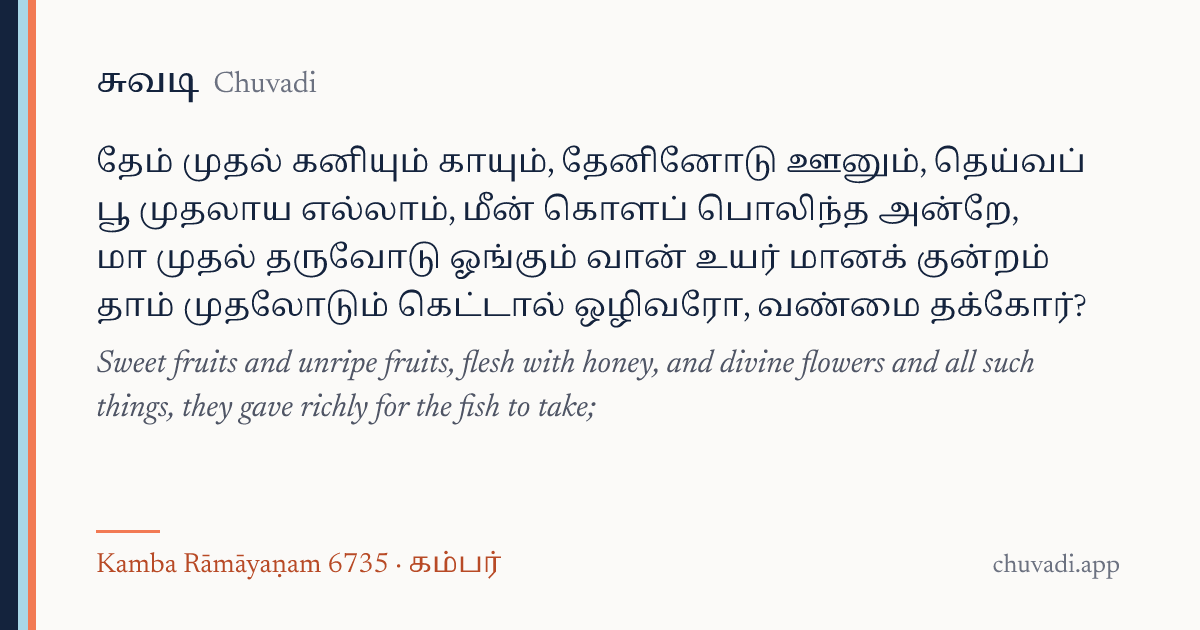
பாடல் · The poem
Tap a word to see its gloss in the commentary and where else it occurs.
பாட வேறுபாடு · Project Madurai reads
பொருள் · Meaning in Tamil
தேம் முதல் கனியும் காயும்- இனிய பழங்களும் தின்பதற்குரிய காய்களும்; தேனினோடு ஊனும் - தேனுடன் தின்பதற்கான ஊனும்; தெய்வப் பூ முதலாய எல்லாம் - தெய்வங்களும் விரும்பும் மண மலர்களும் மற்றும் பலவும்; மீன் கொளப் பொலிந்தது - (மலைகளை வானரங்கள் கடலில் வீசுதலால்) மீன்கள் தின்னும்படி பொலிந்தது; மாமுதல் தருவோடு ஓங்கும் - மாமுதலிய நல்ல பழமரங்கள் நிறைந்துள்ள; வான் உயர் மானக் குன்றம் - வானமளவும் உயர்ந்துள்ள அந்த மலைகள்; வண்மை தக்கோர் -வள்ளல் பண்புள்ள மேலோர்கள்; தாம் முதலோடும் கெட்டால் ஒழிவரோ - தாம், தமது செல்வத்தை இழந்தாலும் வள்ளல் பண்பு நீங்குவரோ?
தேம்- இனிமை. தேம்முதல் கனி - இனிமையைத் தம்மிடத்தே கொண்ட பழம். 'வான் உயர் மானக்குன்றம் - கனியும், காயும் பூமுதலாய எல்லாம் மீன் கொளப் பொலிந்தது' என இயையும். 'வண்மை தக்கோர்தாம் முதலோடு கெட்டால் ஒழிவரோ?' என்ற பொதுப் பொருளை விளக்குவதால் இரு வேற்றுப் பொருள் வைப்பணியாம்.
ஆங்கிலம் · English translationAI
Translation
- Sweet fruits and unripe fruits, flesh with honey, and divine
- flowers and all such things, they gave richly for the fish to take;
- the lofty, sky-high hills that tower with mango and other trees:
- if the generous are ruined to the root, do they cease to give?
What the poem says
Even as they sink, the great hills covered in mango and other trees go on feeding others: their fruit, honey, meat and flowers become a feast for the fish.
The last line turns this into a moral. A truly generous person keeps giving even after losing everything. This figure, where a general truth is set beside a particular scene, is called vēṟṟupporuḷ vaippu.