



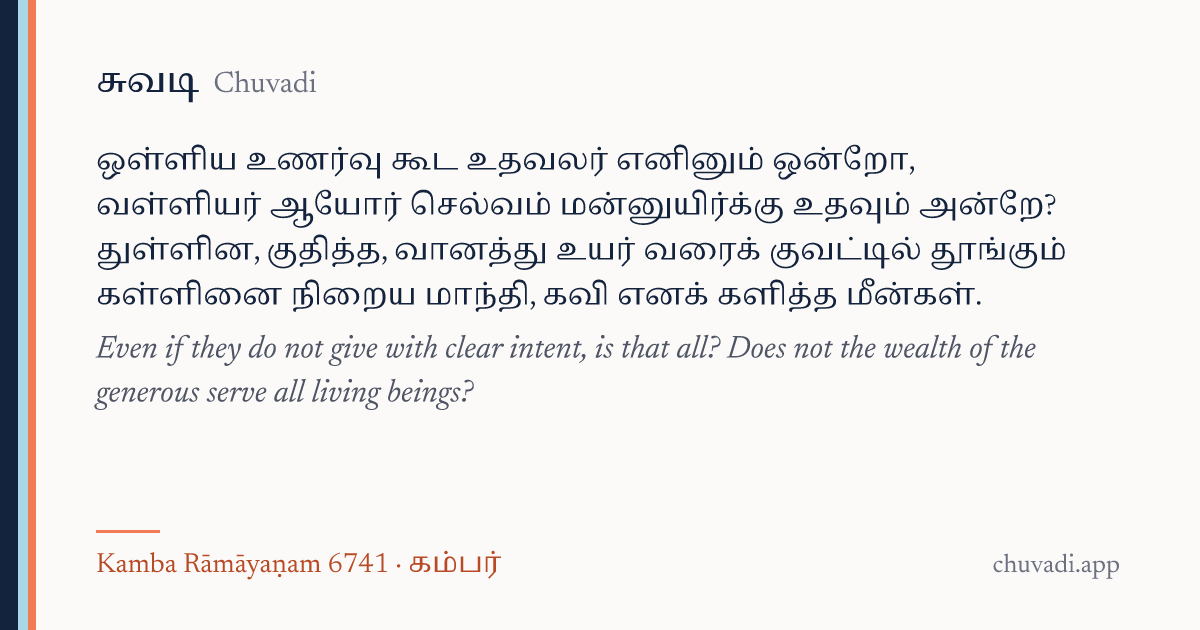
கம்பராமாயணம் 6741 · யுத்த 7.24
பாடல் · The poem
Tap a word to see its gloss in the commentary and where else it occurs.
பொருள் · Meaning in Tamil
வானத்து உயர்வரைக் குவட்டில் - (வானரங்களால் கடலில் வீசப்பட்ட) வானளவு உயர்ந்த மலைகளின் உச்சியில்; தூங்கும் கள்ளினை நிறைய மாந்தி - தொங்கிய தேன் கூடுகளிலுள்ள தேனை நிறையக் குடித்து விட்டு; கவி என மீன்கள் களித்த துள்ளின குதித்த - கடலில் வாழும் மீன்கள் எல்லாம் குரங்குகளைப் போலக் களித்துத் துள்ளிக் குதித்தன வாயின என்பது; வள்ளியர் ஆயோர் - வள்ளல் பண்பு உடையவர்கள்; ஒள்ளிய உணர்வு கூட - தெளிவான உணர்வுடனே; உதவலர் எனினும் ஒன்றோ - பிறருக்கு உதவவில்லை என்றாலும்; செல்வம் மன்னுயிர்க்கு உதவும் அன்றே - அவர்களது செல்வம் உலகத்து உயிர்களுக்கு உதவுமல்லவா அது போன்றிருந்தது.
குவடு- சிகரம். தூங்கும் - தொங்கும். கள் - தேன். வள்ளியர் ஆயோர் - வள்ளல் பண்புடையவர்கள். ஒள்ளிய - விளக்கத்தை உடைய. வள்ளியோர் பிறருக்கு உதவ வேண்டும் என்று நினைத்துத் தரவில்லை என்றாலும், அவர்களது நல்ல செல்வம் பயன் மரம் போல, ஊருணி நீர்போல, மருந்தாகித் தப்பா மரம் போலப் பிறருக்கு உதவும் தன்மையுடையது என்ற கருத்து விளக்கப்பட்டுள்ளது.
ஆங்கிலம் · English translationAI
Translation
- Even if they do not give with clear intent, is that all?
- Does not the wealth of the generous serve all living beings?
- They leapt and jumped: having drunk their fill of the honey
- hanging on the peaks of the sky-high hills, the fish grew merry like monkeys.
What the poem says
Honeycombs hang from the peaks of the mountains thrown into the sea. The fish drink the honey till they are drunk, and leap and caper like monkeys.
The mountains did not mean to feed the fish, yet their riches did. So too the wealth of the generous benefits all creatures even when they are not consciously giving, like a fruit tree in the village or a public water tank.