



கம்பராமாயணம் 6746 · யுத்த 7.29
பாடல் · The poem
Tap a word to see its gloss in the commentary and where else it occurs.
பாட வேறுபாடு · Project Madurai reads
பொருள் · Meaning in Tamil
வவ்விலங்கு வளர்த்தவர் மாட்டு - தம்மை வளர்த்தவர்களைப் பிறர் பற்றிக் கொண்டால் அப்போது வளர்த்தவரிடம்; செவ்விலங்கல் இல் சிந்தையில் - செம்மையான நெறியிலிருந்து விலகாத மனத்திலிருந்து; அருள் தீர்வரோ - (வளர்த்தவர்பால்) அருள் நீங்கப் பெறுவார்களோ (மாட்டார்); இனி இவ்விலங்கல் விடேம் - இனியும் இந்த மலையை விட்டுப் போக மாட்டோம்; என்ப போல் - என்று தீர்மானித்தன போல; எவ் விலங்கும் - மலையில் வாழ்ந்த எல்லா விலங்குகளும்; வந்து எய்தின வேலையே - வானரங்கள் மலைகளைக் கடலில் எறிந்த போது அம்மலையோடு கடலை எய்தின.
செவ் விலங்கல் இல் - செம்மை நெறியிலிருந்து. தீர்வரோ- தீர்வார்களோ. ஓகாரம் எதிர் மறைப் பொருளில். வளர்த்தவர்களைப் பிறர் பற்றிக் கொண்டால், வளர்த்த பாசத்தால் அவர்களைவிட்டு நீங்காமல் தம்மை வளர்த்தவரோடு வந்து விடும் நல்ல மனம் உள்ளவர் களைப் போல மலை விலங்குகள் மலைகளோடு கடலை அடைந்தன என்பது கருத்து.
ஆங்கிலம் · English translationAI
Translation
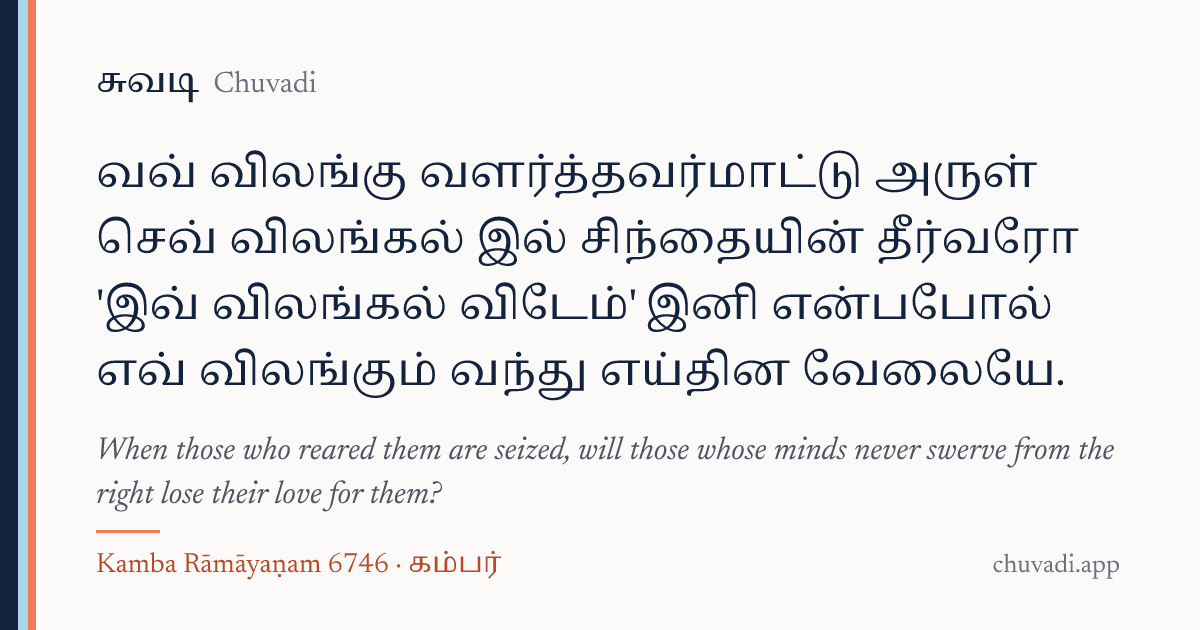
- When those who reared them are seized, will those whose minds never swerve from the right
- lose their love for them?
- As if saying 'We will not now leave this mountain',
- every beast came along into the sea.
What the poem says
The animals of the hills go into the sea along with them, as though they had sworn never to abandon the mountain that raised them.
The poet compares them to people of upright mind who do not desert those who raised them when misfortune seizes them, but go along and share their fate. The verse plays on the words vilaṅku, 'beast' or 'swerve', and vilaṅkal, 'mountain'.