



கம்பராமாயணம் 676 · பால 10.124
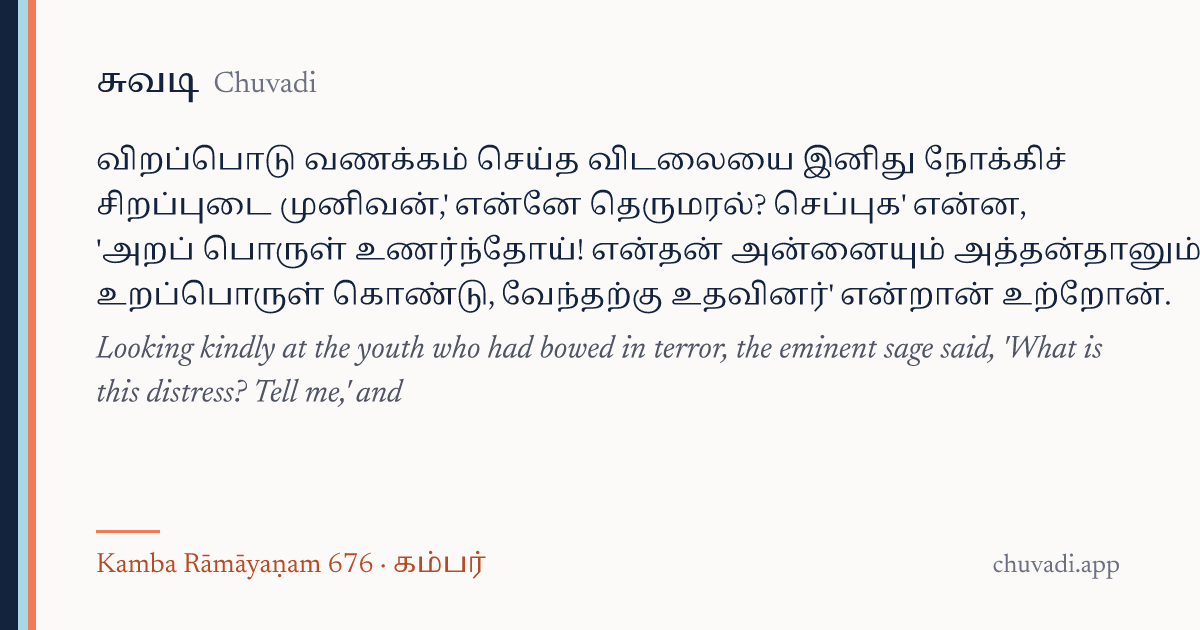
பாடல் · The poem
Tap a word to see its gloss in the commentary and where else it occurs.
பாட வேறுபாடு · Project Madurai reads
பொருள் · Meaning in Tamil
விறப்பொடு - சாவின் அச்சத்தோடு; வணக்கம் செய்த - வணக்கம் புரிந்த, விடலையை - அந்த இளைஞனை; சிறப்பு உடை முனிவன் - சீரிய பண்புள்ள கோசிக முனிவன்; இனிது நோக்கி - இனிமை ததும்பப் பார்த்து; தெருமரல் என்னே - (நீ இவ்வாறு கலங்குவது) என்ன காரணத்தால்?; செப்புக - சொல்லுக; என்ன - என்று கேட்க; உற்றோன் - (அவனைச் சரணாக அடைந்த) சுனச்சேபன்; அறம் பொருள் - தரும நூல்களின் உட் பொருளை; உணர்ந்தோய் - அறிந்தவனே; என்தன் - என்னுடைய; அன்னையும் - தாயும்; தந்தை தானும் - தந்தையும், உறப் பொருள் - மிகுதியான செல்வத்தை; கொண்டு - பெற்றுக் கொண்டு; வேந்தற்கு - அம்பரீட மன்னவனுக்கு; உதவினர் - (நரமேத வேள்விக்காக) என்னைக் கொடுத்துவிட்டார்கள்; என்றான் - என்று (நடந்த செய்தியைச்) சொன்னான்.
சிறப்பு: சரண் அடைந்தவனைக் கைவிடாது காக்கும் உறுதியும் தவ ஒழுக்கமும். அறம் - காரியவாகு பெயர். 'விறப்பே வெரூஉப் பொருட்டு மாகும்' தொல். உரி. 52 சேனா.
ஆங்கிலம் · English translationAI
Translation
- Looking kindly at the youth who had bowed in terror,
- the eminent sage said, 'What is this distress? Tell me,' and
- the one who had come to him said, 'You who know the meaning of dharma! My mother and my father
- took much wealth and gave me over to the king.'
What the poem says
Kaucikaṉ gently asks the frightened youth what troubles him. Cuṉaccēpaṉ, addressing him as one who understands the law, explains that his mother and father have taken a great sum and handed him over to the king to be sacrificed.