



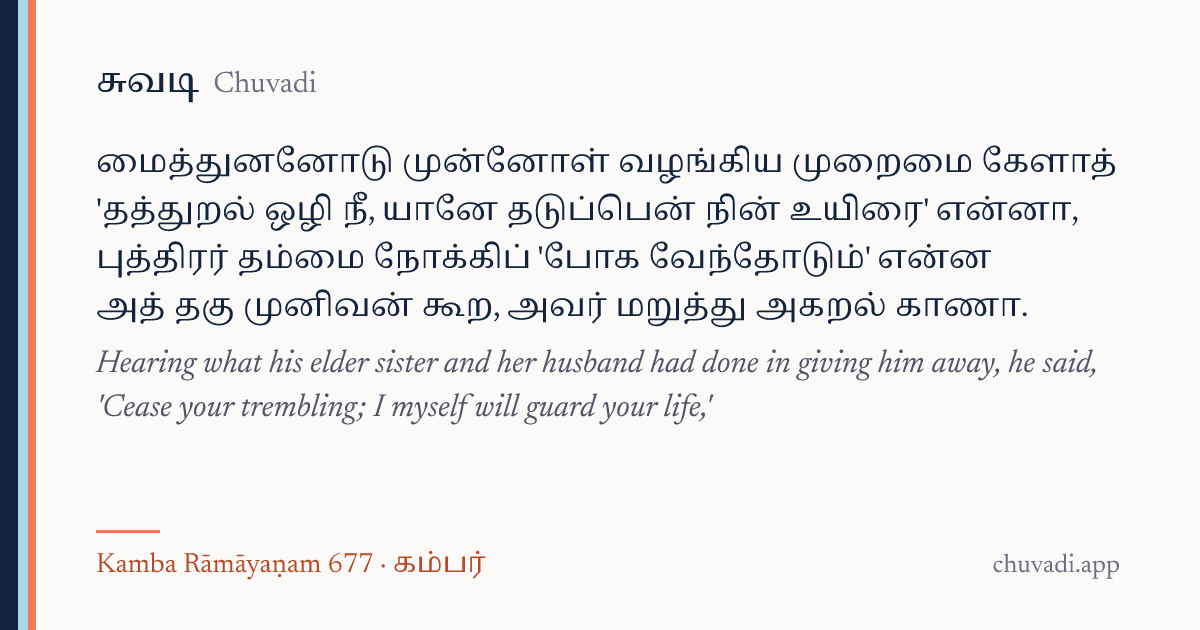
கம்பராமாயணம் 677 · பால 10.125
பாடல் · The poem
Tap a word to see its gloss in the commentary and where else it occurs.
பாட வேறுபாடு · Project Madurai reads
பொருள் · Meaning in Tamil
முன்னோள் - (தனக்கு) முன் பிறந்தவளும்; மைத்துனனோடு - (அவள் கணவனாகிய) மைத்துனன் ரிசிகனும்; வழங்கிய - (பிள்ளையை) விலைக்குக் கொடுத்துவிட்ட; முறைமை - செய்கையை; கேளா - கேட்டு; அத் தகு முனிவன் - தக்கவனாகிய அம்முனிவன்; நீ - (சுனச்சேபனை நோக்கி) நீ; தத்துறல் ஒழி - அச்சப்படுவதை நீக்குவாயாக; யானே நின் உயிரை - நானே உனது உயிரை; தடுப்பேன் என்னா - காப்பேன் என்று கூறி; புத்திரர்தம்மை நோக்கி - தன் மைந்தர்களைப் பார்த்து; வேந்தொடும் போக - (உங்களில் ஒருவன்) இந்த அரசனுடன் (நரமேதத்திற்காக இவனுக்கு ஈடாகக்) செல்லுக; என்னா கூற - என்று சொல்ல; அவர் மறுத்து அகறல் - அம் மக்கள் அனைவரும் கட்டளையை மறுத்து நீக்குதலை; காணா - கண்டு.
பெற்றோரால் கைவிடப்பட்ட தன் மருமகனுக்கு அபயம் அளித்து என் மக்களில் யாரேனும் ஒருவன் இவனுக்காகச் செல்லுக என்றான் முனிவன்; ஆனால் அதற்கு ஒருவனும் உடன்படவில்லை.
ஆங்கிலம் · English translationAI
Translation
- Hearing what his elder sister and her husband had done in giving him away,
- he said, 'Cease your trembling; I myself will guard your life,'
- and turning to his own sons, 'Go with the king,'
- that worthy sage said; and seeing them refuse and walk away —
What the poem says
Kaucikaṉ learns that the youth's parents are his own elder sister and her husband Ricikaṉ, so Cuṉaccēpaṉ is his nephew. He tells the boy not to fear, promising to save his life, and orders one of his own sons to go with the king in the boy's place. They all refuse and leave; his response follows in the next verse.