



கம்பராமாயணம் 6773 · யுத்த 7.56
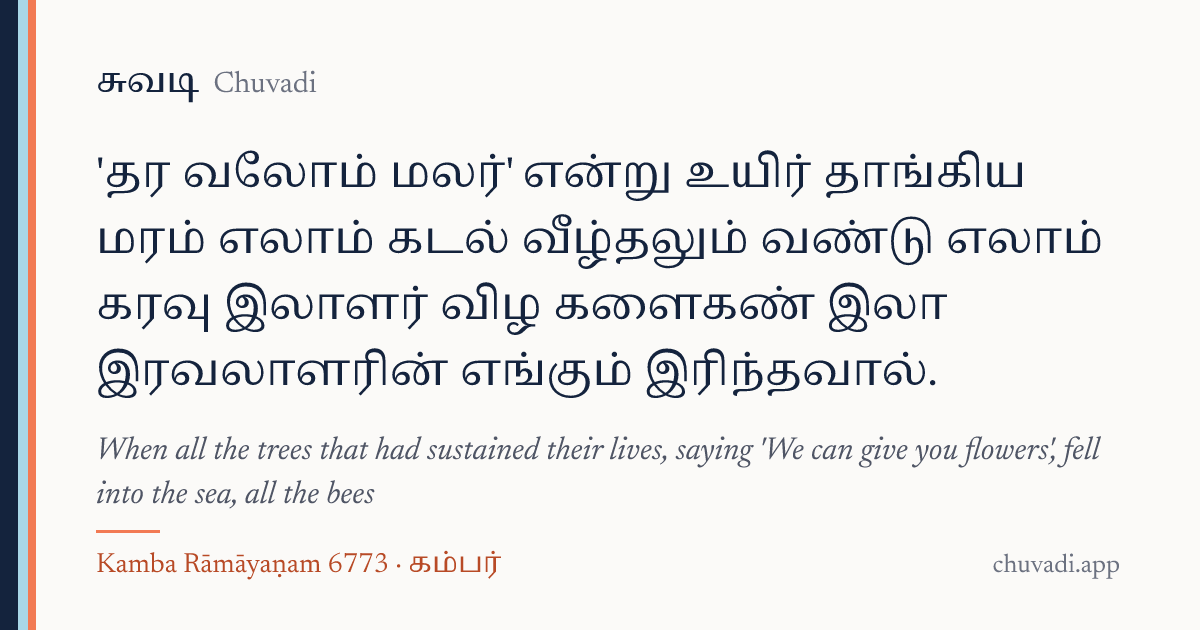
பாடல் · The poem
Tap a word to see its gloss in the commentary and where else it occurs.
பொருள் · Meaning in Tamil
தரவலோம் மலர் என்று - (வண்டுகளுக்கு வேண்டிய மலர்களை உங்களுக்கு தரவல்லோம் என்று கூறி; உயிர் தாங்கிய மரம் எல்லாம் - அவற்றின் உயிர்களைக் காத்து ஆதரித்துக் கொண்டிருந்த மரங்களெல்லாம்; கடல் வீழ்தலும் - வானரங்களால் பறிக்கப்பட்டுக் கடலில் வீழ்ந்ததும்; வண்டு எலாம் - (அம்மரங்களின் மலர்களில் நிறைந்திருந்த தேனை உண்டு வாழ்ந்திருந்த) வண்டுகள் எல்லாம்; கரவிலாளர் விழ - செல்வத்தை ஒளித்து வைக்காது தம்மை நாடி வந்தவர்க்கு உதவிய கொடையாளிகள் இறந்துவிழ; களைகண் இலா - பற்றுக் கோடு எதுவுமற்ற; இரவலாளரின் - இரவலர்களைப் போல; எங்கும் இரிந்த - எங்கும் ஓடலாயின.
'வலோம்' வல்லோம் என்பதன் இடைக்குறை. கரவிலாளர் - செல்வத்தை ஒளிக்காது பிறர்க்கு உதவுபவர். வண்டுகள் பருக வேண்டிய தேனை வேண்டுமளவு தந்த மரங்களை 'உயிர்தாங்கிய மரம்' என்றார். வரையாது வழங்கும் வள்ளலைப் போல அம்மரங்கள் தரவலோம் மலர் என்று கூறித் தந்தன. கரத்தல் - மறைத்தல். செல்வத்தை மறைத்துவைக்காது நாடி வந்தவர்களுக்கு உதவுபவர் 'கரவிலாளர்' ஆவர். இத்தகையோர் 'கரப்பிலர்' எனவும், 'கரத்தல் கனவிலும் தேற்றாதார்' எனவும் வள்ளுவரால் போற்றியுரைக்கப்படுவர். களைகண் - பற்றுக் கோடு.
ஆங்கிலம் · English translationAI
Translation
- When all the trees that had sustained their lives, saying 'We can give you flowers',
- fell into the sea, all the bees
- fled everywhere, like beggars left without support
- when the open-handed who hid nothing have fallen.
What the poem says
The flowering trees had fed the bees with nectar as if promising, 'We can always give you flowers.' Now they are torn up and thrown into the sea, and the bees scatter in every direction.
They are like beggars whose generous patrons have died, patrons who never hid their wealth from those who came to them. The Tirukkuṟaḷ praises such people as those who 'do not know how to hide, even in dreams'.