



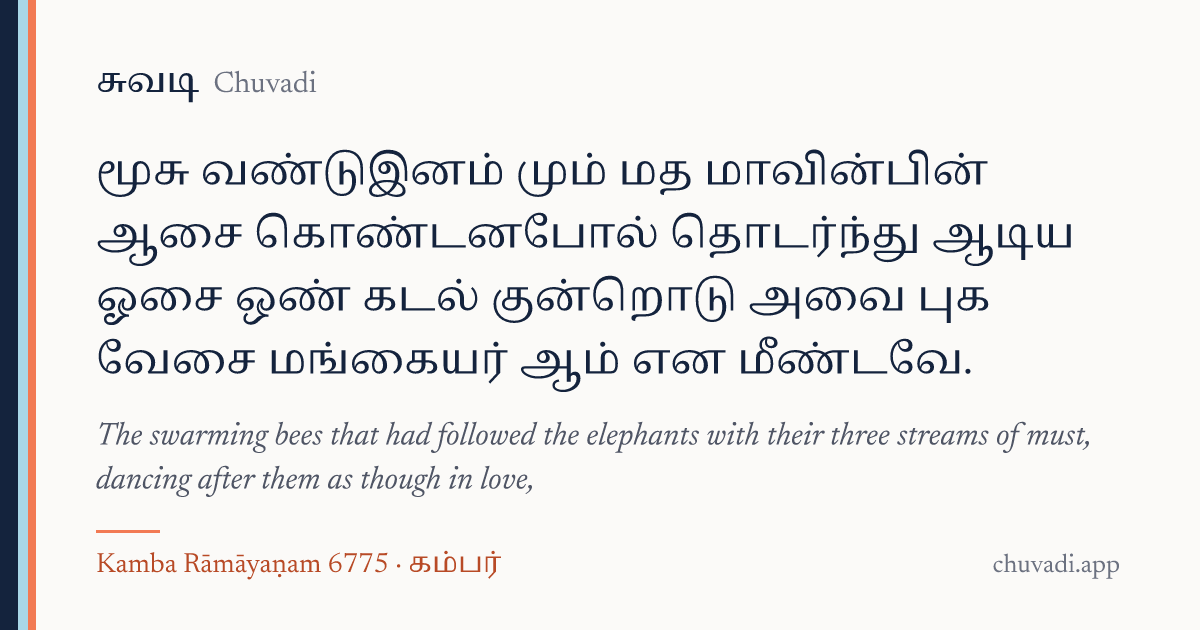
கம்பராமாயணம் 6775 · யுத்த 7.58
பாடல் · The poem
Tap a word to see its gloss in the commentary and where else it occurs.
பாட வேறுபாடு · Project Madurai reads
பொருள் · Meaning in Tamil
மூசுவண்டினம் - மொய்த்திருக்கும் வண்டுகளின் கூட்டம்; மும்மதமாவின்பின் - மும்மதம் பொழியும் யானைகளின் பின்னால்; ஆசைகொண்டனபோல் - அந்த யானைகளின் மீது ஆசை கொண்டன போல; தொடர்ந்து ஆடிய - யானைகளைப் பின் தொடர்ந்து ஆடிக் கொண்டு சென்றவை; ஓசை ஒண் கடல் - அலைகளின் ஓசைமிகுந்த ஒள்ளிய கடலிலே; குன்றொடு அவை புக - தாம் வாழ்ந்த மலைகளோடு அந்த யானைகள் விழ; வேசை மங்கையராமென மீண்டவே - வேசையரைப் போல மீண்டு வந்தன.
மூசுவண்டு - மொய்த்த வண்டு. மும்மதம் - கன்னமதம், கபோலமதம், பீஜமதம். இது உவமை அணி. "நறுந்தாதுண்டு நயனில் காலை வறும்பூத்துறக்கும் வண்டு போல்குவம்" என்பது மணிமேகலை (18.19.20)
ஆங்கிலம் · English translationAI
Translation
- The swarming bees that had followed the elephants with their three streams of must,
- dancing after them as though in love,
- when those beasts went into the bright roaring sea with their hills,
- turned back like women of the town.
What the poem says
Bees love the fragrant must that flows from rutting elephants at three points on the head, so swarms of them used to follow the elephants about, dancing as if in love.
When the elephants fall into the sea with their mountains, the bees simply turn and leave, like courtesans who desert a lover once he has nothing left to give. The image is close to a line in the Maṇimēkalai about bees that drink a flower's nectar and abandon it once it is empty.