



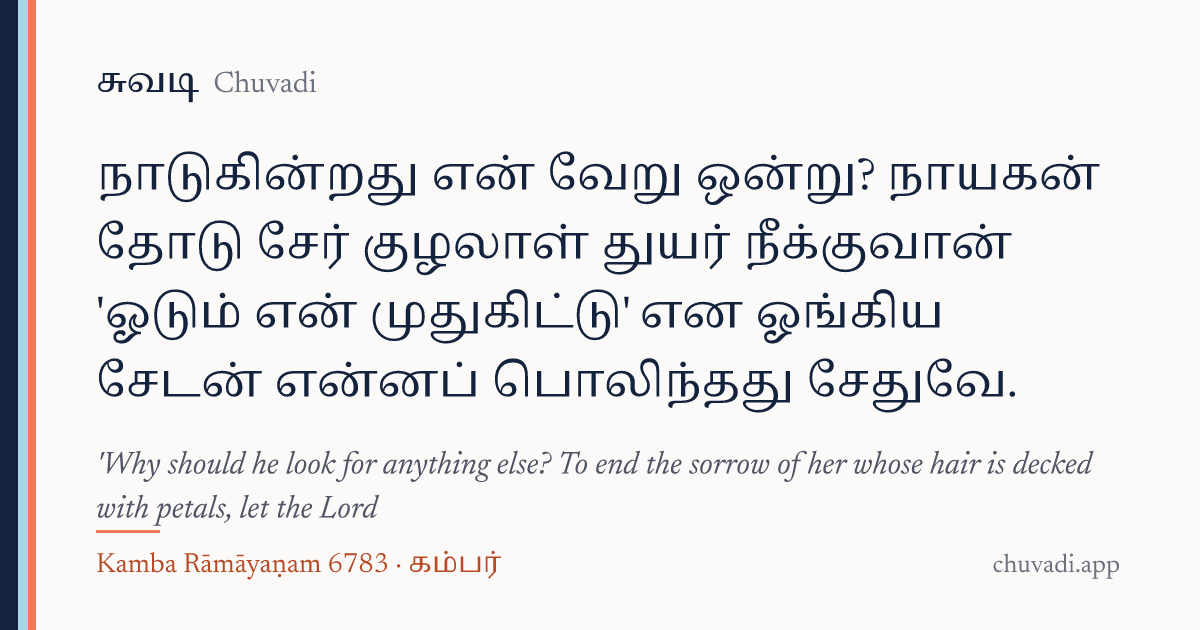
கம்பராமாயணம் 6783 · யுத்த 7.66
பாடல் · The poem
Tap a word to see its gloss in the commentary and where else it occurs.
பொருள் · Meaning in Tamil
நாயகன் - எல்லாவுயிர்களுக்கும் தலைவனான இராமபிரான்; தோடு சேர் குழலாள் - பூவிதழ்களைச் சூடிய கூந்தலை உடைய சீதாபிராட்டியின்; துயர் நீக்குவான் - துயரத்தைத் தீர்ப்பதற்கு; நாடு கின்ற தென் வேறு ஒன்று - அப்பெருமானுக்கு ஏவல் பூண்டொழுகும் நான் இருக்க வேறு ஒன்றினை ஏன் அவன் நாடவேண்டும்; ஓடும் என்முதுகு இட்டு என - எனது முதுகின் மீது அடியிட்டு இராமபிரான் விரைந்து செல்லட்டும் என்று; ஓங்கிய சேடன் என்ன - கடலின்மீது உயர்ந்து விளங்கிய ஆதிசேடனைப் போல; சேது பொலிந்தது - அந்த அணை பொலிவு பெற்று விளங்கியது.
முதுகு இட்டு - முதுகில் அடியிட்டு. "சென்றால் குடையாம் இருந்தால் சிங்காதனமாம் நின்றால் மரவடியாம் நீள்கடலுள் என்றும் புணையாம் மணி விளக்காம் பூம்பட்டாம்புல்கும் அணையாம் திருமாற்கு அரவு" என்ற முதல் திருவந்தாதி (53) நினைவு கூரத்தக்கது.
ஆங்கிலம் · English translationAI
Translation
- 'Why should he look for anything else? To end the sorrow
- of her whose hair is decked with petals, let the Lord
- run across my back,' as if saying so, like Cēṭaṉ
- rising up, the causeway shone.
What the poem says
The finished causeway stretching across the sea looks like Ādiśeṣa, Cēṭaṉ, the great serpent on whom Viṣṇu rests, lifting himself above the waters.
It is as if the serpent said: I am always at the Lord's service, so why should he look for any other way across? Let him run over my back to rescue Cītai. An old devotional hymn praises the serpent as everything to Viṣṇu: his umbrella when he walks, his throne when he sits, his sandals when he stands, and his raft upon the sea.