



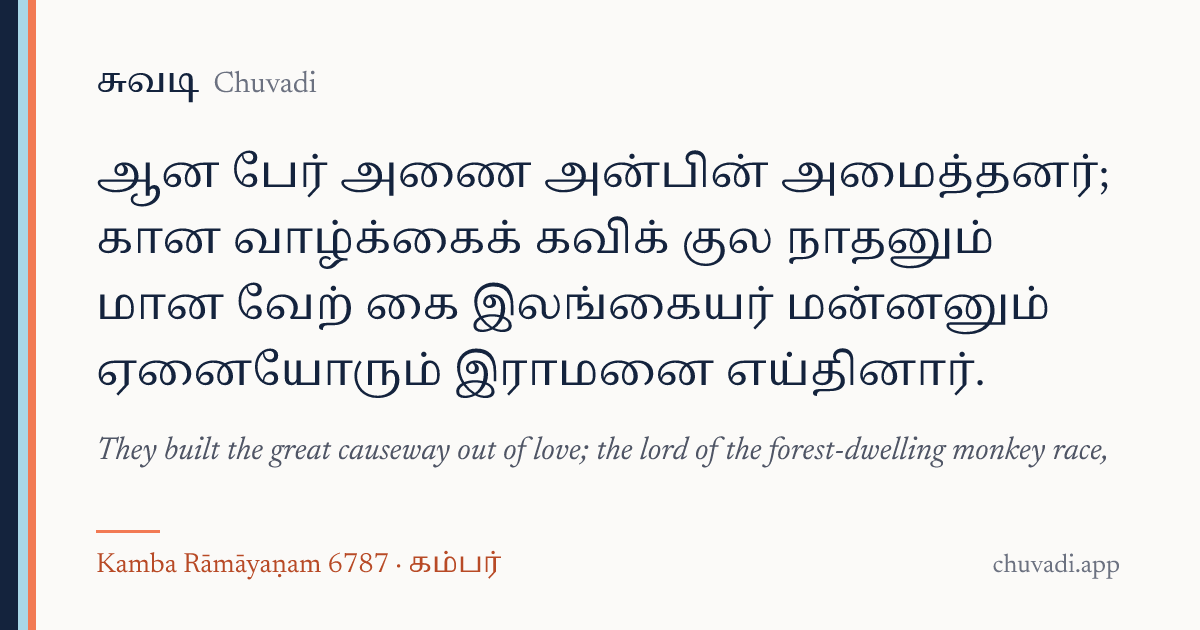
கம்பராமாயணம் 6787 · யுத்த 7.70
பாடல் · The poem
Tap a word to see its gloss in the commentary and where else it occurs.
பாட வேறுபாடு · Project Madurai reads
பொருள் · Meaning in Tamil
ஆனபேரணை - இலங்கை செல்லுதற்கான பெரிய அணை; அன்பின் அமைத்தனர் - வானர வீரர்கள் அன்பாலே கட்டி முடித்தனர்; கான வாழ்க்கை - காடுகளிலே வாழுகின்ற வாழ்க்கையை உடைய கவிக்குல நாதனும் - வானரக் கூட்டத்தின் தலைவனான சுக்கிரீவனும்; மான வேற்கை - பெருமைமிகுந்த வேலைப்படையாக கையில் தாங்கியுள்ள; இலங்கையர் மன்னனும் - இலங்கையில் வாழ்பவர்களுக்கு அரசனான வீடணனும்; ஏனையோரும் - மற்றுமுள்ள அனுமன், சாம்பவந்தன், அங்கதன், நீலன், முதலான வானரப்படையின் தலைவர்களும்; இராமனை எய்தினர் - இராமபிரானிடம் சென்று அடைந்தனர்.
'ஆன்' என்பதற்கு இலங்கை செல்லுதற்கான என்று விரித்துப் பொருள் கொள்ளலாம். வானர வீரர்கள் இராமபிரானிடம் கொண்ட அன்பினால்தான், அணைகட்டும் அரிய செயலைச் செய்து முடித்தார்களே அல்லாது வேறு எவ்விதப் பயனையும் எதிர் பார்த்துச் செய்யவில்லை என்பதால் 'அன்பின் அமைத்தனர்' என்றார். பக்தியால் அன்றிப் பிற வகையால் நிறைவேற்றியிருக்க முடியாத கைங்கரியம் என்பது கவிஞர் குறிப்பு. காடுகளில் சுற்றித் திரிந்து காய் கனிகளை உண்டு வாழும் குரங்குகளாதலின் 'கான வாழ்க்கைக் கவிக்குலம்'. வேடராகிய கண்ணப்பரின் சாதனை போன்றது இது. அவர் சாதனை ஆறு நாளில்; வானரரின் பக்திச் சாதனை மூன்று நாளில் என அறிக. மான வேற்கை என்பதற்குப் பதிலாக மான வேலை என்ப தொரு பாடமும் கூறுவர். 'மான வேலை இலங்கை' என்பதற்கு பெரிய கடல் சூழ்ந்த இலங்கை என்பது பொருளாகும்.
ஆங்கிலம் · English translationAI
Translation
- They built the great causeway out of love;
- the lord of the forest-dwelling monkey race,
- the king of Ilaṅkai's people with a proud spear in his hand,
- and all the others came to Irāmaṉ.
What the poem says
The bridge was built out of love alone. The monkeys wanted no reward, and only devotion could have achieved such a task. The commentary compares it to the hunter-saint Kaṇṇappar's six days of devotion to Śiva; the monkeys' feat took three.
With the work done, Cukkirīvaṉ, Vīṭaṇaṉ, spear in hand and already named king of Ilaṅkai, and the other leaders go to Irāmaṉ. One reading has 'great sea' instead of 'proud spear', giving 'Ilaṅkai girt by the great sea'.