



கம்பராமாயணம் 680 · பால 10.128
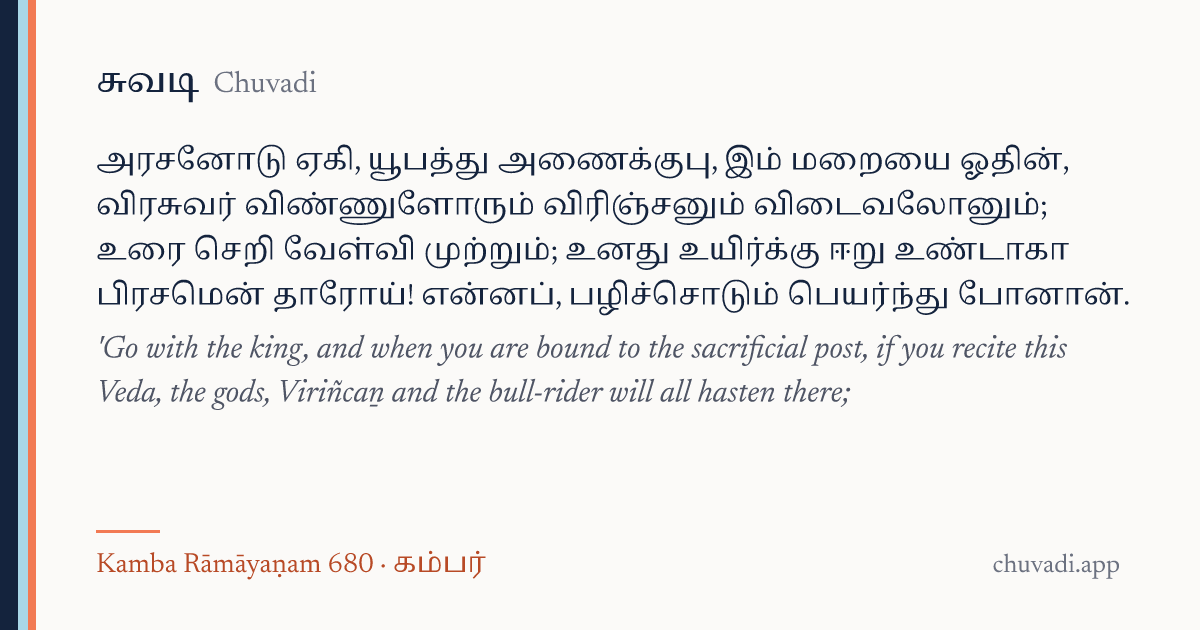
பாடல் · The poem
Tap a word to see its gloss in the commentary and where else it occurs.
பாட வேறுபாடு · Project Madurai reads
பொருள் · Meaning in Tamil
பிரசம் மென் தாரோய் - தேனுடைய மென்மையான பூமாலை தரித்தவனே; அரசனோடு ஏகி - அம்பரீட மன்னனோடு சென்று; யூபத்து அணைக்குபு - (அவன்) யூபத் தூணிலே கட்டும் போது; இம் மறையை ஓதின் - இந்த மந்திரங்களைச் சொன்னால்; விண்ணுளோரும் - தேவர்களும்; விரிஞ்சனும் - பிரமனும்; விடைவலோனும் - காளை ஊர்தியான சிவபிரானும்; விரசுவர் - (தத்தம் அவிர்ப் பாகத்தைப் பெற) வந்து சேர்வார்கள்; உரை செறி - புகழ் மிக்க; வேள்வி முற்றும் - யாகமும் நிறைவுறும்; உனது உயிர்க்கு - உன் உயிர்க்கும்; ஈறு உண்டாகா - இறுதி உண்டாகாது; என்ன - என்று (தன் மருமகனிடம்) சொல்ல; பழிச்சொடும் - (அது கேட்டு அவன் வணங்கித்) துதிமொழிகள் கூறியவனாக; பெயர்ந்து போனான் - (அவ்விடத்தை விட்டு) நீங்கி அரசனோடு சென்றான்.
அணைக்குபு: அணைக்க; அரசன் முனி மைந்தனைச் சந்தனம், மாலை முதலியவற்றால் அலங்கரித்து நரமேதத்திற்காக அழைத்துச் சென்றானாதலால் கோசிகன் அவனைப் 'பிரசம் மென் தாரோய்' என விளித்தான். யூபம்: யாகப் பசுவைக் கட்டும் தூண். இரண்டு மந்திரங்கள்: 1. பலியை உண்பவனாகிய இந்திரனைத் துதிப்பது. 2. யூபத் தூணின் தேவதையான உபேந்திரனைத் துதிப்பது.
ஆங்கிலம் · English translationAI
Translation
- 'Go with the king, and when you are bound to the sacrificial post, if you recite this Veda,
- the gods, Viriñcaṉ and the bull-rider will all hasten there;
- the renowned sacrifice will be completed, and there will be no end to your life,
- you with the soft honeyed garland!' he said, and the youth, with words of praise, went away.
What the poem says
Kaucikaṉ instructs Cuṉaccēpaṉ: go with the king, and when you are tied to the sacrificial post, recite these mantras. The gods, Brahmā (Viriñcaṉ) and Śiva the bull-rider will come to receive their shares, the sacrifice will be fulfilled, and your life will be spared.
He addresses the youth as one wearing a soft garland dripping honey, since the victim had been decked with garlands and sandal paste for the rite. The two mantras, the commentary says, praise Indra and Upendra, the deity of the post. Cuṉaccēpaṉ praises the sage and leaves with the king.