



கம்பராமாயணம் 6802 · யுத்த 8.14
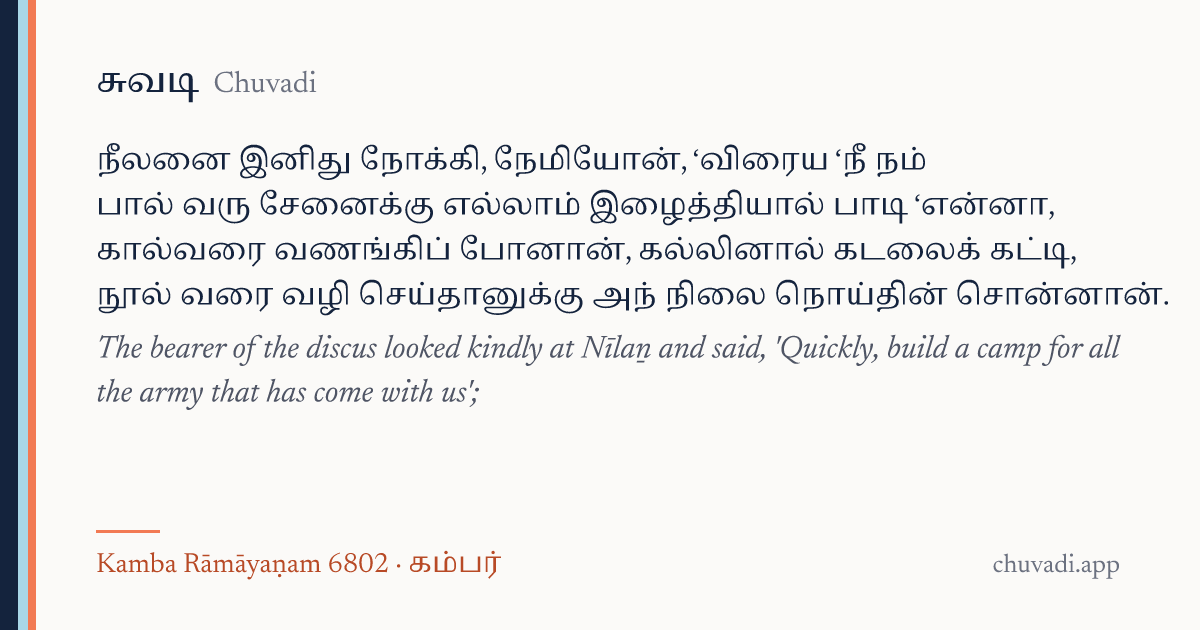
பாடல் · The poem
Tap a word to see its gloss in the commentary and where else it occurs.
பாட வேறுபாடு · Project Madurai reads
பொருள் · Meaning in Tamil
நேமியோன் - சக்கரப் படையேந்திய திருமாலின் அவதாரமான இராமபிரான்; நீலனை இனிது நோக்கி - நீலன் எனும் வானரப் படைத் தலைவனை இனிமையுற நோக்கி, நீ நம் பால் வருசேனைக்கு எல்லாம் - 'நீ நம்முடன் வந்துள்ள சேனைகட்கு எல்லாம்; பாடி விரைய இழைத்தி என்னா - (தங்குவதற்குப்) பாடிவீடுகளை விரைய அமைப்பாயாக' என்று பணித்திட; கால் வரை வணங்கிப் போனான் - (அவன், பெருமானது) திருவடிகளில் வீழ்ந்து வணங்கிச் சென்று; கல்லினால் கடலைக்கட்டி - மலைகளைக் கொண்டு கடலுக்கு அணையினைக் கட்டி; நூல்வரை வழிசெய்தானுக்கு - சிற்ப நூல்களின் இலக்கணப் படி நின்று, இலங்கைக்கு வழி செய்து கொடுத்தவனாகிய நளனிடம்; அந்நிலை நொய்தின் சொன்னான் - அப் பணியினை நொடிப் பொழுதில் சொன்னான்.
போனான் - முற்றெச்சம். நேமி - சக்கரம். நொய்து - ஆகுபெயராய் நொடியைக் குறித்தது. 'வரை' இரண்டில், முன்னது இடத்தையும் பின்னது முறையையும் குறித்தது.
ஆங்கிலம் · English translationAI
Translation
- The bearer of the discus looked kindly at Nīlaṉ and said, 'Quickly,
- build a camp for all the army that has come with us';
- he bowed at his feet and went, and to the one who bound the sea with stone
- and made the road by the rule of the books, he told that task at once.
What the poem says
Irāmaṉ, Viṣṇu who bears the discus, kindly asks the commander Nīlaṉ to set up quarters at once for the whole army.
Nīlaṉ bows at his feet and passes the order straight to Naḷaṉ, who bound the sea with stone and laid the road to Ilaṅkai according to the rules of the building manuals.