



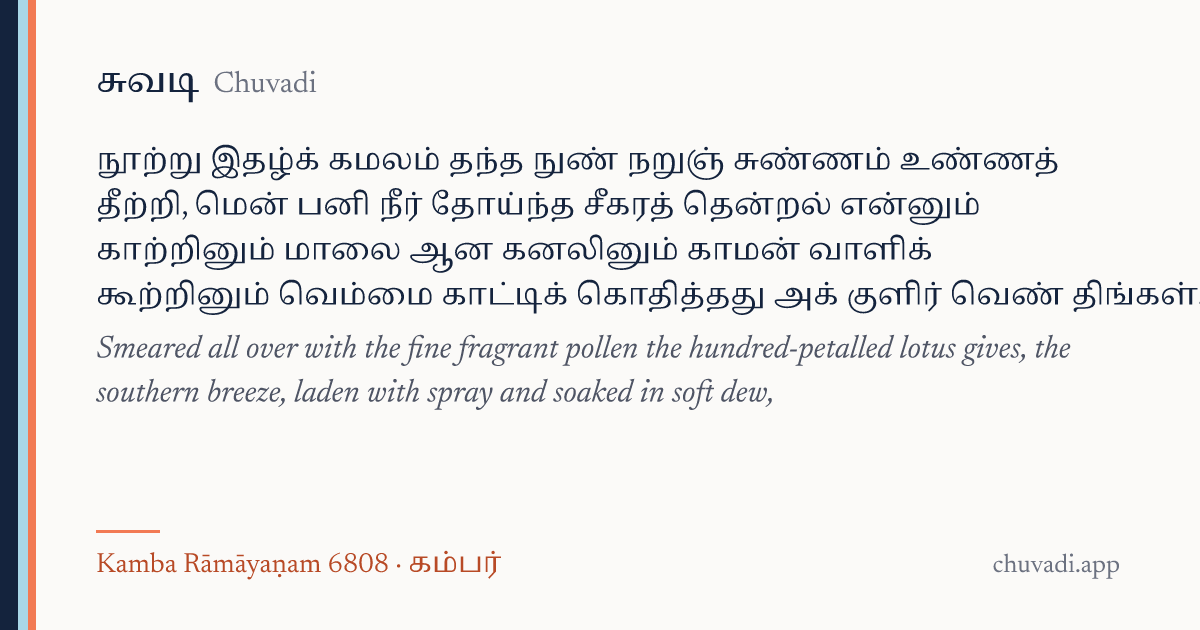
கம்பராமாயணம் 6808 · யுத்த 8.20
பாடல் · The poem
Tap a word to see its gloss in the commentary and where else it occurs.
பாட வேறுபாடு · Project Madurai reads
பொருள் · Meaning in Tamil
நூறு இதழ்க் கமலம் தந்த - நூறு இதழ்களையுடைய தாமரை கொடுத்த; நுண் நறும் சுண்ணம் உண்ணத் தீற்றி - நுண்ணிய நல்மணம் மிக்க பூந்தாதுக்களை, தன் உடல் உண்ணும்படி அப்பிக் கொண்டு; மென்பனி நீர்தோய்ந்த - மென்மைமிக்க பனிநீர் படியப்பெற்ற; சீகரத் தென்றல் என்னும் - நீர்த்துளிகளுடன் கலந்த தென்றற் காற்றினாலும்; மாலை ஆன கனலினும் - மாலைக்காலம் ஆகிய நெருப்பினாலும்; காமன் வாளிக் கூற்றினும் - மன்மதன் அம்பு எனப்படுகின்ற கூற்றுவனாலும்; வெம்மை காட்டி அக்குளிர் வெண்திங்கள் - (தரஇயலாத) வெப்பத்தைத்தந்து, அந்தக் குளிர்ந்த தன்மையது எனப்படுகின்ற வெள்ளைத் திங்கள்; கொதித்தது - கொதிப்பாய்க் கொடுத்தது.
நூற்றிதழ் - நூறு, எண்ணைக் குறிக்காமல். பலஎனும் பொருள் குறித்தது. விரக நோய் உற்றார்க்குத் தென்றற் காற்றும், மாலைப் போதும், மன்மதன் பூங்கணைகளும் குளிர் திங்களும் மிகுவெப்பம் விளைவிப்பன என்பது கவிமரபு. குளிர் திங்கள் கொதித்தது என்பதில் உள்ள முரணால் தோன்றும் நயம் உவப்பளிப்பது. இயல்பின் இனிமையுடைய தென்றல், திங்கள் முதலியன பிரிந்த காதலர்க்கு வேதனை தரும் என்பதைக் கம்பர் முன்னும் (543, 555, 557, 5159) குறிப்பிட்டுள்ளார்.
ஆங்கிலம் · English translationAI
Translation
- Smeared all over with the fine fragrant pollen the hundred-petalled lotus gives,
- the southern breeze, laden with spray and soaked in soft dew,
- the fire that is evening, and the death that is Kāmaṉ's arrow:
- hotter than all of these, that cool white moon burned.
What the poem says
Indian love poetry has a stock list of things that torment a lover parted from the beloved: the gentle south breeze, the evening hour, the flower arrows of Kāmaṉ, and the cool moon.
The breeze, though dusted with lotus pollen and damp with dew, scorches Irāmaṉ. Evening is a fire, and Kāmaṉ's arrow is death itself. The moon, supposedly cool, burns hotter than any of them. The paradox of the boiling cool moon is the point of the verse.