



கம்பராமாயணம் 6811 · யுத்த 8.23
பாடல் · The poem
Tap a word to see its gloss in the commentary and where else it occurs.
பாட வேறுபாடு · Project Madurai reads
பொருள் · Meaning in Tamil
காலம் இற்று இது ஆக - காலம் இத்தன்மையது ஆக; இலங்கையர் வேந்தன் ஏவ - இலங்கை மக்களின் தலைவனான இராவணனது ஏவலினால்; ஒற்றர் வந்து - (வேவு பார்க்கும்) ஒற்றர்கள் (அங்கு) வந்து; அளவு நோக்கி - (வானரப் படையின் திறம், எண்ணிக்கை முதலிய) அளவுகளைப் பார்த்து; குரங்குஎன உழல்கின்றாரை - குரங்குகள் போல வேடமிட்டுப் (பாடி வீடுகட்கிடையே) திரிகின்றவர்களை; தான் பண்டு பலநாள் செய்த - தான், முன்பு பன்னெடு நாட்கள் (பொறுமைபூண்டு) செய்த; நல்தவப் பயன் - நல்ல தவத்தின் பயன்; தந்து உய்ப்ப - விளைந்து (பின்னின்று) செலுத்த; முந்து உறப் போந்த நம்பி - முன்னதாக இராமன் திருவடிகளைப் பற்றி உய்ய வந்த புருடோத்தமனாகிய வீடணன்; பற்றினன் - (ஒற்றர் எனக் கண்டு) பற்றிக் கொண்டான்.
அரக்கர், விரும்பும் வடிவம் பெற்றுக் கொள்ளும் திறமுடையர். விரும்பும் வடிவம் எடுக்கும் திறத்தால் அரக்கர்க்குக் 'காமரூபர்' எனும் பெயர் உண்டு.
ஆங்கிலம் · English translationAI
Translation
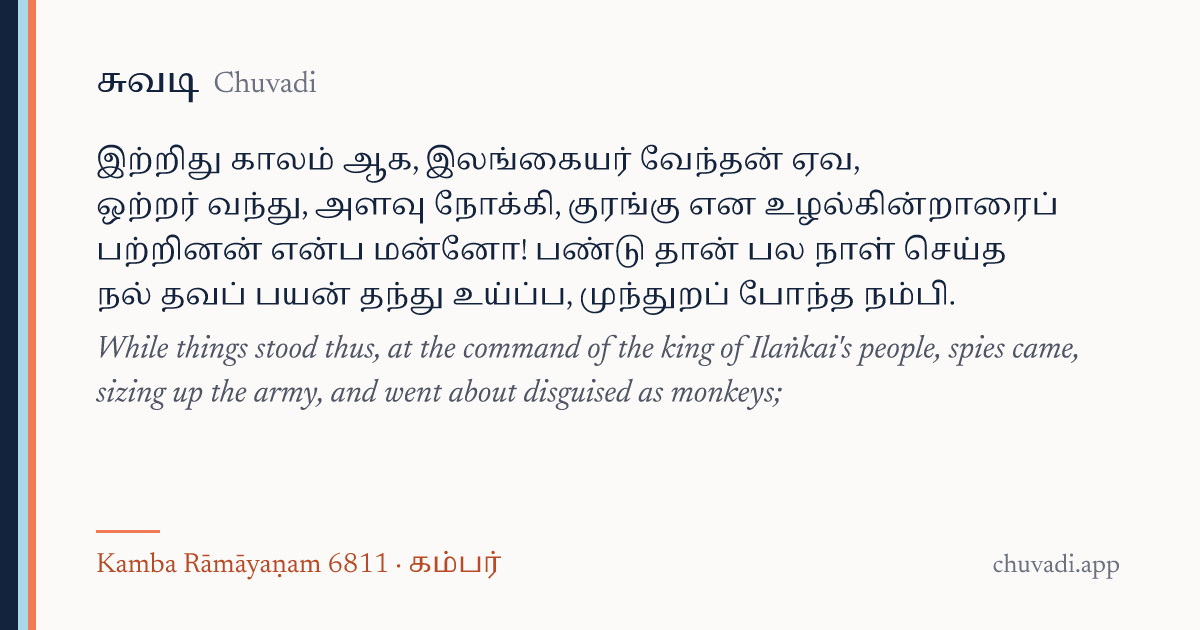
- While things stood thus, at the command of the king of Ilaṅkai's people,
- spies came, sizing up the army, and went about disguised as monkeys;
- and they were caught, so it is told, by that noble one
- who had come over first, led on by the fruit of the good penance he had done for many days of old.
What the poem says
The scene of the spies begins. Irāvaṇaṉ has sent agents to size up the army. Arakkars can take any form they like, so they slip into the camp disguised as monkeys.
Vīṭaṇaṉ, who came over to Irāmaṉ ahead of everyone, led by the merit of the long penance he had once performed, recognises them and seizes them.