



கம்பராமாயணம் 6823 · யுத்த 8.35
பாடல் · The poem
Tap a word to see its gloss in the commentary and where else it occurs.
பாட வேறுபாடு · Project Madurai reads
பொருள் · Meaning in Tamil
மாகம் - வானத்தில்; சண்டங்கள் வேகத்தனிவிடை உவணம் தாங்கும் - மிகக் கடுமையான வேகத்தில் செல்லவல்ல ஒப்பற்ற எருதும் கருடனும் தாங்கும்; துண்டம் கொள் பிறையான் - பிறைத் துண்டம் அணிந்த சிவபிரானோடும்; மெளலித் துளவினானோடும் - மகுடத்தில் துளவம் அணிந்த திருமாலோடும்; தொல்லை அண்டங்கள் எவையும் - தொன்மை வாய்ந்த அண்டங்களில் வாழும் அனைத்துயிர்களும்; தாங்கிக் காப்பினும் - துணையாக வந்து காத்தாலும்; அறம் இலாதான் - அறநெறிச் செல்லாத இராவணனை; கண்டங்கள் பலவும் காண்பென் - பற்பல துண்டங்களாக்கிப் பார்ப்பேன்; என்பதும் கழறுவீர் - என்ற செய்தியையும் (சென்று) உரையுங்கள்.
சண்டம் - கொடுமை, கடுமை, உக்கிரம். புயற்காற்றைச் சண்டமாருதம் எனல் காண்க. "சண்டப் பிறைவாள் எயிற்றான்" (கம்ப. 3425) என முன்பும் கூறுவார். "சண்டவேகம்" (4284), "சண்டவெங்கடுங்கணை" (2995) எனவும் வருதல் காண்க. மாகம் - வானம். மாகம் சண்டங் கொள்வேகம் எனக் கூட்டுக. "தனிவிடை தாங்கும் பிறையான்" எனவும், "உவணம் தாங்கும் துளவினான்" எனவும் முறையே நிரல் நிறையாய் இயையும். பிரமன் இராவணன் குலமுதல்வன் ஆதலின் அவன் துணையாதல் கூறாமலே பெறப்படும். எனவே, மும்மூர்த்திகளோடு அனைத்து அண்டங்களிலிருப்போரும் இணைந்து இராவணனைக் காத்து நிற்பினும், அறம் வழுவிய அவனை நான் கண்ட துண்டமாக்குவது தப்பாது எனப் பெருமான் தன் ஆற்றல் உணர்த்தியவாறு. தான் ஆனதன்மையை மறந்து பெருமான் உரையாடும் இடங்களில் இதுவும் ஒன்று.
ஆங்கிலம் · English translationAI
Translation
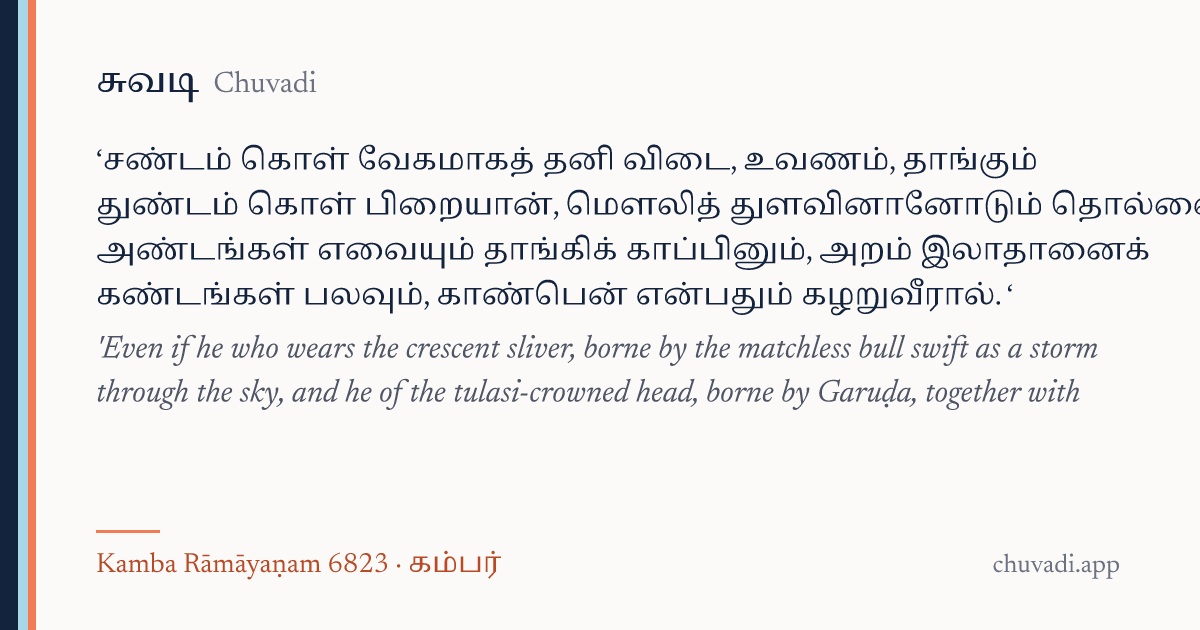
- 'Even if he who wears the crescent sliver, borne by the matchless bull swift as a storm through the sky,
- and he of the tulasi-crowned head, borne by Garuḍa, together with
- all the ancient worlds, should uphold and guard him, I will see
- the lawless one cut into many pieces: tell him this as well.'
What the poem says
Irāmaṉ's threat. Even if Śiva, who rides the storm-swift bull and wears the crescent moon, and Viṣṇu, who rides Garuḍa and wears tulasi in his crown, joined with every creature in all the ancient worlds to protect Irāvaṇaṉ, Irāmaṉ would still cut him to pieces. Brahmā, the ancestor of Irāvaṇaṉ's line, is understood as included.
There is quiet irony here. Irāmaṉ is himself Viṣṇu, and in his human role he speaks as though he had forgotten it.