



கம்பராமாயணம் 6839 · யுத்த 8.51
பாடல் · The poem
Tap a word to see its gloss in the commentary and where else it occurs.
பாட வேறுபாடு · Project Madurai reads
பொருள் · Meaning in Tamil
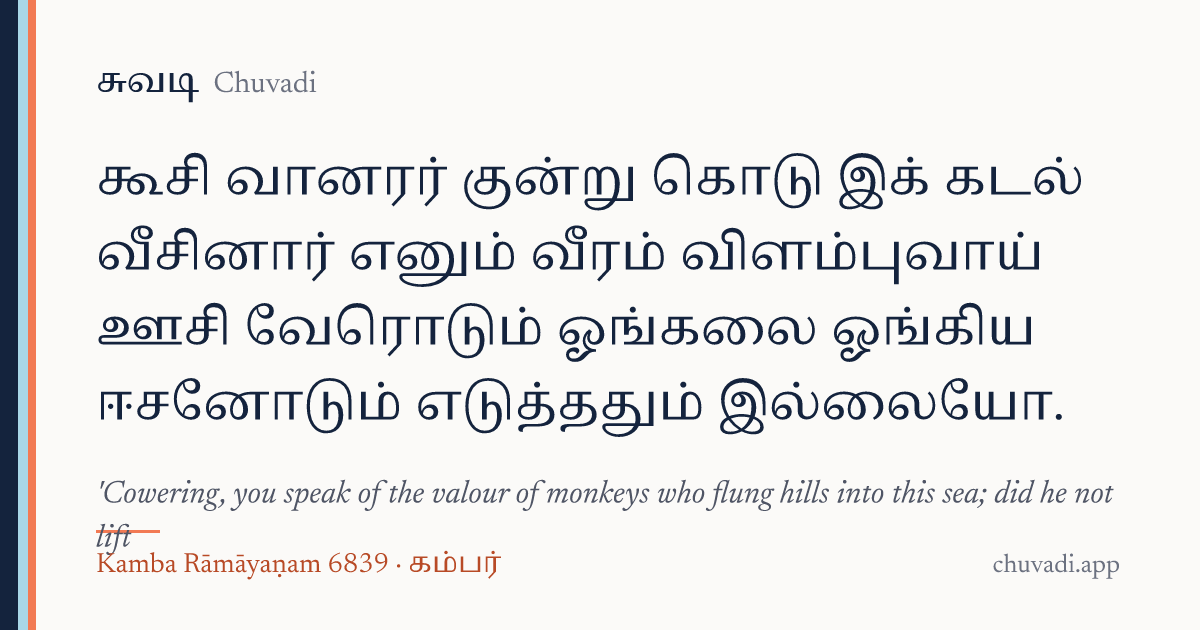
கூசி - நீ வானரர்க்கு அஞ்சினவனாம்; குன்று கொடு - மலைகளையெடுத்து; இக்கடல் வீசினார் எனும் வீரம் விளம்புவாய் - (அவ்வானரர்கள்) இக்கடலுள் வீசினர் என்கின்ற (அவர்) வீரச் செயலையே விளம்பிக் கொண்டுள்ளாய்; ஓங்கலை - உயர்ந்தோங்கிய கயிலை மலையை, ஓங்கிய ஈசனோடும் - அதன் உச்சியில் வீற்றிருக்கும் சிவபெருமானோடும்; ஊசி வேரொடும்- அம் மலையின் ஆணிவேரோடும்; எடுத்ததும் இல்லையோ? - (நம் தலைவன்) இராவணன் எடுத்துள்ளதும் உன் நினைவுக்கு வரவில்லையோ? (என்றான் படைத் தலைவன்).
ஓங்கல் - மலை. ஊசி - வேர், ஆணிவேர். இராவணன் கயிலை எடுத்தது முன்பும் (2832, 2840, 3360) பல இடங்களில் புகழப்படும். வானரங்கள் எடுத்தவை குன்றுகள்; நம் வேந்தன் எடுத்தது ஈசனோடு சேர்ந்த மலைகட்குத் தலைவனாகிய மலையரசனை!; மறந்ததும் எப்படியோ என வியந்துரைக்கின்றான்.
ஆங்கிலம் · English translationAI
Translation
- 'Cowering, you speak of the valour of monkeys who flung
- hills into this sea; did he not lift
- the lofty mountain, taproot and all,
- together with the exalted Lord upon it?'
What the poem says
The commander mocks Māliyavāṉ for cowering before monkeys and praising them for throwing hills into the sea.
Has he forgotten that their own king once lifted Mount Kailāsa, the king of mountains, right down to its taproot, with Śiva himself seated on top? The monkeys only carried hills. Irāvaṇaṉ carried the greatest mountain of all, god and all.