



கம்பராமாயணம் 6849 · யுத்த 8.61
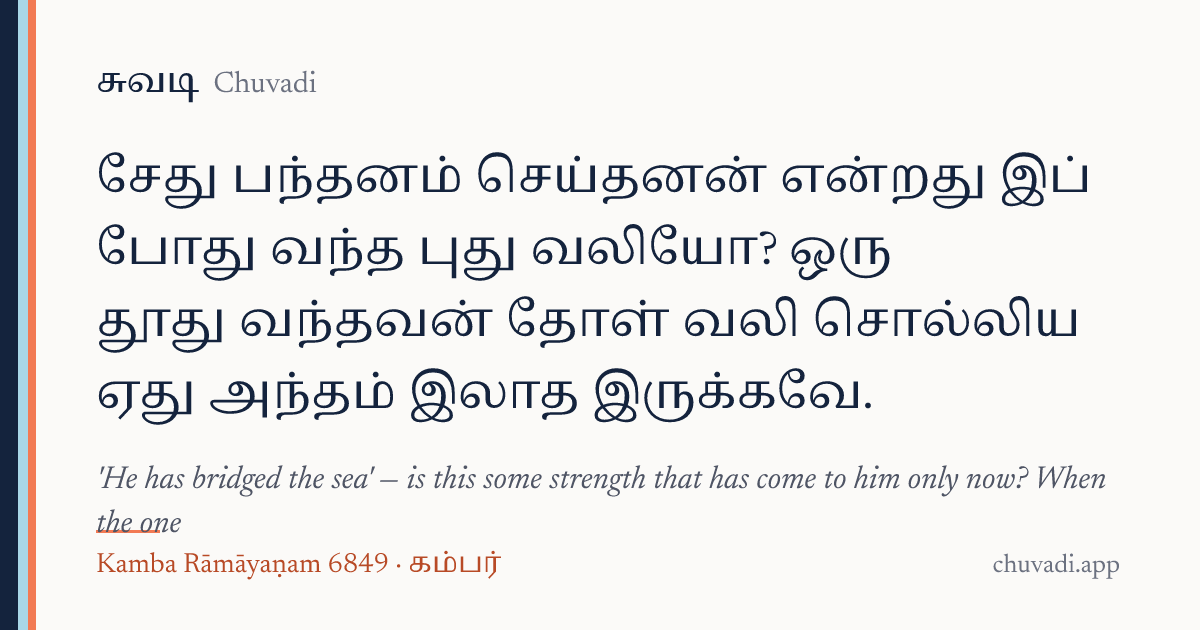
பாடல் · The poem
Tap a word to see its gloss in the commentary and where else it occurs.
பொருள் · Meaning in Tamil
ஒரு தூது வந்தவன் - தூதாக வந்த ஒருவன் ஆகிய (அனுமனுடைய); தோள்வலி சொல்லிய ஏது - தோள் ஆற்றலைச் சொல்ல வல்ல காரணங்கள்; அந்தம் இலாத இருக்க - எண்ணற்றவை (நாம் தெரிந்து) இருக்க; சேது பந்தனம் செய்தனன் என்றது - இராமன் குரங்குகளைக் கொண்டு, சேதுவுக்கு அணை கட்டிவிட்டான் என்பது; இப்போது வந்த புது வலியோ? - இப்போது தான் புதிதாகச் சேர்ந்த வலிமையாமோ? (முன்பிருந்த வலிமையே என்றவாறு).
முன்னே தூதனாக வந்த அனுமன் பல ஏதுக்களால் விளக்கித் தெரிவித்த இராமன் தோளாற்றல் இருக்கவும், கடலை அணைகட்டித் தடுத்தான் என்றது கொண்டு, அது அவனுக்கு இப்போது புதிதாக உண்டான வலிமை என்று எண்ணுதல் தகுமோ? என உரைப்பினுமாம். பந்தனம் -கட்டு. இப்பொருட்கு தூது வந்தவன், அந்தம் இலாத ஏதுக்களால் சொல்லிய தோள் வலி என இயைக்க. ஏது-காரணம்.
ஆங்கிலம் · English translationAI
Translation
- 'He has bridged the sea' — is this some strength
- that has come to him only now? When the one
- who came here as an envoy has already told of his arm's might
- with proofs that have no end?
What the poem says
The spies continue. Irāvaṇaṉ should not think that building the causeway across the sea is some new power Irāmaṉ has just gained. The envoy who came earlier, Aṉumaṉ, had already shown in countless ways how strong Irāmaṉ's arms are.
The verse can also be read as: Aṉumaṉ, the lone messenger, proved his own strength beyond counting, so the bridge is no surprise. Either way, the warning is that Irāvaṇaṉ has long had evidence of the enemy's power.