



கம்பராமாயணம் 6858 · யுத்த 9.5
பாடல் · The poem
Tap a word to see its gloss in the commentary and where else it occurs.
பாட வேறுபாடு · Project Madurai reads
பொருள் · Meaning in Tamil
வந்தவர் - (நம்மை எதிர்த்துப் போரிட) வந்தவர்களாகிய இராம இலக்குவர்; தானையோடு மறிந்து - (அவர்களின் வானரப்படையோடு திரும்பி; மாக்கடலில் வீழ்ந்து - பெரிய கடலில் விழுந்து; சிந்தினர் இரிந்து போக - சிதறுண்டு அஞ்சி ஓடும்படி; சேனையும் யானும் சென்று - நம் சேனையும் நானும் ஆகப் போய்; வெந்தொழில் புரியுமாறு காணுதி - கடுமையான போர்ச் செயல்கள் செய்யுமாறு காண்பாயாக, விடை ஈக - விடை தந்தருள்க; என்னா - என்று; இந்திரன் முதுகு கண்ட இராவணற்கு - தேவர் தலைவனாகிய இந்திரனைப் புறமுதுகிட்டு ஓடும்படி களங்கண்ட இராவணனுக்கு; ஏயச் சொன்னான் - பொருந்துமாறு (சேனைத்தலைவன் பிரகத்தன்) கூறினான்.
சிந்தினர்- முற்றெச்சம். என்னா - என்று. செய்யா என்னும் எச்சம். இந்திரனைப் புறமுதுகு கண்டவன் இராவணன்: அமரர் கணத்தொடும் அடர்ந்த போர்த்தானை இந்திரனைப் பொருது அவனைப் போர் தொலைத்து வேர்த்தான் (2834) எனவும், "மீளா நிறத்து ஆயிரங் கண்ணவன் விண்ணின் ஓட வாளால் ஒறுத்தான்" (3432) எனவும் வருதல் காண்க. இடிப்பாரை யில்லாத ஏமரா (குறள் 448) மன்னன் இராவணன் ஆதலின், அவனுக்கு இனிப்பானவற்றையே சொல்லுகின்றான் படைத்தலைவன் என்பார். "இராவணற்கு ஏயச் சொன்னான்" என்றார்.
ஆங்கிலம் · English translationAI
Translation
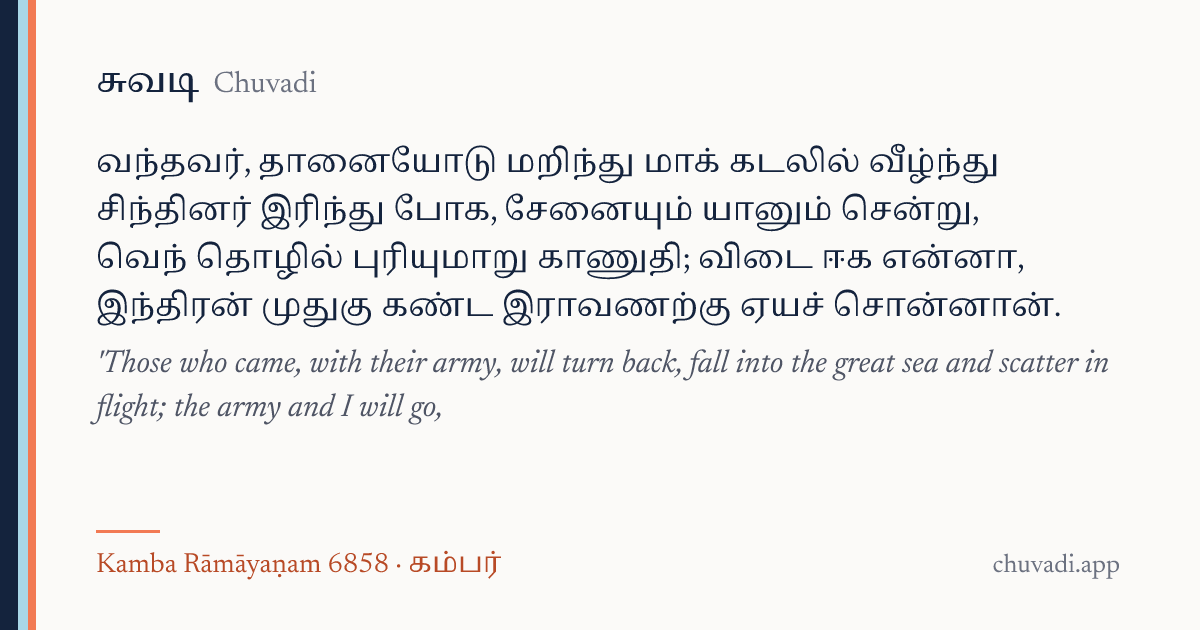
- 'Those who came, with their army, will turn back, fall into the great sea
- and scatter in flight; the army and I will go,
- and you shall see the fierce work we do; give us leave' — so
- he spoke, in words to please Irāvaṇaṉ, who once saw Intiraṉ's back.
What the poem says
The commander, named Pirakattaṉ, finishes by asking leave to attack. He promises that Irāmaṉ, Ilakkuvaṉ and their monkey army will be driven back into the sea.
Irāvaṇaṉ once defeated Intiraṉ, king of the gods, and made him flee, which is what seeing his back means. The poet notes that the commander says what pleases the king. Like the king in the Tirukkuṟaḷ who has no one to rebuke him, Irāvaṇaṉ has surrounded himself with flatterers, and this leads to his ruin.