



கம்பராமாயணம் 6863 · யுத்த 9.10
பாடல் · The poem
Tap a word to see its gloss in the commentary and where else it occurs.
பாட வேறுபாடு · Project Madurai reads
பொருள் · Meaning in Tamil
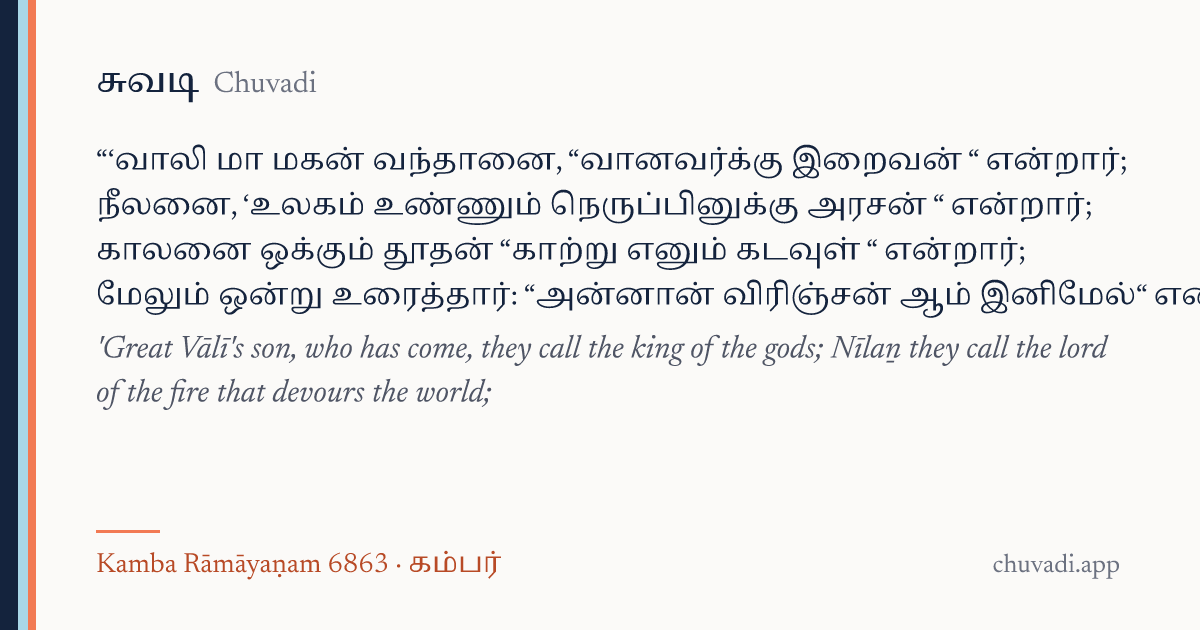
மா வாலி மகன் வந்தானை - பெருமை பொருந்திய வாலிக்கு மகனாகப் பிறந்த அங்கதனை; வானவர்க்கு இறைவன் என்றார் - வானத்துத் தேவர்கள் தலைவனான இந்திரன் என்றார்கள்; நீலனை உலகம் உண்ணும் நெருப்பினுக்கு அரசன் என்றார் - நீலனை, ஊழிக்காலத்தே உலகத்தை அழிக்கும் தீக்கடவுளின் மகன் என்றார்கள்; காலனை ஒக்கும் தூதன் - (எதிர்ப்பார்க்கு) யமனைப் போன்ற தூதனாகிய அநுமனை; காற்றெனும் கடவுள் என்றார் - காற்றுக் கடவுள் ஆகிய வாயு தேவனே என்றார்கள்; மேலும் ஒன்று உரைத்தார் - (அவனைக் குறித்து) மேலும் ஒன்று சொன்னார்கள்; அன்னான் இனிமேல் விரிஞ்சன்ஆம் என்றார்- அவ்வனுமன் இனிவரும் பிறப்பில் பிரமதேவன் ஆவான் என்றும் சொன்னார்கள்.
ஆங்கிலம் · English translationAI
Translation
- 'Great Vālī's son, who has come, they call the king of the gods;
- Nīlaṉ they call the lord of the fire that devours the world;
- the envoy who is like Death they call the god who is the Wind;
- and they say one thing more: that he will hereafter be Viriñcaṉ.'
What the poem says
Māliyavāṉ continues with the talk about the monkey leaders. People say that Aṅkataṉ, son of Vālī, is Intiraṉ, king of the gods, in another form. Nīlaṉ is said to be the fire that consumes the world at the end of an age.
Aṉumaṉ, the envoy who was as deadly as Death when he came to Ilaṅkai, is called the Wind-god himself. People even say that in a future age he will become Brahmā (Viriñcaṉ), the creator.